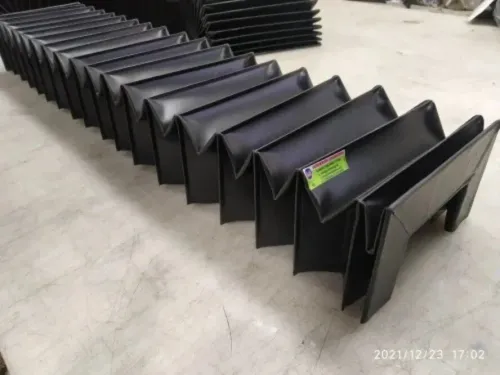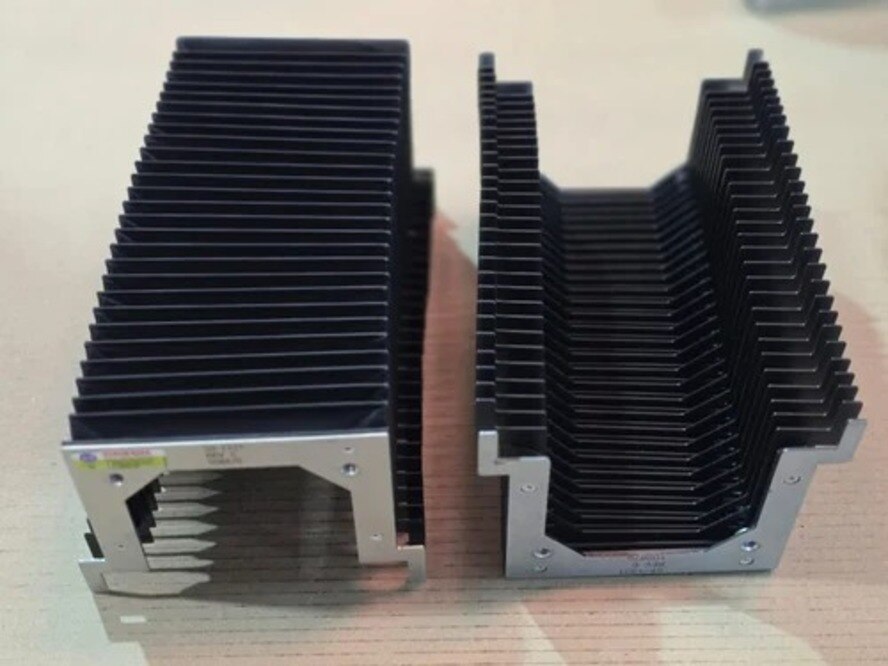
Bellow covers belong on moving machine components exposed to sand, drilling mud, oil, chips, spray, weather, or mechanical impact—not on pressurised process lines or leaking equipment. By the end, you can identify the oil-and-gas users who need them, match construction to service conditions, and prepare a specification that a supplier can verify.
Key takeaways
- Use bellow covers on exposed moving guideways, slides, rods, cables, and hoses.
- Specify chemical, heat, flame, abrasion, and weather exposure before choosing materials.
- Confirm travel, speed, folded height, clearances, and mounting loads before installation.
- Require drawings, test records, material details, and service limits in the RFQ.
Which oil-and-gas assets and teams need bellow covers?
Bellow covers for oil and gas shield moving components from sand, chips, mud, spray, debris, and mechanical wear. They protect machinery; they are not pressure vessels, pipe seals, fire barriers, or hydrocarbon-containment devices.
| Asset or exposure | Who should specify | Decision trigger |
|---|---|---|
| CNC guideways, linear slides, ball screws, lead screws, telescopic slides | Machine builders and maintenance engineers | Contamination reaches the travel surfaces or shortens component life |
| Robot axes, hydraulic-cylinder rods, valve actuators | Maintenance engineers and plant operators | Abrasive or oily deposits cause scoring, leakage, or repeated failures |
| Drilling equipment, pump skids, compressor packages | Plant operators and skid contractors | Mud, sand, spray, or washdown reaches moving mechanisms |
| Control-panel mechanisms, exposed hose and cable runs | Machine builders and contractors | Movement brings cables or hoses against debris, edges, or contaminated structures |
A cover is not automatically required for every asset. Specify one when the component’s travel, exposure, access requirements, and failure history justify it: maintenance engineers respond to shortened service life, machine builders design protection into new equipment, plant operators address repeated contamination failures, and contractors protect skids during assembly.
Bellow covers for machinery designed for a clean machine-tool bay can fail outdoors. Sand abrades folds, mud packs into creases, hydrocarbons swell coatings, sunlight and ozone age materials, and washdown drives contamination into seams or causes collapse.
Select bellow covers for oil and gas against the combined motion, weather, chemical, and cleaning duty—not a clean-environment datasheet alone.
How should you match the cover to oil-and-gas hazards?
Build the design brief around the actual exposure, not a label such as “oil-resistant.” The industrial bellow covers applications decision depends on fluid compatibility, movement, weather, and cleaning conditions acting together.
Record every contact medium:
- Crude oil
- Diesel
- Mineral oil
- Synthetic hydraulic oil
- Drilling mud
- Produced-water residue
- Aromatic solvent
- Detergent
- Degreaser
- Another cleaning chemical
For each medium, state concentration, temperature, contact time, and whether contact is splash, immersion, mist, or repeated washdown. Do not infer compatibility from the fabric or elastomer name: mineral oil tolerance does not prove resistance to a synthetic ester, additive package, aromatic solvent, or sour-service chemical.
| Exposure | Design control | Failure if missed |
|---|---|---|
| Sand or metal chips | Abrasion-resistant cover and protected seams | Folds wear through, exposing the component |
| Salt spray, rain, or outdoor humidity | Weathering, UV, ozone, and corrosion-resistant construction | Cracking, embrittlement, or rusted attachments |
| Hot surfaces or sparks | Defined flame and heat performance with a test method and pass criterion | Ignition or heat damage remains unassessed |
| High-pressure cleaning | Drainage, retention, venting, and resistance to collapse or inflation | Water retention, ballooning, detachment, or crushed folds |
In hydrogen-sulfide service, evaluate clamps, springs, fasteners, frames, and adjacent parts against the purchaser’s specification and ISO 15156/NACE MR0175. Corrosion resistance in the cover fabric alone proves nothing.
Which construction fits the movement and service life?
Choose the construction from the machine envelope, not the required stroke alone. Specify usable stroke, extended length, compressed length, speed, acceleration, cycle frequency, fold height, bend radius, lateral offset, mounting geometry, and required service life. A flexible design suits frequent motion where low mass matters.
| Option | Best fit | Main limitation |
|---|---|---|
| Sewn fabric | Frequent motion, low mass, moderate contamination | Seams and folds can wear or leak |
| Heat-sealed or welded coated fabric | Splash, washdown, and stronger seam protection | Coating and welds must suit the fluids and temperature |
| Molded elastomer | Repeated flexing and specified fluid compatibility | Material choice controls swelling, cracking, and life |
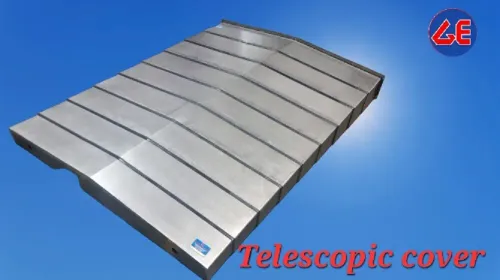
| Formed metal or telescopic steel | Chips, impact, heat, and rigid sliding arrangements | Higher mass and less tolerance for misalignment |
Specify bellow covers for machinery only after checking full compression. Folds must not rub together, drag on a guideway, bottom out, snag on a clamp, or exceed permitted deflection. For outdoor service, include UV, ozone, rain, salt spray, temperature cycling, mud, and continuous sunlight in the life assessment.
Require the supplier to state the actual operating temperature range, flame behaviour, smoke performance, UV and ozone test basis, and static-control properties. “Fireproof” and “oil-resistant” mean nothing without the test method, construction, and pass criteria.
What safety limits must be checked before installation?
A bellow cover is a mechanical shield for a moving rod, guideway, actuator, or slide. It is not a pressure vessel, pipe seal, fire barrier, explosion-proof enclosure, or hydrocarbon-containment device, and it cannot replace a machine guard where personnel can reach hazardous motion.
Before installation, verify these limits in order:
1. Confirm whether washdown pressure, suction, hot air, or a pressure pulse can reach the folds. Specify venting, drainage, retention, and collapse or inflation resistance; do not assume closed folds are pressure-tight.
2. Obtain the hazardous-area classification from the site electrical and process-safety authority. Check ATEX or IECEx requirements where they apply, and confirm Petroleum and Explosives Safety Organisation requirements for the Indian installation.
3. Assess motors, sensors, switches, bonding, grounding, antistatic construction, and every other ignition-capable component separately. A fabric cover does not certify the machine for a classified location.
4. Include the cover and its mounts in the safeguarding assessment under ISO 12100 and ISO 14120. Check that compression, extension, or a loose attachment cannot expose a nip, shear point, rotating coupling, or other dangerous motion.
5. Define inspection access and replacement criteria before fitting the cover. You must be able to find rod leaks, corrosion, pinholes, delamination, swelling, abrasion, loose attachments, and lost travel without dismantling the machine unnecessarily.
A cover that traps water or oil at its mounts can accelerate corrosion while hiding the failure it was installed to prevent. Keep the protected component inspectable.
What should the RFQ and bellow cover manufacturer prove?
For bellow covers for oil and gas operations in Chhatrapati Sambhajinagar, geographic availability matters less than a duty-specific drawing and test record. Put these details in the RFQ:
- Equipment tag, protected component, drawing, stroke, speed, acceleration, extended and compressed dimensions, minimum fold height, allowable offset, mounting method, temperature range, fluids and concentrations, solids, washdown method, outdoor exposure, hazardous-area classification, fire-performance requirement, and replacement quantity.
| Supplier response | What it proves | What to reject |
|---|---|---|
| Duty-specific drawing | Fold geometry, clearance, mounting tolerances, and usable travel | Generic catalogue dimensions |
| Material and construction record | Material identification, coating or weld details, seam construction, and traceability | “Oil-resistant” without compound or method |
| Inspection and test evidence | Dimensional inspection, attachment strength, static-control method, and results tied to the actual motion, fluids, solids, and washdown | Static material data alone |
| Replacement plan | Interval and criteria for fold cracks, abrasion, pinholes, loose attachments, swelling, delamination, water or oil retention, and lost travel | No defined inspection trigger |
A credible bellow cover manufacturer controls repeatability between replacement units; it does not merely sew an accordion shape. Ask how the supplier prevents fold rubbing, guideway drag, bottoming, clamp snagging, and excessive offset.
GURUKRUPA BELLOWS PVT LTD belongs in the comparison when it supplies that documented fit and qualification package. Choose the supplier with evidence for your machinery and site conditions, not the nearest supplier or a generic label.
Related products
 | Bellow Cover We are considered a well-known name in the business that manufactures and supplies Bellow Cover. View product → |
 | Bellow Cover The range of CNC Bellow Cover is manufactured on our premises, under the guidance of our expert professionals. View product → |
Frequently asked questions
Which oil-and-gas assets and teams need bellow covers?
Maintenance, reliability, and machine-tool teams use them on exposed guideways, slides, telescopic components, cable carriers, hoses, and moving rods. They protect machinery from sand, chips, mud, spray, debris, and mechanical wear.
How should you match a bellow cover to oil-and-gas hazards?
Identify the actual exposure first: hydrocarbons, drilling mud, salt water, sand, ultraviolet light, heat, sparks, or cleaning chemicals. Then require compatible fabric, coating, seams, wipers, and fasteners. A bellow cover is not a pressure vessel, pipe seal, fire barrier, or hydrocarbon-containment device.
Which construction fits movement and service life?
Match the cover to travel direction, stroke length, speed, acceleration, folded height, bend radius, cycle count, and available clearance. Compare coated fabric, sewn or welded construction, internal frames, guiding strips, scrapers, and replaceable sections against the duty cycle.
What safety limits must be checked before installation?
Check temperature, chemical compatibility, flame and spark exposure, pressure, moving-parts clearances, pinch points, inspection access, drainage, and mounting strength. Do not use the cover as containment or as a substitute for a rated fire, pressure, or process-safety component.
What should the RFQ and bellow cover manufacturer prove?
Request a dimensioned drawing, travel and folded-height calculations, material and coating data, temperature limits, chemical-compatibility information, seam and attachment details, inspection access, replacement guidance, and test records that match the specified service.
Related product
 | CNC Bellow Cover Product Details: Brand GURUKRUPA Color BLACK Size ANY We are considered a well-known name in the business that manufactures and supplies CNC Bellow... View product → |