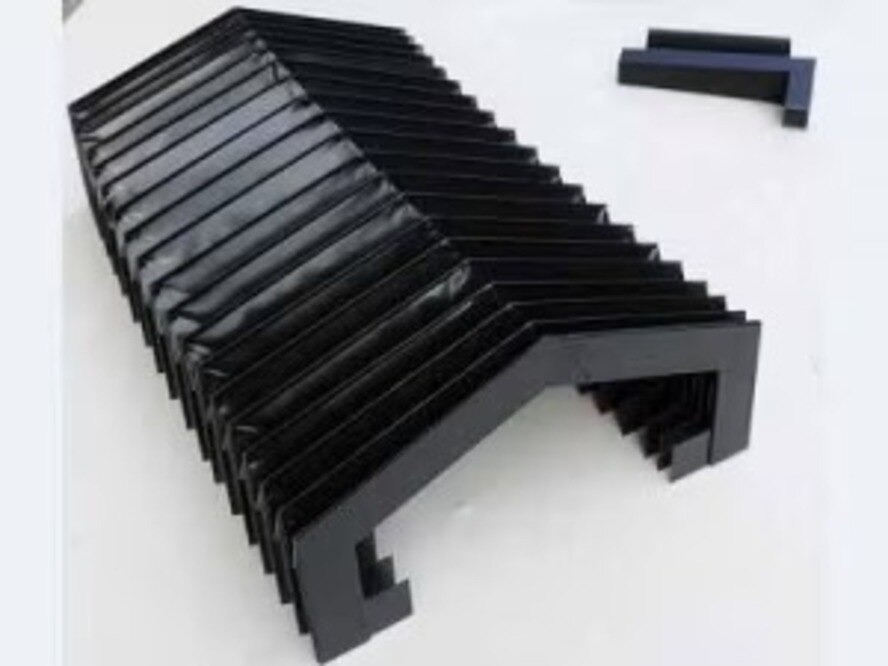
The first signs of failure usually come from incorrect travel, trapped chips, rubbing, chemical attack, or heat exposure rather than from ordinary surface dirt. You will be able to establish a safe inspection routine, clean the cover without damaging its coating, identify stop-use defects, and decide when a supplier-approved repair or replacement is necessary.
Key takeaways
- Record travel, dimensions and clearances before production use.
- Remove chips before wiping; use approved cleaners for coolant and oil.
- Inspect seams, folds, mounting hardware and rubbing marks at scheduled intervals.
- Stop operation when damage exposes guideways, cables or moving machine parts.
How do you confirm the cover fits correctly after installation?
Confirm the fit by recording a dimensional and movement baseline before the cover carries production duty. Treat bellow covers maintenance after installation as a measured fit check, not a visual sign-off. Use the cover drawing and application specification as the authority for allowable dimensions, travel and clearances.
Record these values with the machine stopped, then repeat them after one complete slow travel cycle:
- Overall length when fully compressed and fully extended
- Cover width, height and fold spacing at both travel limits
- Mounting-frame position, fastener condition and end-connection alignment
- Clearance from guideways, tooling, guards, hoses and cable carriers
- Any rubbing, snagging, twisting, bunching or uneven fold movement
Check the cover again while the axis completes its normal stroke. Stop the cycle if a fold catches, a frame shifts or the cover contacts another component; continued travel can turn a small alignment error into a torn seam or damaged guideway.
| Measurement | Compare against | Acceptable observation |
|---|---|---|
| Compressed and extended length | Drawing or application stroke | Reaches both limits without overstretching or bottoming out |
| Width, height and fold spacing | Drawing dimensions | Remains consistent without collapsed or distorted folds |
| Mounting and end connections | Mounting detail and hole pattern | Sits squarely with secure fasteners and no lifted edge |
| Travel clearance | Specified surrounding envelope | No contact with guideways, tooling, guards or cables |
Photograph the installed condition and record the date, axis, travel and results. Recheck after adjustment, relocation or any machine change rather than relying on the original baseline.
How should you clean chips, dust, coolant and oil from the cover?
Good thermally bonded bellow covers care begins by identifying the facing material before you choose a cleaner. Thermal welding joins coated fabrics; it does not make the cover universally resistant to solvents, heat or coolant. Confirm the facing material and temperature limit on the drawing or with the supplier.
- Stop the machine and let the cover reach a safe temperature. Do not clean moving folds.
- Remove loose chips and dust with a soft nylon brush or lint-free cloth. Brush away from the folds, guideways and welded seams rather than pushing debris into them.
- Wipe coolant residue with a clean, damp cloth and the cleaner approved for that facing material. Do not scrape dried deposits with a blade.
- Remove oil with the same approved method, changing cloths when they become dirty so you do not spread an abrasive film across the cover.
- Use compressed air only if the supplier permits it. Set low pressure, keep the nozzle away from the folds and direct air away from bearings and guideways.
Keep the cover clean and dry after wiping. Do not apply general-purpose grease, penetrating oil, silicone spray or solvent-based dressing; these products can swell or soften coatings, attract dust or migrate into welded seams. Never use a pressure washer or uncontrolled compressed air.
Let the cover dry fully, then check that no residue remains in compressed folds before returning the machine to service.
What should you inspect on the seams, folds and mounting hardware?
Inspect seams, folds and mounting hardware with the machine stationary, then repeat the check during one slow, complete travel cycle. Examine outer faces, fold interiors, the underside of frames, end plates and any concealed retaining edges.
Effective thermal welded bellows maintenance includes checking for:
- Lifted or peeling weld edges, pinholes, cuts, cracks at fold creases and exposed reinforcement
- Shiny abrasion marks, coating delamination, heat discolouration or brittle areas
- Loose end frames, distorted retainers, missing washers, damaged brackets or over-tightened fasteners
- Screws, clamps or brackets rubbing against the fabric or catching during movement
- Twisting, snagging, uneven folding, bunching at one end or excessive stretching
Watch the cover as it compresses and extends. It must travel without rubbing a guideway, cable carrier, machine guard, tooling or chip conveyor; a repeated contact mark can become a tear after many cycles.
Check whether the folds open and close in sequence across the full width. A fold that stays collapsed, opens late or shifts sideways indicates misalignment or a mounting problem, not normal wear.
Do not add improvised clamps or force a retainer into position. Correct loose or damaged hardware only according to the original mounting design, because concentrated loads at the frame can peel a welded seam or restrict fold movement. Record each defect with its location and photograph it before adjustment.
How do you set the inspection schedule for the machine’s actual conditions?
Set the interval from machine duty, not from a universal calendar rule. For how to care for thermally bonded bellow covers in Coimbatore, treat abrasive dust, metal particles, coolant residue, heat, moisture and radiant exposure as separate risk factors, then confirm the schedule during the first weeks of operation.
| Exposure profile | Starting inspection interval | Shorten the interval when |
|---|---|---|
| Heavy chips, abrasive dust, coolant, high speed, long travel or heat | Every shift and after spills | Folds retain debris, seams discolor, or wear appears |
| Moderate contamination and regular production travel | Weekly | Coolant reaches hidden folds or travel becomes rough |
| Clean, lightly used machine with low thermal exposure | Planned periodic maintenance | The cover begins rubbing, bunching or stiffening |
Record each inspection against the machine axis and travel cycles. Include:
- Installation date, cover material, coolant or oil in use, cleaning agent and inspection date
- Dust, chips, moisture or heat exposure since the previous check
- Damage location, travel direction, fold condition, seam condition and mounting condition
- Corrective action and the person who completed it
Shorten the interval after the first sign of abrasion, cracking, lifting, residue retention or uneven folding. Recording whether wear starts at one end, along a travel direction or beside a mounting point helps identify misalignment, excessive stroke or an obstruction instead of treating every failure as material deterioration.
When should you stop using, repair or replace a bellow cover?
Stop the machine if the cover no longer protects the guideway, cable or moving component. Loose dust, chips, dried coolant and oil film are contamination problems: remove them using the approved cleaning method, then inspect again. Do not treat a clean surface as proof that the cover is sound.
Repair or replacement is required when you find any of these conditions:
- Exposed reinforcement, torn fabric, cracked coating, delamination or a lifted thermal weld.
- A puncture or open seam that admits coolant, oil, chips or fine abrasive dust.
- Permanent creases, stiff folds, fold memory, twisting, bunching or a changed compressed or extended shape.
- Widespread tackiness, surface cracking, colour change or a strong solvent smell, which indicates coating, chemical, heat or UV damage.
- Rubbing, snagging or sagging that could expose the machine during travel.
Stop operation immediately when coolant reaches the guideway through a damaged area, or when the cover catches on tooling, guards or its own mounting frame. A cover is not a platform; a tool, workpiece or swarf container placed on the folds can damage reinforcement without leaving an obvious hole.
Do not sew through a sealed coolant-facing area or apply an untested adhesive patch. Ask the supplier to specify the compatible material and controlled hot-air, hot-wedge or patch process.
For industrial bellow covers care in Coimbatore, GURUKRUPA BELLOWS PVT LTD can confirm whether the actual fabric, coating and exposure conditions support repair or require a replacement.
Related product
 | Thermally Bonded Bellows ₹1000 Product Details: Brand GURUKRUPA Color BLACK & OTHER Size ALL On offer from us is available Thermally Bonded Bellows for the clients. View product → |
Frequently asked questions
How do you confirm a thermally bonded bellow cover fits correctly after installation?
Use the cover drawing and application specification to record its installed dimensions, full travel, compressed length, extension, clearances and mounting alignment. Run the machine through its complete movement range and record any rubbing, stretching, bunching or contact with adjacent parts.
How should you clean chips, dust, coolant and oil from a bellow cover?
Remove chips with a soft brush or low-pressure air directed away from folds and seals. Wipe dust, coolant and oil with a clean lint-free cloth and a cleaner approved for the cover material. Do not scrape the fabric or direct high-pressure air into seams.
What should you inspect on the seams, folds and mounting hardware?
Check thermally welded seams for lifting, cracking, pinholes and separation. Inspect folds for cuts, punctures, thinning, trapped chips and abnormal creasing. Tighten or replace loose fasteners, check mounting plates for distortion, and look for shiny rubbing marks.
How do you set the inspection schedule for actual machine conditions?
Start with a check after installation, after the first production shift, and after the first week. Increase inspection frequency when the machine produces sharp chips, abrasive dust, hot material, heavy coolant spray or frequent rapid-axis movement. Record findings and adjust the interval using wear evidence.
When should you stop using, repair or replace a bellow cover?
Stop the machine when damage exposes a guideway, cable, hose or moving component, or when the cover catches, binds or loses its travel clearance. Repair minor seam or mounting defects only when the repair preserves the specified movement and protection. Replace the cover when folds, fabric, seams or mounting points cannot meet the original specification.