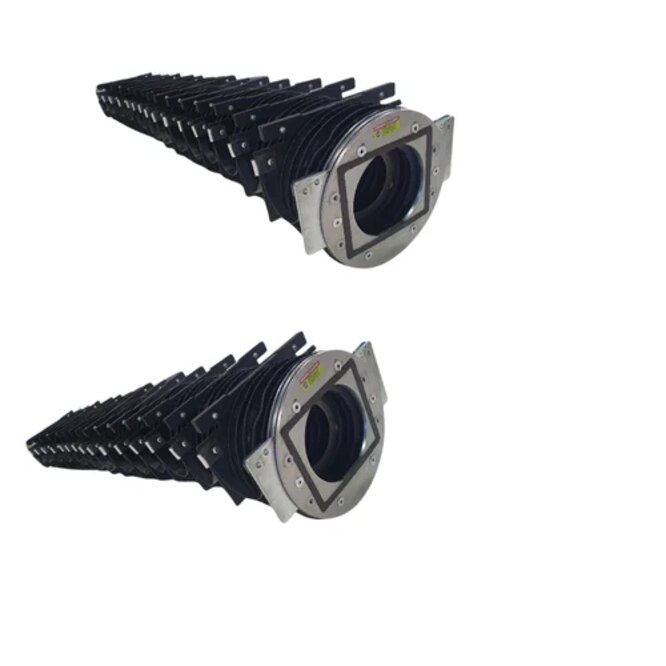
A Trumpf machine model alone cannot identify the correct replacement cover: the axis travel, folded package, mounting geometry, motion profile, contamination, and laser-head clearance all determine fit. By the end, you will have a measurement procedure, comparison criteria, and a supplier specification that can be checked through the machine’s complete travel.
Key takeaways
- Identify the exact Trumpf machine, axis, travel, and installed mounting geometry.
- Measure the cover in place, including compressed length, extended length, and mounting points.
- Check full-stroke clearance against optics, cables, hoses, heat, debris, and moving structures.
- Specify materials, interfaces, dimensions, and inspection requirements before requesting quotations.
Start with the Axis and Installed Geometry
Before comparing Trumpf laser bellow covers, identify the exact machine, protected axis, and installed geometry. A model or series name cannot establish interchangeability: the same machine family can use different travel lengths, mounting patterns, or laser-head arrangements.
| Information | Record | Why it matters |
|---|---|---|
| Machine and axis | Model, serial number, axis name, cover location, travel direction | Prevents selection of a cover for the wrong carriage or guideway |
| Geometry | Extended and compressed length, width, height, folded height, fold count | Defines the working envelope and storage space |
| Mounting | Flange dimensions, hole pattern, fixing method, end connections | Determines whether the cover can attach without drilling or adapters |
| Motion area | Guides, workholding, cable carriers, nearby moving parts, laser-head position | Exposes rubbing, twisting, buckling, and obstruction risks |
| Exposure | Coolant, oil, dust, abrasive fines, sparks, hot particles, temperature | Determines construction, coating, and shielding requirements |
Record dimensions from a machine drawing or verified installed cover, not from appearance. Check whether the protection system also needs scrapers, wipers, telescopic steel covers, drain paths, or laser-head shielding; a bellows alone can leave contamination routes at joints and openings.
This is the practical basis for how to choose trumpf laser bellow covers and compare trumpf laser machine covers without treating a visible size as proof of fit. Ask for a controlled data sheet before requesting a quotation.
Measure the Existing Cover Without Removing It
Use the machine’s controlled jog function to measure the installed cover at both travel limits; do not pull, stretch, or detach it. Record the axis position for each measurement so a supplier can relate cover length to actual travel.
- Clean debris from the folds and mounting flanges before measuring.
- At full extension, measure the cover length along its centreline, then record width and height at the mounting faces.
- At full compression, measure the compressed length and folded height without flattening the bellows.
- Count the folds and measure one fold pitch at several locations; inconsistent pitches can indicate wear or distortion.
- Measure mounting-hole centre distances, flange length and width, fixing type, and the gap to guides, cable carriers, the carriage, and the laser head.
- Photograph both ends, each flange, the fold profile, and nearby obstructions. Place a ruler in the frame and label every image with the axis and machine position.
Repeat critical dimensions with a steel rule or caliper, taking readings twice. Put the results into the trumpf bellow cover specifications sheet with the machine model, axis, orientation, travel, extended and compressed lengths, fold height, hole pattern, and clearance measurements. A model name or photograph alone cannot establish interchangeability.
Prove Full-Stroke Clearance Before Ordering
A cover that fits at the travel limits can still fail halfway through the stroke. Build a dimensioned envelope from the machine drawing or a rigid mock-up, including the laser head, guides, cable carrier, workholding, and adjacent guards.
Verify it in this order:
1. Record the proposed extended length, compressed length, width, height, fold height, mounting-hole pattern, and flange position. Compare each dimension with the measured Trumpf bellow cover specifications.
2. With the laser disabled and the axis under controlled jog operation, move from one limit to the other at low speed. Check the cover at both ends and at several intermediate positions for fold collision, rubbing, snagging, or contact with the laser head.
3. Repeat the stroke at the specified peak speed, acceleration, and cycle frequency. Watch for asymmetric folding, buckling, sagging, twisting, and delayed recovery after compression.
4. Place removable witness tape or feeler strips beside suspected contact points. Any scuff, displaced tape, pinched seal, or mounting distortion identifies insufficient clearance.
5. Cycle the cover repeatedly, then inspect folds, seams, edges, and mounts for cracking or separation. Do not approve Trumpf laser machine covers until they clear the complete motion envelope without obstructing travel, cable routing, or the laser safety boundary.
Match the Construction and Material to the Hazard
Hot spatter and molten particles demand a heat-resistant textile, protected seams, and shield plates where direct impact occurs. Do not select a cover from room-temperature oil resistance alone: the outer fabric and coating solve different problems.
| Hazard | Suitable Trumpf laser bellows options | Check before approval |
|---|---|---|
| Hot spatter | Heat-resistant fabric, reinforced seams, and local metal or flexible shield plates | Test against the actual spatter temperature, exposure time, and impact angle |
| Sparks | Heat-resistant, low-flammability textile with sealed or protected folds | Confirm sparks cannot lodge between folds or reach the guideway |
| Molten particles | Heat-resistant textile plus sacrificial shields at the strike zone | Reject fabric that softens, holes, or transfers heat under the process condition |
| Coolant | Coated textile with sealed seams and a drainable end transition | Check coating compatibility, fold drainage, and resistance to hydrolysis |
| Oil and lubricant | Oil-resistant coating with reinforced mounting edges | Verify swelling, tackiness, and loss of flexibility after exposure |
| Dust and smoke condensate | Closed-fold construction, sealed ends, and contamination-shedding surface | Inspect joints and carriage openings; opacity is not a safety enclosure |
| Abrasive metal fines | Wear-resistant outer layer, wipers, scrapers, or telescopic shielding at exposed guides | Check that particles cannot enter through rubbing edges or open transitions |
These trumpf laser bellows options must be specified by test conditions, not “laser-resistant fabric.” To decide how to choose trumpf laser bellow covers, match textile, coating, seams, shields, and adjacent protection to the contamination path. Perform a separate laser-safety assessment if the cover forms part of a beam boundary.
Resolve Laser-Head Interfaces and Safety Boundaries
The laser-head opening must clear the complete moving envelope, not just the nozzle diameter. Allow for head tilt, focus adjustment, collision sensing, cable motion, and the beam’s optical path at every axis position; a tight opening can snag the head or distort the cover during acceleration.
Specify the interface in the drawing:
- Opening dimensions and corner radii, with the smallest permitted gap around the head
- Overlap at adjoining covers, including a labyrinth or shingle arrangement that blocks dust and spatter
- Guide locations, guide clearance, and anti-twist features that prevent the folds entering the head path
- End-frame dimensions, flange thickness, hole pattern, fasteners, and allowable sliding movement
- Sealed transitions around cable carriers, hoses, scrapers, wipers, and drain paths
Do not treat opaque fabric as a laser enclosure. If the cover forms part of the hazard boundary, document its material, seams, joints, leakage paths, access controls, and interlocks in a separate assessment against IEC 60825-1 and the machine-guarding requirements.
Confirm beam clearance, emergency-stop response, door interlock operation, and no loss of protection at full travel. Trumpf laser machine covers and Trumpf laser bellows options must be judged by these interfaces, not by model name or visible size.
Turn the Measurements into a Controlled Purchase Specification
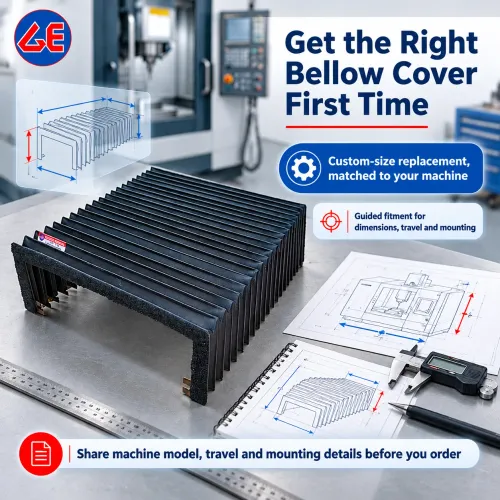
A machine model is an identification aid, not a purchase specification. Send a controlled data sheet with the axis, cover location, travel, extended and compressed lengths, width, height, folded height, fold count, flange dimensions, mounting-hole pattern, fixing method, orientation, guide support, nearby clearances, and laser-head interfaces.
1. Add peak speed, acceleration, cycle frequency, and expected operating temperature. State exposure to sparks, molten particles, coolant, oil, dust, or metal fines, plus material, coating, seam, and cable-routing requirements.
2. Attach dimensioned drawings and photographs showing both travel limits. Ask the supplier to confirm every measurement against the drawing rather than infer interchangeability from the Trumpf series.
3. Before production, cycle the installed cover through its complete travel at operating speed. Reject it if folds collide, the cover sags, twists, buckles, rubs, obstructs the head, or distorts its mounts.
4. Inspect extended folds and seams for pinholes, delamination, cracked coating, frayed edges, and separation. Confirm seal continuity at joints and interfaces; do not claim an IEC 60529 IP rating unless the complete arrangement was tested.
5. If the cover forms part of a laser hazard boundary, obtain a separate assessment against IEC 60825-1 and machine-guarding controls.
These checks show how to choose Trumpf laser bellow covers without confusing photographs with Trumpf bellow cover specifications. GURUKRUPA BELLOWS PVT LTD can use this controlled data sheet to resolve fabrication details before production.
Related products
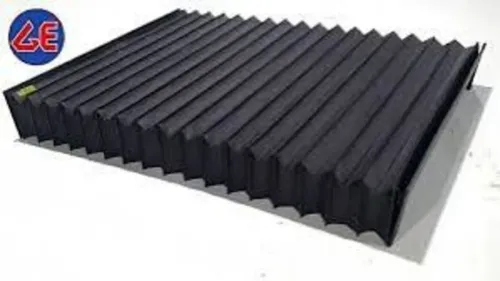
 | Trumpf Laser Bellows Product Details: Minimum Order Quantity 1 Number Brand GE Color Black Size any We offer bellows made specifically for your Trumpf® laser machine. View product → |
 | Laser Machine Bellows ₹1000 We are committed to manufacture, export, and supply a qualitative range of Laser Machine Bellows for our esteemed clients. View product → |
Frequently asked questions
What should you identify before choosing a Trumpf laser bellow cover?
Record the exact machine, protected axis, travel range, mounting geometry, laser-head arrangement, and surrounding components. A machine family name alone does not establish interchangeability.
How can you measure an existing Trumpf machine cover without removing it?
Measure the installed cover’s compressed and extended lengths, width, height, mounting points, folded section dimensions, and available clearances. Photograph both ends and record fixed reference points.
How do you prove full-stroke clearance before ordering?
Move the axis through its complete travel and check the cover at compression, extension, and intermediate positions. Confirm that it clears the laser head, optics, cables, hoses, guideways, and nearby structures.
How should you match bellows construction and material to the hazard?
Specify the hazards first: dust, chips, coolant, heat, sparks, flame exposure, abrasion, or corrosive fluids. Then compare fabric, coating, reinforcement, seam construction, and temperature limits against those conditions.
What belongs in a Trumpf laser bellow cover purchase specification?
Include machine and axis identification, dimensions, travel, mounting details, construction, materials, interface requirements, safety boundaries, drawings, inspection points, and acceptance criteria.
Related product
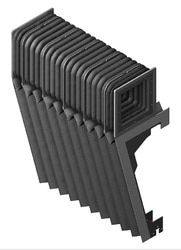 | Laser Cutting Machine Bellows ₹1000 We offer Laser Cutting Machine Bellows made specifically for your laser machine. View product → |