Replacing a machine cover is a fit-and-motion problem, not a catalogue-name match. You will be able to identify the correct cover construction, complete a useful site survey, compare material and installation choices, and send a supplier the evidence needed for a reliable quotation and commissioning check.
Key takeaways
- Identify rigid telescopic, flexible fabric, or hybrid construction before measuring.
- Record closed and extended lengths, section clearances, and mounting dimensions.
- Match materials and guides to chips, coolant, heat, and axis speed.
- Test full travel and inspect seals before accepting the replacement.
Identify the cover before you measure for a replacement
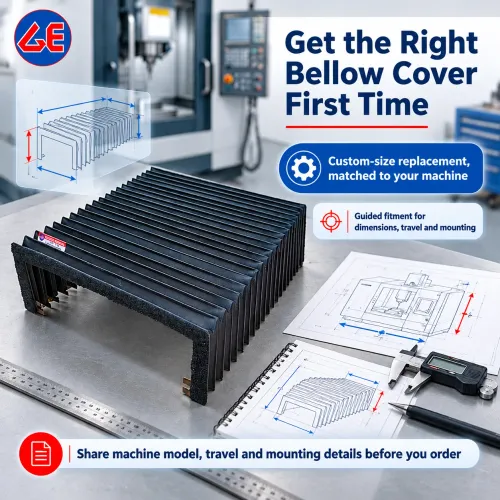
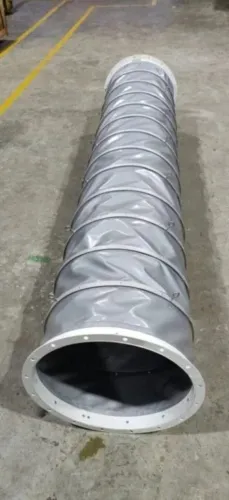
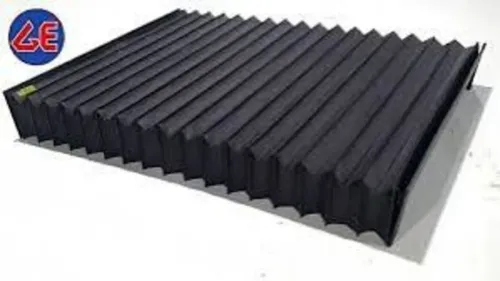
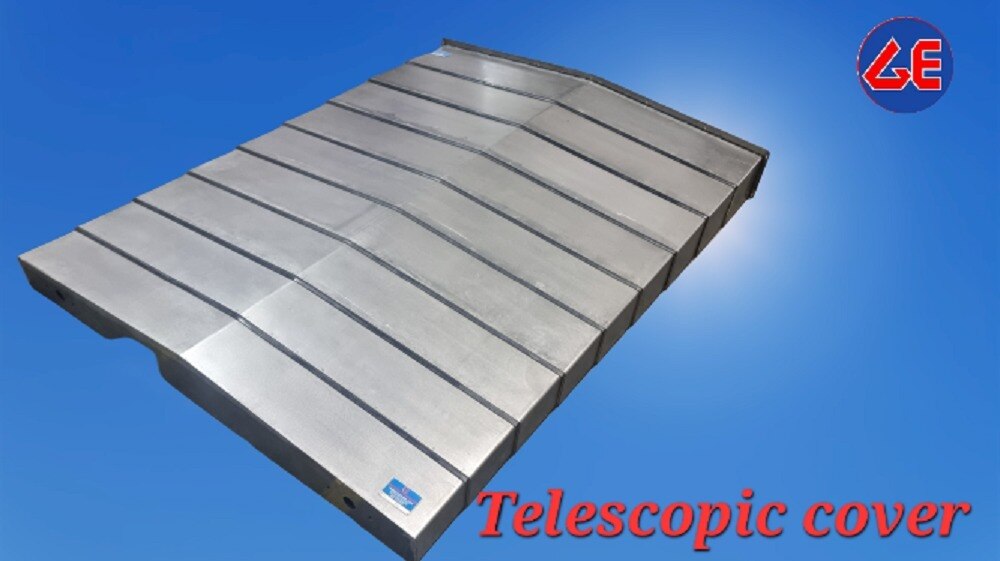
Identify the construction before measuring: telescopic bellow covers use overlapping rectangular or polygonal sections that collapse into a stack. A flexible sewn or bonded fabric bellow folds like a concertina; a steel telescopic cover uses rigid boxes, while a steel-and-fabric hybrid combines rigid shielding with flexible transitions.
Purchasing language uses “bellow” loosely, but each construction needs different drawings, mounts, clearances, and service checks.
| Construction | Identify it | Choose it when |
|---|---|---|
| Steel telescopic cover | Boxes, rollers or sliding guides, scrapers, end frames | Chips, impact, and rigid vertical or horizontal guideway protection |
| Fabric concertina bellow | Sewn or bonded folded fabric, without stacked boxes | Low mass, flexibility, or unusual movement matters |
| Steel-and-fabric hybrid | Rigid sections joined to flexible bellows | Impact shielding must continue through changing or offset movement |
On a CNC lathe, machining centre, milling machine, or grinding machine, inspect:
- Section profiles, folded bellows, overlap, scraper or wiper arrangement, end frames, fasteners, rollers, guide rails, and mounting faces.
- If no rigid mounting points exist, obstructions remain unmeasured, or contamination cannot be contained by a generic replacement, specify a complete guideway enclosure instead.
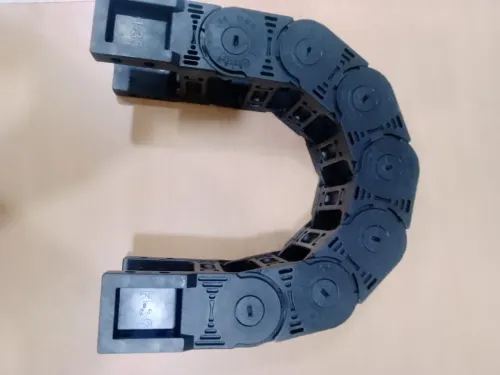
- Use telescopic bellow covers for the guideway, not cable covers or energy chains; those systems carry cables and hoses through a defined bend radius.
Industrial telescopic bellow covers require the actual construction identified before dimensions are taken. A fabric replacement cannot substitute for rigid chip protection, and a steel assembly can add unnecessary mass to a flexible axis.
Survey the machine in both closed and extended positions
1. Stop the machine, isolate electrical, hydraulic, and pneumatic energy, and lock out the controls before touching the cover or moving the axis.
2. Record the machine make, model, axis name, machine orientation, travel direction, and nominal stroke. For telescopic bellow covers for replacement in Coimbatore, this information is only a starting point, not a substitute for site measurements.
3. Photograph the old cover in closed and extended positions, both end mounts, the underside, guideway, mounting faces, and nearby obstructions. Include lubrication lines, sensors, service doors, cable or hose routes, guide rails, and damaged castings. Put a ruler, scale, or known-size object in every view.
4. Measure at fully closed and fully extended positions: collapsed length, maximum extended length, width, height, mounting-face orientation, travel direction, guideway clearance, fixing-hole pattern, and every interference point. Measure space for stacked sections, end-frame movement, wipers, lubrication lines, sensors, service doors, and cable or hose routing.
Collapsed length is not section count multiplied by section width; overlap controls sealing and stability.
5. Check the original mounts for distortion, worn holes, damaged brackets, and misalignment. Do not measure only extended length, copy nominal machine dimensions, or assume a rectangular cover fits a profiled casting.
6. Mark chip-flow direction, drainage points, low spots, and cleaning access. Send a dimensioned sketch showing both positions, hole centres, clearances, and mounting orientation with the photographs.
Match construction to chips, coolant, heat, and axis motion
Specify industrial telescopic bellow covers from operating conditions, not from a product name. Select cold-rolled steel or stainless steel, section thickness, coatings, rollers, guides, and overlap for chip impact, unsupported span, corrosion, heat, and weight. Stainless steel is not automatically best: it can add mass and cost where a suitable coating is adequate.
| Dimension | Formed steel sections | Coated fabric bellows |
|---|---|---|
| Rigidity | Resists impact and unsupported spans | Flexible; needs support against sharp chips |
| Sealing | Overlap and wipers give controlled exclusion | Continuous folds suit irregular movement |
| Mass | Higher | Lower |
| Travel speed | Check roller loading and section impact | Suits light, fast reciprocation when material survives it |
| Noise | Section contact can be loud | Quieter, but vibration can fatigue folds |
| Repairability | Replace sections, rollers, or wipers | Patch or replace fabric assemblies |
| Installation | Needs accurate rails, mounts, and alignment | Easier around unusual paths, but needs careful fastening |
For fabric, give the supplier the actual exposure:
- State whether abrasive chips, cast-iron or grinding dust, water-soluble or neat cutting fluids, oil mist, sparks, welding spatter, chemicals, or heat will reach the bellows. Flexibility alone does not prove resistance to burning, cracking, delamination, or porosity.
- For high-speed reciprocation, check acceleration as well as stroke: section impact, roller loading, vibration, and guide wear can destroy a correctly sized cover.
- Treat wipers as service components. Excessive preload raises drag and heat; insufficient contact admits fine chips and coolant. Specify the elastomer and temperature range.
- Provide drainage and clean-out access where coolant can pool inside stacked sections. Put exact material, thickness, elastomer, speed, temperature, and load figures on the drawing or specification sheet.
Prevent a replacement from repeating the original failure
A replacement works only when it corrects the failure mechanism, not just the damaged box. Inspect the machine before ordering industrial telescopic bellow covers.
1. Check guideway wear, mounting damage, guide rails, rollers, lubrication lines, sensors, and adjacent castings. Chip packing points to poor section overlap or blocked drainage; hardened or torn wipers admit coolant and chips; worn rollers and misaligned mounts create drag and lifting. Replacing one visible section will not cure alignment damage.
2. Identify impact evidence on the cover, tool, workpiece, end frames, and castings. A struck section can distort its travel path, while continued operation with a damaged section transfers load to rollers, guides, and wipers. Repair the cause before specifying replacement parts.
3. Require the quotation and approval drawing to show closed and extended dimensions, number of sections, overlap, mounting brackets, fixing-hole pattern, travel direction, wiper arrangement, drain provisions, and the complete clearance envelope. Include access around lubrication lines, sensors, doors, and stacked sections.
4. Reject a telescopic bellow cover when rigid mounting points are absent, the path contains unmeasured obstructions, extreme heat or fire demands a specifically rated material, or contamination requires another enclosure. An energy chain is separate: specify cable count, hose diameters, bend radius, travel, speed, and drag-chain mounts.
Run a low-speed trial first, then the full stroke at intended acceleration. Check for collision, lifting, abnormal drag, seal gaps, drainage failure, and interference before returning the machine to production.
Buy and commission the replacement in Coimbatore
Send a local supplier evidence, not only the machine model. For telescopic bellow covers for replacement in Coimbatore, include:
- Machine make and model; axis, orientation, and travel
- Closed and extended lengths; width, height, section profile, and number of boxes
- Mounting-face details, hole pattern, travel direction, and guideway clearance
- Travel speed and acceleration; chip, dust, coolant, oil, heat, spark, and corrosion conditions
- Photographs of both positions, mounts, underside, obstructions, and guideway
- A dimensioned sketch and required delivery, lifting, and installation access
Ask whether a site measurement is needed. Confirm that the quotation separately identifies brackets, rollers, guides, wipers, scrapers, drains, drawings, trial fitting, alignment, transport within Coimbatore, installation, and commissioning.
Compare quotations on the same basis:
| Item | Compare |
|---|---|
| Material and construction | Material, thickness, overlap, and sealing arrangement |
| Service provision | Access, drains, drawings, trial fitting, and alignment |
| After-sales scope | Warranty, spare-section policy, installation responsibility |
Do not compare a bare assembly with a fitted cover. A local manufacturer such as GURUKRUPA BELLOWS PVT LTD becomes useful when the enquiry includes this evidence and the design is confirmed on an approved drawing.
Before production use, check smooth stacking, full travel, no section collision or lifting, correct seal contact, accessible fasteners, no interference with doors or lines, controlled coolant drainage, and chip exclusion at operating speed. Record the post-installation inspection and cleaning instructions.
Related products
 | Telescopic Bellow Cover ₹1000 Product Details: Brand GURUKRUPA Ours is a distinguished name in the business that manufactures and supplies Telescopic Bellow Cover that is vastly... View product → |
 | Industrial Telescopic Covers Our company is known as one of the eminent names of the industry to manufacture and supply Industrial Telescopic Covers. View product → |
Frequently asked questions
How do you identify a telescopic bellow cover before ordering a replacement?
Check whether the cover uses overlapping rigid sections, folded sewn or bonded fabric, or a steel-and-fabric hybrid. Record the section shape, mounting style, and movement direction.
What measurements are needed for a telescopic bellow cover replacement?
Survey the machine with the cover fully closed and fully extended. Measure the collapsed and extended lengths, width, height, mounting-hole pattern, guide clearances, and available stack space.
How should you choose construction for chips, coolant, heat, and axis motion?
Match rigid steel sections to heavy chips and impact, coated or treated fabrics to coolant exposure, and heat-resistant materials to the measured temperature. Confirm that the construction suits the axis speed and travel.
How can you prevent a replacement bellow cover from failing again?
Find the original failure cause, such as incorrect stack space, chip entry, coolant attack, misalignment, or excessive travel. Correct that cause, then test the cover through its complete machine stroke.
What should you check when buying and commissioning replacement covers in Coimbatore?
Provide the supplier with machine drawings, photographs, closed and extended measurements, operating conditions, and mounting details. During commissioning, check alignment, fastening, smooth collapse, full extension, sealing, and interference.
Related product
 | Steel Telescopic Cover Product Details: Brand GURUKRUPA Our company is considered a renowned name in the field that manufactures and supplies Steel Telescopic Cover. View product → |