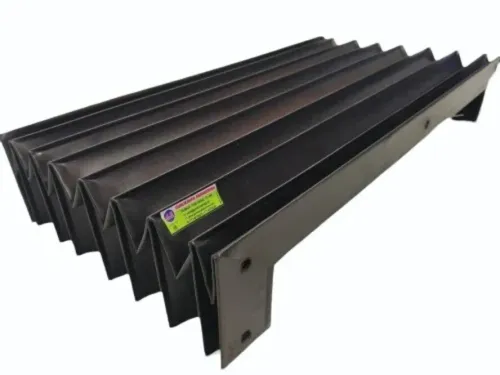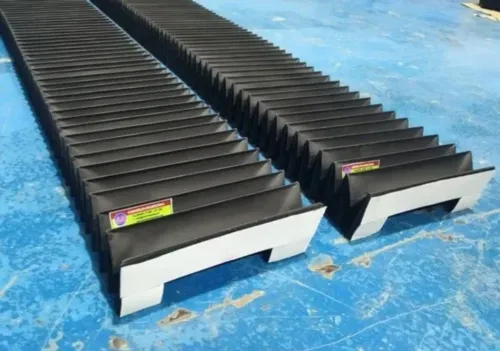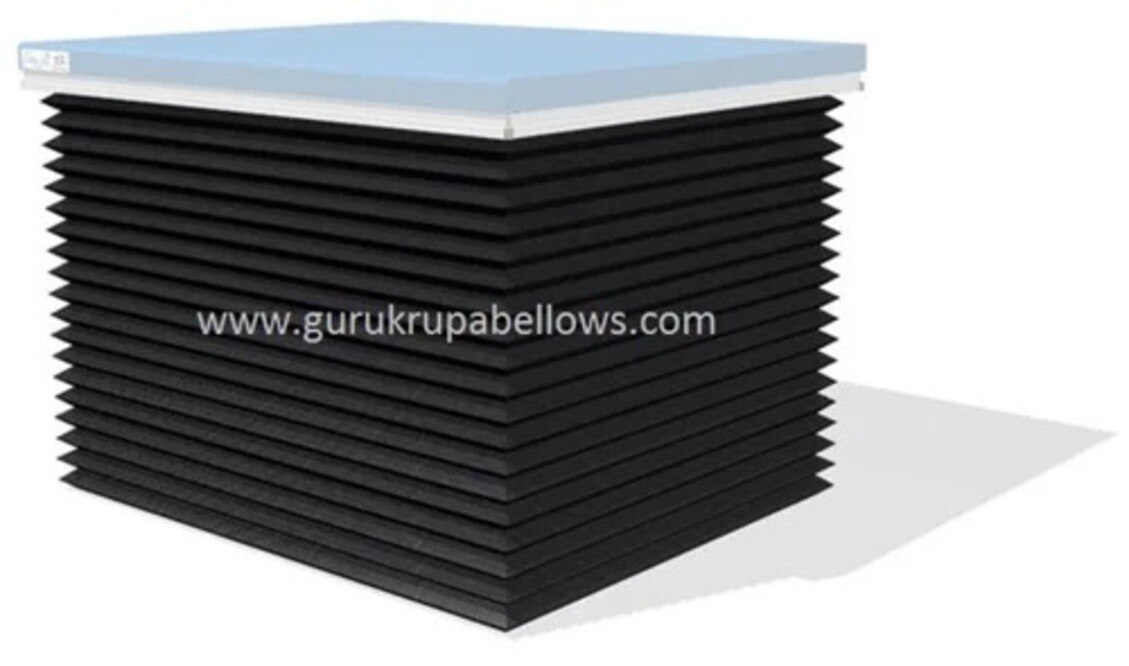
Hydraulic oil on a scissor lift bellow cover calls for more than a quick wipe: the fluid can soften coatings, collect inside folds, and hide damage at seams and mounting points. You will be able to isolate the lift, clean and dry the cover safely, assess whether it needs repair or replacement, and prevent the same leak from contaminating it again.
Key takeaways
- Install rated mechanical supports before touching the cover.
- Blot hydraulic oil before washing; do not force it into folds.
- Replace covers softened, cracked, swollen, or delaminated by oil.
- Test full travel after drying and correcting the leak.
Make the Lift Safe and Identify the Contaminating Fluid
Before scissor lift bellow cover cleaning, make the platform incapable of moving. Lower it fully where the manufacturer permits; otherwise install rated mechanical supports before entering the area or touching the cover. A pendant command or open hydraulic valve is not isolation.
- Stop the lift and isolate the hydraulic supply, electrical disconnect, and any other connected energy source.
- Release stored hydraulic pressure through the manufacturer’s designated procedure, then wait for pressure to dissipate.
- Apply lockout/tagout to each isolation point and keep the keys under the responsible worker’s control.
- Test the controls from a safe position, then verify zero movement and zero residual pressure. Do not place hands beneath an unsupported platform.
- Record the contamination before wiping it away, including colour, odour, location, and any damaged cover areas.
Identify the fluid from machine records, the service log, the container label, and its safety data sheet. Look specifically for mineral-oil hydraulic fluid, biodegradable ester fluid, water-glycol fluid, or a solvent; never treat “hydraulic oil” as a sufficient description.
For hydraulic platform bellow care in Gurgaon, provide the exact fluid grade, additive package, cover material, operating temperature, and exposure duration when seeking advice.
Compatibility depends on that complete combination. Additives can attack coatings or adhesives, while heat and prolonged soaking accelerate swelling, softening, embrittlement, or delamination. If the fluid is unknown, stop cleaning until the supplier or cover maker identifies it and approves the cleaning method.
Remove Hydraulic Oil Without Driving It Into the Folds
Contain the spill before washing. Keep oil out of floor drains, and place drip trays or absorbent booms around the work area. Collect oil-soaked pads, wipes, and removed contaminated material for disposal as industrial waste under the hydraulic fluid safety data sheet and site waste rules.
1. Confirm the lift is isolated, locked out, depressurised, lowered, and mechanically supported. Gain access from the side or a safe work platform; never stand beneath an unsupported platform.
2. Remove bulk oil with absorbent pads or lint-free wipes. Dab rather than scrub, and replace saturated material promptly. Work from clean areas toward contaminated areas so you do not spread oil into clean folds, seams, or guideway clearances.
3. Wash the cover with lukewarm water and a dilute neutral or mildly alkaline detergent. Use a soft nylon brush for fold valleys and a clean cloth for coatings, windows, seams, and end frames. Scissor lift bellow cover cleaning must be gentle because detergent cannot reverse swelling, softening, or delamination already caused by oil.
4. Rinse with low pressure while keeping the nozzle away from folded bellows, sewn or bonded seams, wiper strips, cylinders, guideways, limit switches, and electrical parts.
Pressure washers can drive oil and water behind the cover; brake cleaner, acetone, aromatic or chlorinated solvents, strong alkaline cleaners, abrasive pads, and hard scrapers can attack coatings, adhesives, windows, stitching, and elastomers.
5. Separate the folds and dry the cover fully extended. Do not wash oil into a drain. This scissor lift skirt maintenance step prevents trapped water from carrying abrasive dust into folds or promoting corrosion nearby.
Inspect the Cover and Choose Cleaning, Repair, or Replacement
Cleaning restored the cover only if every fold remains flexible, sealed, and dimensionally stable after drying and movement checks. A clean-looking surface is not acceptance evidence.
- Inspect every fold and pleat for oil trapped between layers, tackiness, swelling, soft spots, blistering, cracking, delamination, exposed reinforcement, and trapped debris.
- Check for distorted folds, pulled stitches, failed welded or bonded seams, and coating that feels sticky or brittle.
- Examine mounting frames, fasteners, end plates, and drain points for looseness, damage, blockage, or oil retention.
- Confirm cylinder clearance through the full stroke; look for contact with rollers, pins, hoses, cylinders, or the structure.
| Decision | Action | When it applies |
|---|---|---|
| Clean and reuse | Dry fully, refit, and test slowly | Material stays flexible, sealed, and dimensionally stable |
| Repair with maker approval | Use a compatible patch, panel replacement, seam resealing, or mounting-hardware renewal | Damage is limited and the maker approves the method and materials |
| Replace | Fit a new cover and verify its travel geometry | Reinforcement is exposed, several folds are cracked, coatings are sticky or brittle, seams have pulled out, or geometry is lost |
A durable scissor lift cover repair needs compatible patch material, adhesive or heat-welding, controlled preparation, and a folding-safe overlap. Do not use ordinary duct tape or generic silicone sealant. During scissor lift skirt maintenance, record defects and reject any cover that catches, bunches, or becomes taut at one stroke position.
Dry, Test, and Prevent a Repeat Contamination
A clean cover is not ready for service until it is completely air-dry. Separate every fold during drying; trapped water can corrode nearby steel and carry abrasive dust into the pleats.
- Confirm that no fold sticks, water remains trapped, or oil hides in a pleat. Wipe suspect areas with a clean, dry cloth and inspect seams, corners, and mounting edges.
- Cycle the lift slowly through its full travel. Watch for rubbing, bunching, stretching, catching, or uneven folding, and check clearance from rollers, pins, hoses, cylinders, and the surrounding structure. A cover that becomes taut at one point is not serviceable.
- Inspect cylinder seals, hose fittings, burst-guard drains, lubrication points, and nearby machinery for the contamination source. Correct the leak or oil mist before reinstalling the cleaned cover, or fresh oil will degrade it again.
- Record the result and set trigger-based inspections after a spill, washdown, unusual noise, visible rubbing, slow platform movement, or repeated oil marks.
For scissor lift skirt maintenance, set inspection frequency by dust load, operating cycles, and site conditions, not calendar time alone. A dusty, oily production area may need shift visual checks and inspection at every planned service; follow the manufacturer’s interval where it is stricter.
For hydraulic platform bellow care in Gurgaon, document the hydraulic-fluid grade and additive package, cover material, operating temperature, cleaning chemical, and expected dust or washdown exposure. “Hydraulic oil” is not precise enough for compatibility decisions.
Specify a Replacement or Local Repair That Will Survive the Application
A durable scissor lift cover repair starts with the application data, not the old cover’s colour. Identify the hydraulic-fluid grade and additives, operating and peak temperatures, exposure duration, dust or washdown conditions, and whether field patching is approved. A small cut needs compatible patch fabric, adhesive or heat welding, prepared surfaces, and a fold-safe overlap.
| Option | Fluid and temperature comparison | Geometry and use |
|---|---|---|
| PVC-coated polyester | Check mineral oil, ester, and water-glycol compatibility; verify continuous and peak temperature limits | Economical for guided folds; avoid tight radii that crack the coating |
| Polyurethane-coated fabric | Compare against the exact fluid and additive package; confirm hydrolysis and temperature resistance | Flexible, but unsuitable if repeated immersion attacks the coating |
| Neoprene | Check oil, solvent, and maximum-temperature resistance | Suits compact folds; confirm it will not swell around cylinders |
| Silicone | Handles higher temperatures; verify resistance to the specific hydraulic fluid | Flexible, but lower tear resistance can affect fast-moving folds |
| Rubberized textile | Compare compound, reinforcement, and temperature rating | Robust for abrasion; confirm bend radius and fold thickness |
| Laminated construction | Check every layer, adhesive, and edge seal | Useful for barriers, but delamination makes repair unreliable |
- Closed and extended height; cover width and length; opening dimensions
- Mounting-hole pattern, end-frame details, cylinder and scissor-arm clearance
- Rubbing, bunching, pulled seams, and every interference point
Quote labour, containment, oil-soaked-waste disposal, downtime, removal, reinstallation, and slow full-travel testing. A bellow is wrong for rigid guarding, frequent immersion, extreme heat, sparks, high-pressure washdown, or regular inspection access.
For hydraulic platform bellow care in Gurgaon, arrange an inspection with GURUKRUPA BELLOWS PVT LTD and send the fluid SDS, photos, dimensions, and access constraints before requesting a site visit. Repair the leak first.
Related products
 | Bellow Cover ₹5000 Product Details: Brand GURUKRUPA Color Black-Blue Size Customised With the support of our excellent team workers, we have been delivering the best... View product → |
 | Product Details: Brand GURUKRUPA Color Black-Blue Size Customised With support of our excellent team workers, we have been delivering the best... View product → |
Frequently asked questions
How do you make a scissor lift safe before cleaning its bellow cover?
Lower the platform fully where the manufacturer permits. Otherwise install rated mechanical supports before entering the area or touching the cover. A pendant command or open hydraulic valve is not isolation.
How should you remove hydraulic oil from a scissor lift bellow cover?
Remove pooled oil first, then clean without driving contamination deeper into the folds. Avoid aggressive scrubbing that stretches fabric, damages coatings, or forces oil into seams.
When should you repair or replace an oil-contaminated scissor lift cover?
Inspect the cover for softening, swelling, cracking, delamination, damaged stitching, and loss of flexible movement. Repair limited damage when the material remains sound; replace it when oil has degraded the fabric, coating, or attachment points.
What should you check before returning a cleaned scissor lift to service?
Dry the cover completely, correct the hydraulic leak, and test the lift through its full permitted travel. Watch for rubbing, folding, stretching, snagging, and renewed oil contamination.