A telescopic cover usually sticks when contamination, distorted sections, excessive wiper pressure, or mounting misalignment raises static friction above the force available from the machine axis. By the end, you will be able to separate a cover jam from an axis fault, inspect a stopped machine safely, clean the right surfaces, and decide whether adjustment, wiper replacement, or a new cover is justified.
Key takeaways
- Check static friction, chips, wiper lips, and guide alignment before blaming the axis.
- Stop the machine and isolate power before inspecting a sticking telescopic cover.
- Remove chips from the outside inward without forcing debris beneath overlapping sections.
- Redesign or replace the cover when travel geometry, heat, or contamination exceeds its limits.
The friction and Gurgaon conditions behind a sticking cover
Static friction is the usual reason a telescopic cover sticks. Overlapping steel boxes, guide surfaces, and wiper lips need more force to start moving than to keep moving, so the cover holds, then releases suddenly in a stick-slip jerk. That shock can look like a servo, ballscrew, or linear-guide fault.
The practical answer to why telescopic bellow covers for stick in gurgaon is usually contamination, clearance, or alignment rather than the city itself. Check for:
- Cast-iron chips, grinding dust, welding spatter, and dried coolant packed between sliding boxes
- Torn, hardened, or over-tight wiper lips rubbing the cover
- Distorted sections, loose fasteners, inadequate overlap clearance, or incorrect installation
- Corrosion or blocked drainage that leaves abrasive sludge inside the cover
Gurgaon’s construction dust, road dust, hot dry periods, and monsoon humidity worsen those conditions. Worn wipers admit fine abrasive particles; moisture combines with metal dust and coolant residue to form paste that increases drag and corrosion.
Temperature changes add another trigger: steel sections and the machine structure expand as cutting, warm coolant, or solar heating raises temperature. A cover that moves cold but binds hot needs checking at operating temperature, not adjustment during a cold shutdown.
A flexible fabric bellow is not a substitute for a steel telescopic cover where hot chips, sharp swarf, or weld spatter are present. Each protection type fails differently.
Read the symptoms before blaming the machine axis
A telescopic cover jam usually produces uneven resistance at one part of the stroke, while a machine-axis fault affects movement even after the cover is isolated. Static friction causes stick-slip: the cover holds, then releases with a jerk.
Record these clues before resetting the alarm.
| Symptom | Points to a cover jam | Points to an axis or control fault |
|---|---|---|
| Motor-load spike | Appears at the same cover position; current drops when the cover releases | Continues with the cover uncoupled |
| Following-error alarm | Follows a scrape, jerk, or box collision | Appears during smooth travel with no cover contact |
| Uneven box overlap or metal dust | Indicates distorted sections, guide-shoe damage, or trapped chips | Not explained by a linear guide or ballscrew alone |
| Axis will not move | Cover remains tight when tested through its stroke by hand after isolation | Brake, servo, ballscrew, or linear guide still resists movement |
| Alarm at one coordinate | Cover catches before that position or leaves lifted sections | Travel-limit fault repeats at the same machine coordinate |
Check both extension and retraction. A cover that drags only when hot points to thermal growth; coolant leakage past wipers and scraping noise strengthen the diagnosis. These telescopic bellow cover problems deserve isolation before blaming the servo.
A safe inspection sequence for a stopped machine
Do not jog the axis against resistance. For telescopic bellow cover jamming in gurgaon, stop the machine, isolate electrical and stored energy, and apply lockout before touching the cover.
1. Record the alarm, axis position, travel direction, scraping sound, and whether the stop occurred during extension or retraction. Photograph uneven gaps, lifted boxes, metal dust, and coolant leakage.
2. With power isolated, inspect both sides and the underside. Look for cast-iron chips, abrasive dust, dried coolant, trapped swarf, torn or hardened wiper lips, loose screws, rubbing marks, and blocked drainage holes.
3. Check alignment without forcing the sections. A box sitting high, a narrowing gap, a shifted mounting bracket, or a bent guide shoe points to mechanical interference rather than a simple control fault.
4. Remove loose contamination using the approved cleaning method, then verify that fasteners and mounts are secure. Do not pry overlapping boxes or pull the cover by hand.
5. Restore power only under an authorised test procedure and run the axis at reduced speed through short travel increments. Stop immediately if resistance returns during extension or retraction.
6. Repeat the test after the machine reaches its normal operating temperature. If the cover binds hot but not cold, investigate thermal growth and alignment before changing clearances.
If the cover moves freely while the axis still alarms, have the servo, brake, ballscrew, linear guide, and travel-limit circuit checked separately.
Clean the cover without driving chips deeper
Remove contamination with power isolated and the axis secured against movement. Vacuum loose chips from each overlap and around the wiper lips; then use a soft nylon brush and lint-free cloth lightly dampened with an approved cleaner.
Do not blast compressed air into the joints, because it drives cast-iron dust, dried coolant and grinding debris behind the boxes.
- Lift each accessible section only as far as the manufacturer’s service instructions allow; never force a stuck box.
- Pick out wedged swarf with a plastic scraper or wooden tool, not a screwdriver that can score sliding surfaces.
- Wipe coolant residue from the wipers and drainage paths. Clear blocked drain holes so monsoon moisture does not remain inside.
- Replace a torn, hardened, swollen or over-compressed wiper instead of tightening it harder; excessive lip pressure creates drag.
- Tighten loose fasteners to the specified torque and correct any shifted mounting bracket before testing.
A telescopic bellow cover failure can begin with metal dust at one edge, an uneven gap or scraping on retraction. After cleaning, move the cover manually if safe, then jog the axis at reduced speed through short increments; stop immediately if resistance returns.
Do not repeatedly drive the axis against the obstruction, or bent sections and damaged guide shoes can turn a cleanable jam into a cover replacement.
Use condition-based checks instead of a fixed guess at maintenance
Inspect after a trigger, not only on a calendar. Heavy chip production, grinding nearby, a coolant spill, a monsoon shutdown, or rising travel resistance justifies a check because Gurgaon dust and moisture can turn a small seal leak into a jam.
- If chips, road dust, dried coolant, or welding debris appear between boxes, clean the overlaps and wiper channels before the next cycle. Trapped abrasive material increases friction and wedges sections apart.
- If a wiper is torn, hardened, swollen, or polished on one edge, replace the strip. If a new wiper causes high breakaway force, check its elastomer, profile, and compression; excessive pressure brakes the cover.
- If screws show witness marks, looseness, or fresh rubbing around brackets, inspect every mounting and internal guide fastener. Retighten to the specified torque, because one shifting guide can skew an entire section.
- If coolant or rainwater remains inside after washing or monsoon operation, clear drain slots and channels. Standing moisture promotes corrosion and carries fines into sliding surfaces.
- If left and right box overlap or gap differs, measure both sides with the cover extended and retracted. A changing difference indicates misalignment, bent sheet metal, damaged guide shoes, or loose mounting.
Record the trigger, location, and travel direction for each inspection. That trend reveals telescopic bellow cover problems before resistance becomes a complete jam.
When adjustment is enough and when the cover needs redesign or replacement
Do not replace the cover after one jam. Clean it when chips, dried coolant, or abrasive dust are trapped between boxes or wiper lips and the sections remain straight. If travel improves after cleaning and the specified lubricant is applied, the cause was contamination rather than a telescopic bellow cover failure.
- Choose alignment when gaps are uneven, one box rises, or rubbing marks appear on one side. Check mounting level, guide clearance, and loose fasteners before adjusting.
- Replace a wiper when its lip is torn, hardened, swollen, or excessively compressed. Use the specified cross-section and elastomer; a tighter substitute can create high breakaway force.
- Repair the cover when damage is limited to a replaceable wiper, bent bracket, loose joint, or minor section deformation that can be restored without reducing clearance.
- Replace or redesign it when boxes remain distorted, clearances are inadequate, corrosion has weakened sliding parts, or the jam returns after cleaning and alignment.
- Select a different specification when chip temperature, welding spatter, coolant chemistry, travel speed, acceleration, or stroke exceeds the present design. A fabric bellow is not a substitute for steel protection against heavy sharp swarf.
For telescopic bellow cover jamming in Gurgaon, record dust, monsoon moisture, coolant residue, and temperature changes alongside the fault. GURUKRUPA BELLOWS PVT LTD can use those operating details, dimensions, stroke, and mounting photographs to assess whether repair or a new specification is justified.
Related products
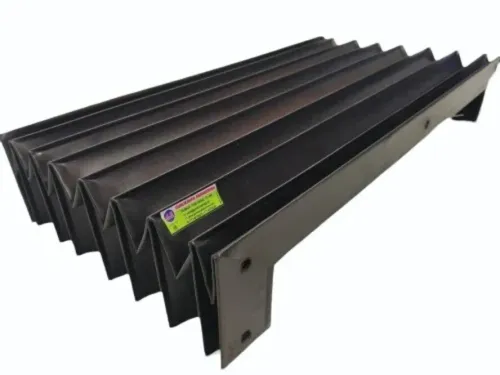
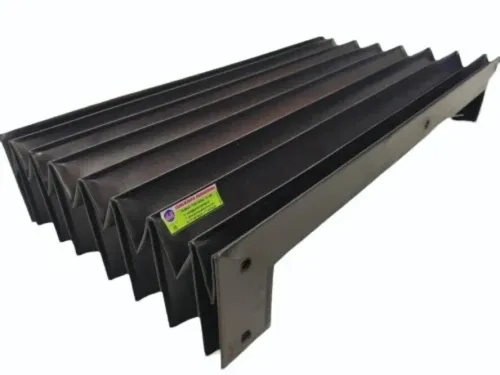
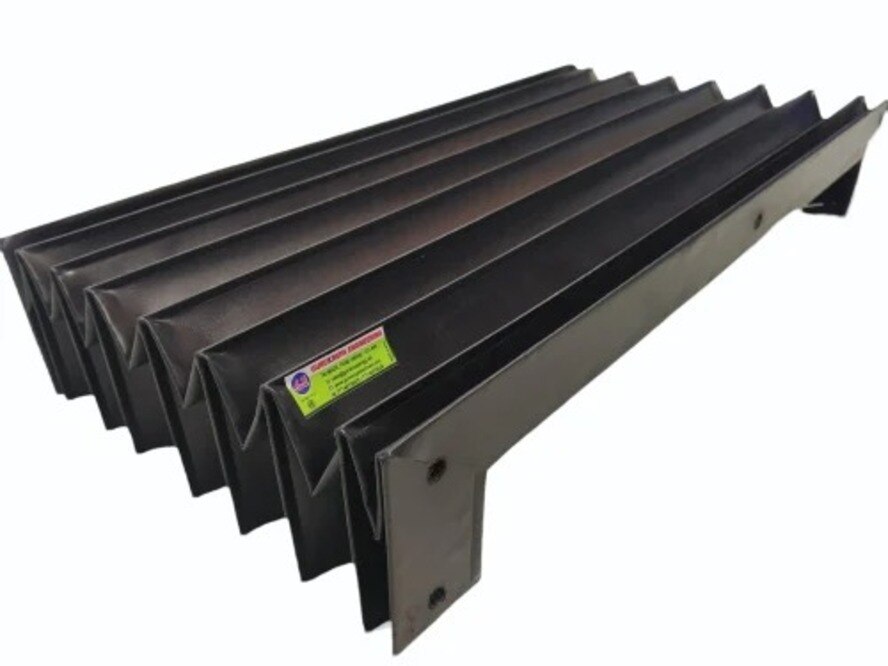
 | Telescopic Bellow Cover ₹1000 Product Details: Brand GURUKRUPA Ours is a distinguished name in the business that manufactures and supplies Telescopic Bellow Cover that is vastly... View product → |
 | Telescopic Cover Product Details: Brand GURUKRUPA Being one of the trustworthy names of the industry, we bring forth CNC Telescopic Cover that can be availed at... View product → |
Frequently asked questions
Why do telescopic bellow covers stick during machine travel in Gurgaon?
Static friction between overlapping steel boxes, guide surfaces, and wiper lips can hold the cover until it releases suddenly. Dust, metal chips, humidity, heat, corrosion, and misalignment increase the force required to start travel.
How can you tell whether the cover or machine axis is causing the jerk?
Observe the cover during slow manual or controlled travel after stopping safely. Uneven gaps, folded wipers, scraped surfaces, trapped chips, or a delayed cover movement point toward the cover; axis alarms, abnormal motor load, or ballscrew noise require machine-side investigation.
How should you inspect a sticking telescopic bellow cover safely?
Stop the machine, isolate electrical and stored energy, wait for hot surfaces to cool, and follow the machine maker's lockout procedure. Inspect the boxes, wipers, guides, fasteners, lubrication points, and travel clearances without placing hands between moving sections.
When does a telescopic bellow cover need replacement or redesign?
Adjustment is enough when loose fasteners, minor alignment errors, contamination, or worn wipers cause the problem. Replace or redesign the cover when sections are permanently distorted, clearances are wrong, corrosion has weakened the material, or heat and chip loads exceed its construction.
Related products
 | Telescopic Cover ₹5000 Product Details: Brand GURUKRUPA Being one of the trustworthy names of the industry, we bring forth CNC Telescopic Cover that can be availed at... View product → |
 | Steel Telescopic Cover Product Details: Brand GURUKRUPA Our company is considered a renowned name in the field that manufactures and supplies Steel Telescopic Cover. View product → |
 | CNC Telescopic Cover Product Details: Brand GURUKRUPA Being one of the trustworthy names of the industry, we bring forth CNC Telescopic Cover that can be availed at... View product → |
 | Rollway Cover Product Details: Brand GURUKRUPA Color Steel Material Steel Size Customised Our company is engaged in manufacturing Rollaway Cover that is quite... View product → |