An uncovered axis exposes guideways, ballscrews and linear bearings to chips, abrasive dust, coolant, oil mist and condensation. You will be able to compare contamination risk, measure the required motion envelope, reject unsuitable cover designs and choose between a bellows system, steel cover or another protection method.
Key takeaways
- Covered travel blocks chips and coolant from guideways and moving components.
- Measure compressed length, extended length, stroke, mounting space, and folded height.
- Match fabric, coating, seals, and reinforcement to heat, oils, chemicals, and chip load.
- Choose telescopic steel covers or guarding when bellows cannot tolerate the environment.
What changes when machine travel is covered
Covering CNC travel provides practical CNC machine protection: it keeps contamination away from guideways and moving components instead of allowing every chip and fluid to reach them.
| Option | Contamination exposure | Production consequence |
|---|---|---|
| Covered with machine bellow covers | Chips, grinding dust, coolant, oil mist, hot swarf and abrasive particles are intercepted; corrosion risk falls when the cover, end wipers and seals remain intact. | Cleaner lubricant, slower bearing-track and ballscrew-nut wear, less wiper damage, lower friction, steadier servo load and fewer positioning errors. |
| Uncovered travel | Chips, dust, coolant, oil mist, hot swarf and moisture reach rolling surfaces, screws and cavities directly. | Lubricant becomes contaminated, abrasive particles cut bearing tracks, wipers wear faster, friction rises, servo load changes and positioning errors appear. |
Uncovered travel can look acceptable during dry cutting or a short demonstration. Production cycles expose the weakness through higher chip volume, coolant flow and repeated reversals.
Hyderabad adds a combined dust-and-fluid problem: dry-season dust mixes with way oil or coolant into abrasive paste, while humidity and wash-down water can remain trapped in folds or guideway cavities and promote corrosion. Inspect behind the wipers and around the guideways after representative cycles, not from the machine exterior.
A cover controls contamination; it does not correct alignment, thermal growth, lubrication quantity, ballscrew support or servo tuning. Also check whether the cover leaves a ballscrew, linear scale or cable loop exposed.
How a bellow follows the axis, and what you must measure
A CNC bellow cover follows an axis by folding and unfolding its reinforced sections, not by stretching across the guideway. Internal frames support each fold and control compression, while end plates and mounting frames connect the cover to the fixed structure and moving carriage.
Specify both extension and compression limits so folded material cannot block travel or rub adjacent parts.
- Record axis travel with the carriage fully retracted and fully extended. Measure guideway width, cover height and width, closed or folded length, extended length, folded thickness, and available end clearance at both positions.
- Mark mounting-hole positions, bolt access, end-plate locations and the complete cover envelope. Include mounting frames, wipers, drain paths and the space needed to remove the cover.
- Locate every obstruction: cable carriers, coolant lines, fixtures, pallets, doors, tooling and service-access panels. Check the carriage through its entire stroke, not only at its parked position.
- Measure the minimum bend or fold radius, confirm mounting orientation, and identify any horizontal low point where coolant can pool. A drain path must not be sealed by a compressed fold.
- Record the cover’s moving mass, maximum speed and acceleration alongside the available clearance. A nominal axis stroke is not the available stroke after folded material, frames and wipers consume space.
A guideway cover and a cable carrier solve different problems. Use an independently engineered energy chain for cables, hoses and coolant lines; routing them loosely inside the bellows invites rubbing, excessive bending, snagging and premature failure.
How to specify materials, motion limits and chemical compatibility
A supplier’s “oil resistant” or “high-temperature” claim is not a specification. For machine bellow covers, obtain the actual fabric or coating, seam construction, reinforcement, wear strips, internal frames and replaceable-skin details, then match them to the machine’s complete motion envelope.
- List the exact coolant concentration, synthetic or mineral cutting oil, biocide, alkaline cleaner, tramp-oil mixture and wash-down chemical. Request compatibility data for each one, plus ambient temperature and chip-temperature limits.
- Obtain stated limits for speed, acceleration, reversal frequency, cycle count, compression ratio and moving mass. Request the minimum fold radius, unsupported-span limit and load rating; if testing is cited, ask for the named test standard and report.
- Check whether the wiper is replaceable and obtain its specified contact pressure. A cover that still moves can already have failed through puncture, fold abrasion, delamination, cracking, sagging, coolant pooling or heat damage.
| Specification | Obtain in writing | Why omission causes trouble |
|---|---|---|
| Material and construction | Fabric or coating, seams, reinforcement, wear strips, frames and skin replacement method | Coolant exposure or sharp chips can destroy sealing without stopping motion |
| Motion and support | Folded and extended lengths, speed, acceleration, reversals, radius, unsupported span and load | Short, repeated reversals can fatigue folds faster than headline speed suggests |
| Installation | Mounting holes, clearances, drain orientation and full envelope | A correct stroke can still interfere with the carriage or trap coolant |
Require a production drawing before approval. It must show extended length, folded length, mounting holes, clearances and drain orientation. Verify the drawing against full retraction and extension, not nominal axis travel.
When a bellows cover is the wrong protection method
A bellows is the wrong choice when sharp, hot or forceful contamination can puncture folds, abrade seams, pool in horizontal sections or strike the cover at speed. Use the machine’s actual hazard—not the fact that an axis moves—to choose the protection architecture.
| Option | Protection and trade-off | Best fit |
|---|---|---|
| Fabric or coated-fabric bellows | Low mass, quiet motion and compact folded length; vulnerable to sharp chips, hot swarf and direct high-pressure coolant | Clean-to-moderate chip loads |
| Telescopic steel or apron cover | Rigid impact barrier with higher mass, mounting rigidity, acceleration demand, noise and folded envelope | Heavy chips, hot swarf, welding spatter, severe abrasion or exposed fire risk |
| Rollway cover | Compact rolling protection with limited coverage outside its rolling path | Tight installations needing compact protection |
| Scrapers or wipers | Remove contamination at the contact surface but do not shield the complete guideway | Supplementary sealing |
| Sheet-metal guard or chip deflector | Blocks a defined impact zone rather than enclosing the axis | Local chip or coolant attack |
| Air purge or enclosure seal | Reduces contamination entry but cannot replace physical impact protection | Supplement to a cover |
Check vertical, inverted and horizontal installations separately. Gravity changes sagging, fold support and coolant drainage, while excessive wiper pressure can increase friction.
Before comparing cnc guideway covers in hyderabad, map every exposed component. A bellows can protect the guideway yet leave a ballscrew, linear scale or cable loop exposed; an uncovered-looking guideway can still have wipers or a partial guard.
Compare full-stroke interference, mounting rigidity, service access and acceleration demand. Reject any design that blocks tooling, fixtures, pallets, doors or inspection access.
How to make and verify the protection decision in a Hyderabad shop
A defensible retrofit starts with a protection map, not a catalogue photograph. Mark every exposed guideway, ballscrew, linear scale, cable loop, carriage interface and existing wiper, then identify the contaminant with the greatest consequence.
| Architecture | Protection gained | Exposure still to verify |
|---|---|---|
| Uncovered travel | Lowest cost and no added envelope | Chips, dust, coolant and condensation reach rolling surfaces |
| Bellow cover | Shields guideways and moving interfaces with low added mass | Ballscrews, scales, cable loops, folds and seals may remain exposed |
| Telescopic steel cover | Stronger barrier against hot, sharp or high-volume chips | Added mass, folded-box clearance, drainage and service access |
For cnc machine bellow covers for comparison in hyderabad, compare the machine’s complete protection architecture rather than “covered” against “uncovered.” Include wipers, enclosure seals, air purge and chip deflectors.
Run the proposed arrangement through representative production cycles: use the largest chip, highest coolant flow and fastest repeated reversals. Then inspect behind the wipers, inside folds, at mounting frames and along guideway rolling surfaces. Record trapped coolant, abrasive paste, punctures, fold wear, seal gaps and interference.
Obtain a dimensioned drawing and written motion, temperature, chemical-compatibility and service limits before ordering. GURUKRUPA BELLOWS PVT LTD can be included in the quotation process, but compare its submitted data with competing designs against measured travel, mounting points and clearance.
Approve only after a full-stroke check with tooling, fixtures, pallets, doors and cable carriers. Schedule inspections around coolant changes, monsoon wash-downs and high-chip production; an intact-looking exterior proves little.
Related products
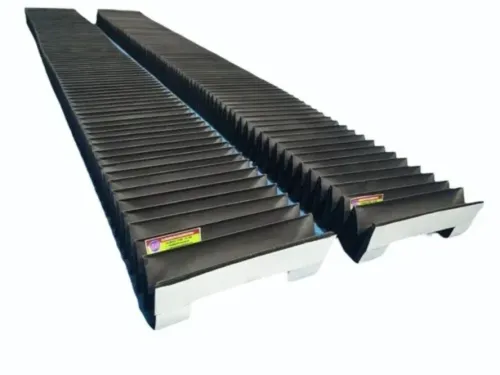
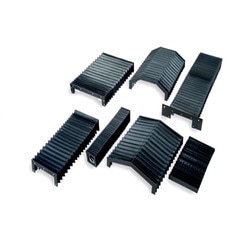 | CNC Bellow Cover Product Details: Brand GURUKRUPA Color BLACK Size ANY We are considered a well-known name in the business that manufactures and supplies CNC Bellow... View product → |
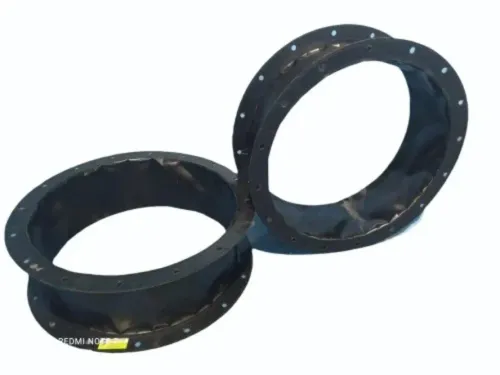
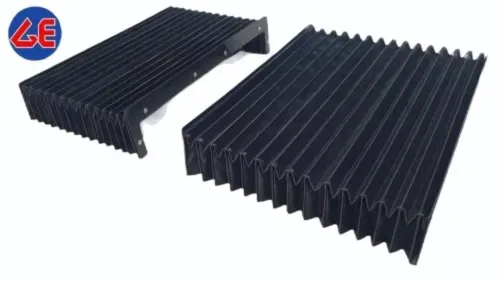
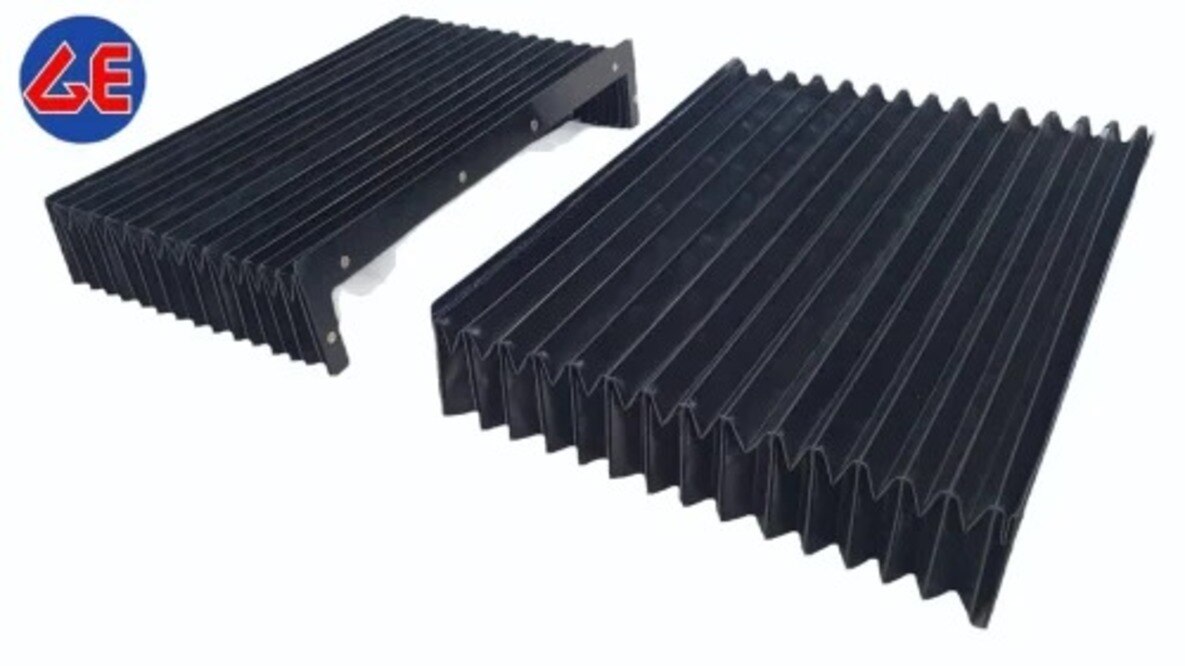
 | Bellow Cover ₹1000 Product Details: Brand GE Color Black-Blue - Gray -White Size ANY ( C shape, Square, Round, Rectangular) Ours is a trustworthy name in the business... View product → |
Frequently asked questions
What changes when CNC machine travel is covered?
A correctly fitted bellow cover reduces chip, coolant, dust, and abrasive-particle contact with guideways, screws, cables, and moving components. It also adds inspection points and requires checks for tears, loose mounts, rubbing, and restricted motion.
What must you measure before specifying a CNC bellow cover?
Measure axis stroke, fully compressed length, fully extended length, folded height, width, mounting-face dimensions, clearance to nearby parts, and the cover’s movement direction. Confirm the cover does not contact the tool, workpiece, chip conveyor, or coolant lines at either travel limit.
How do you choose bellow materials and chemical compatibility?
Specify the fabric and coating against the actual coolant, cutting oil, cleaning chemicals, temperature, chip shape, travel speed, and heat exposure. Request compatibility information for the exact fluid and operating temperature rather than relying on the generic term 'oil resistant'.
When is a bellows cover the wrong protection method?
Use another method when hot or sharp chips can puncture the fabric, when the cover faces severe abrasion or flame exposure, or when available clearance prevents safe folding. Telescopic steel guideway covers, rigid guards, chip shields, or a combined system may suit those conditions better.
Related products
 | CNC Telescopic Cover Product Details: Brand GURUKRUPA Being one of the trustworthy names of the industry, we bring forth CNC Telescopic Cover that can be availed at... View product → |
 | Round Bellow Covers ₹1000 To match with our reputation in the market, we are here to present an unparalleled assortment of Round Bellow Covers. View product → |