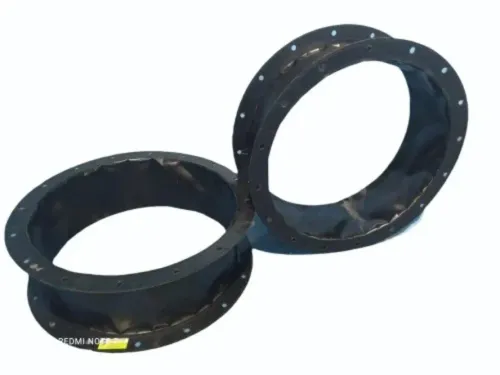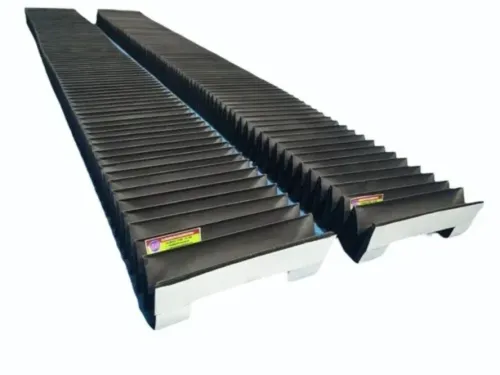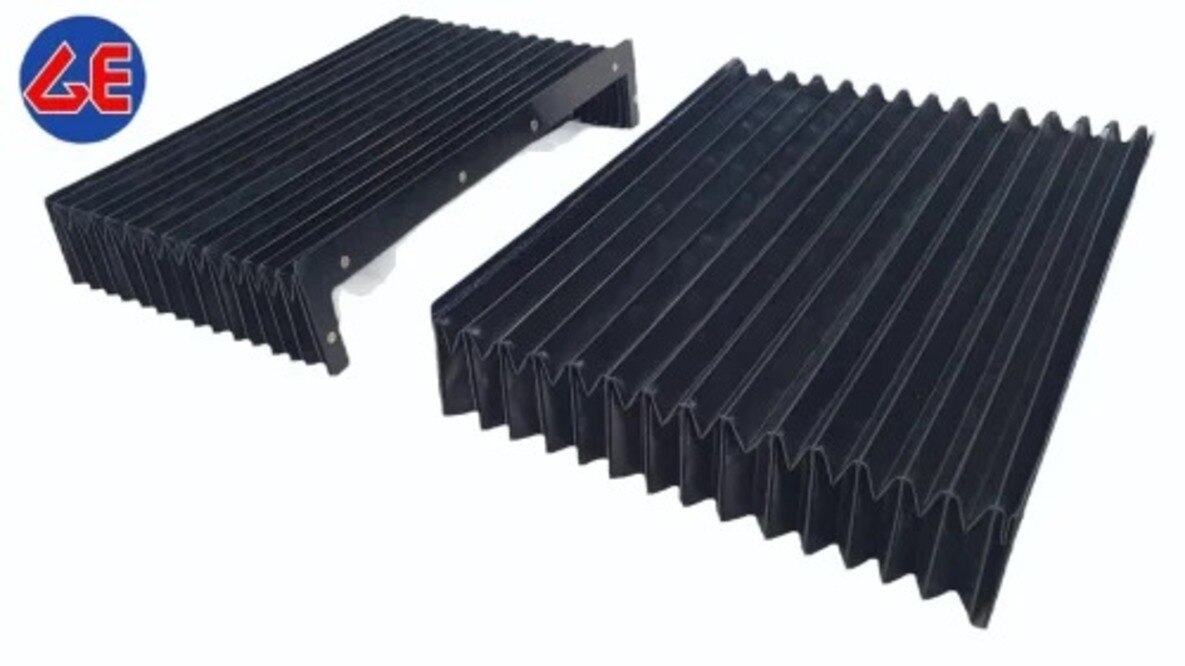
A CNC bellow cover is designed around the machine’s actual travel, clearance and working conditions, not selected from nominal axis length alone. By the end, you will know what measurements and operating data to provide, how fabric and telescopic covers are built, and how to install and test either type without creating interference or premature failure.
Key takeaways
- Measure the full machine envelope, including extension and compressed space.
- Join bellows with heat sealing, stitching, adhesive, or clamping suited to the material.
- Choose steel covers for hot chips and fabric bellows for flexible, lighter protection.
- Align mounting points so the cover moves without side load or rubbing.
Start With the Machine Envelope, Not the Axis Length
A correct cover is sized from the machine’s complete travel envelope, not from nominal axis length alone. Measure the protected travel, maximum extension, available compressed space, guideway width, fold height, and the clearance around the moving carriage. A cover that reaches the axis ends can still bunch against a housing when compressed.
Give the designer these inputs:
- Fixed and moving mounting-face locations, including bolt pattern, end-frame dimensions, and any slotted holes
- Axis speed, acceleration, cycle frequency, and travel orientation
- Guideway width, exposed surfaces, adjacent obstructions, and the machine’s minimum clearance
- Coolant type, oil exposure, chip size and volume, abrasive dust, sparks, and operating temperature range
- Required wipers, wear strips, guides, or reinforcement at contact points
Fold height and fold count set the extended and compressed lengths. A taller fold can provide more extension with fewer folds, but it also creates a larger folded package and increases the risk of sagging or fold interference. Check the compressed length against actual machine clearance.
The CNC bellow covers process should preserve the machine’s guiding function: the cover protects the way but does not correct alignment, support the carriage, or replace lubrication and guideway wipers unless designed for those duties.
For CNC machine bellow covers installation, align both mounting points with the protected axis before fastening; never twist the cover or force a skewed frame into place.
How Fabric CNC Bellows Are Built and Joined
Coated fabric forms the flexible body, but the cover works only when its geometry, reinforcement and attachments match the machine stroke.
The CNC bellow covers process starts by converting the measured travel, compressed length and fold height into a pattern, then selecting PVC-coated polyester, polyurethane, silicone or PTFE-based fabric for the coolant, heat and abrasion involved.
- Cut fabric panels to the developed pattern, including allowances for seams and end attachments.
- Form the fold geometry over a fixture so every pleat opens and compresses evenly without rubbing.
- Add wear strips, corner reinforcement, aramid or metal support, and chip deflectors where the application demands more protection than fabric alone.
- Join the folds, side walls and end sections using the specified seam or bonding method.
- Fit end frames, mounting plates, guide elements and wipers, then check the extended and compressed dimensions.
Joining method controls service life. Unsealed stitching can leak coolant through needle holes, while excessive welding heat can distort or embrittle a coated textile.
| Method | Main benefit | Main risk |
|---|---|---|
| Sewn seam | Flexible and repairable | Leakage unless sealed or protected |
| Hot-air or high-frequency weld | Clean, sealed joint | Heat can damage the coating |
| Adhesive bond | Useful for selected materials | Poor compatibility causes peeling |
| Mechanical fastening | Replaceable panels or frames | Fasteners can catch chips or create gaps |
Knowing how CNC machine bellow covers are made in Hyderabad requires more than a location label: request the material specification, joint method and a full-stroke test record. A lightweight fabric-only cover is the wrong choice where heavy hot chips can settle in the folds.
How Telescopic Steel Covers Differ From Fabric Bellows
A telescopic steel cover is a guided assembly of overlapping sheet-metal sections, not a stack of loose boxes. CNC telescopic cover manufacturing cuts and bends the sections, fits rollers or sliding guides, installs scrapers and wipers, then checks section overlap, squareness, guide clearance and operating force across the full stroke.
The cnc bellow covers process produces a flexible enclosure by cutting coated fabric panels, forming folds over a fixture, joining layers by sewing, high-frequency welding or hot-air welding, and adding frames, reinforcements and mounting plates. Uncontrolled welding heat can distort or embrittle the coating; unsealed stitching can create leakage paths.
| Option | What it protects against | When it applies |
|---|---|---|
| Fabric bellow | Dust, mist, light chips and flexible movement | Use where low mass, compact folds or irregular geometry matter |
| Telescopic steel cover | Heavy swarf, impact, grinding dust and repeated chip loading | Choose it when rigid overlapping sections can shed chips and coolant away from the guideway |
| Wiper alone | Surface contamination at an exposed edge | Use it as a wear part on a cover, not as the enclosure itself |
| Simple guard | Direct access, splash or occasional debris | Use it where no moving seal must follow the axis |
A fabric-only cover can fail when chips enter or sit in its folds. Add lamellas, external slats, aramid or metal reinforcement, or chip deflectors when the application demands flexibility but faces abrasion. Steel sections still need correctly selected wipers; they are replaceable seals, not permanent barriers.
Install the Cover Without Adding Side Load
A safe stroke check begins with the cover loosely positioned on the machine, not with fully tightened fasteners. For CNC machine bellow covers installation, align the fixed and moving mounting points with the protected axis, then use shims or slotted holes to remove any skew before securing the frames.
1. Confirm that the guideway, cable carrier and mounting faces are clean. Keep the bellow or telescopic cover parallel to the axis; do not twist it or force a misaligned end frame into place.
2. Move the axis by hand, or at the lowest jog speed, through its complete stroke. Check that the cover reaches full extension and compression without rubbing, bunching, scraping, fold-to-fold abrasion, snagging on fasteners or pulling on either end frame.
3. For a telescopic cover, watch every section as it opens and closes. Each box must remain square, overlap correctly and travel on its rollers or sliding guides without binding; scrapers and wipers must touch evenly without excessive drag.
4. Tighten the mounting fasteners only after the slow test passes, then repeat the full stroke. Cycle the axis at progressively higher speeds while monitoring noise, vibration, motor current and any abnormal resistance.
Stop immediately if the cover carries guideway loads, sags, contacts a chip guard or changes operating force during travel. Correct the alignment, clearance or mounting position before production use; thicker material will not fix side load.
What to Verify Before Dispatch and Production Use
Do not release the cover on a supplier’s description alone. Request the approved assembly drawing, showing protected travel, compressed and extended lengths, fold height, mounting faces, guideway width, end-frame positions, fastener locations and allowable clearances. The drawing must match the machine revision being built.
Ask for a material and construction specification that names the coated fabric or sheet grade, reinforcement, wiper material, joining method, coating, temperature range and coolant or oil compatibility. “Made in Hyderabad” does not identify performance; the evidence does.
This is the standard a buyer should apply when assessing how CNC machine bellow covers are made in Hyderabad.
Verify these records before dispatch:
- Dimensional inspection report against the approved drawing, including compressed length, full extension, width, squareness and mounting-hole positions.
- Material certificates or supplier declarations for fabric, elastomer, steel, reinforcement and scraper materials.
- Process record identifying sewing, bonding, heat-welding or mechanical fastening, plus any coating or surface-treatment batch.
- Full-stroke test record showing low-speed and operating-speed travel without rubbing, bunching, snagging, excessive force or section overlap failure.
- Temperature, coolant, chip-load and chemical-compatibility limits stated in writing.
Document the CNC machine bellow covers installation with photographs of aligned fixed and moving mounts, shims used and final clearances. GURUKRUPA BELLOWS PVT LTD should be asked for this evidence just as any supplier should.
| Evidence | What it proves | Reject when |
|---|---|---|
| Approved drawing | Fit and travel match | Revision or dimensions are missing |
| Test record | Safe movement through stroke | No measured full-stroke result |
| Material specification | Suitability for conditions | Limits are unnamed |
Related products
 | Bellow Cover ₹1000 Product Details: Brand GE Color Black-Blue - Gray -White Size ANY ( C shape, Square, Round, Rectangular) Ours is a trustworthy name in the business... View product → |
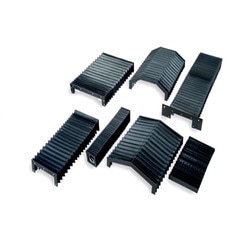 | CNC Bellow Cover Product Details: Brand GURUKRUPA Color BLACK Size ANY We are considered a well-known name in the business that manufactures and supplies CNC Bellow... View product → |
Frequently asked questions
What measurements are needed before making CNC machine bellow covers?
Measure protected travel, maximum extension, compressed length, guideway width, fold height, carriage clearance, and mounting locations. Check the entire machine envelope rather than nominal axis length alone.
How are fabric CNC bellows built and joined?
Fabric bellows use selected coated fabrics, internal or external support components, formed folds, and end frames. Manufacturers join sections with methods such as heat sealing, stitching, adhesive bonding, or mechanical clamping according to the material and duty.
When should you choose a telescopic steel cover instead of a fabric bellow?
Choose a telescopic steel cover when the application produces hot, sharp, heavy chips or demands rigid protection. Fabric bellows suit applications that need low weight, flexible movement, or compact folded storage.
How do you install CNC bellow covers without adding side load?
Align the cover with the guideway and moving carriage, fix the mounting frames squarely, and verify free movement through the full stroke. Remove twists, rubbing, unsupported sag, and mounting misalignment before production use.
What should you verify before dispatch and production use?
Verify the extended and compressed dimensions, fold height, mounting-hole pattern, guideway clearance, material and joining quality, travel smoothness, and interference at both axis ends.
Related products
 | CNC Telescopic Cover Product Details: Brand GURUKRUPA Being one of the trustworthy names of the industry, we bring forth CNC Telescopic Cover that can be availed at... View product → |
 | Bellow Cover ₹5000 Product Details: Brand GURUKRUPA Color Black-Blue Size Customised With the support of our excellent team workers, we have been delivering the best... View product → |
 | Telescopic Cover ₹5000 Product Details: Brand GURUKRUPA Being one of the trustworthy names of the industry, we bring forth CNC Telescopic Cover that can be availed at... View product → |
 | Telescopic Cover Product Details: Brand GURUKRUPA Being one of the trustworthy names of the industry, we bring forth CNC Telescopic Cover that can be availed at... View product → |