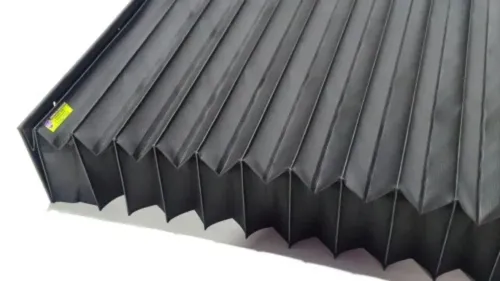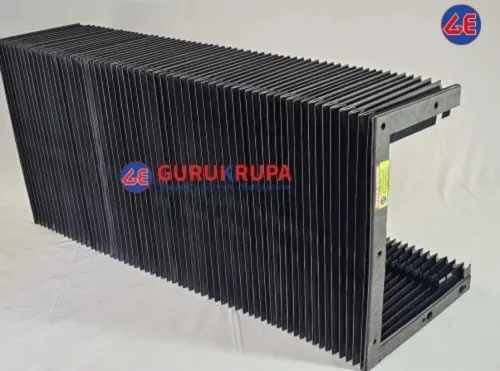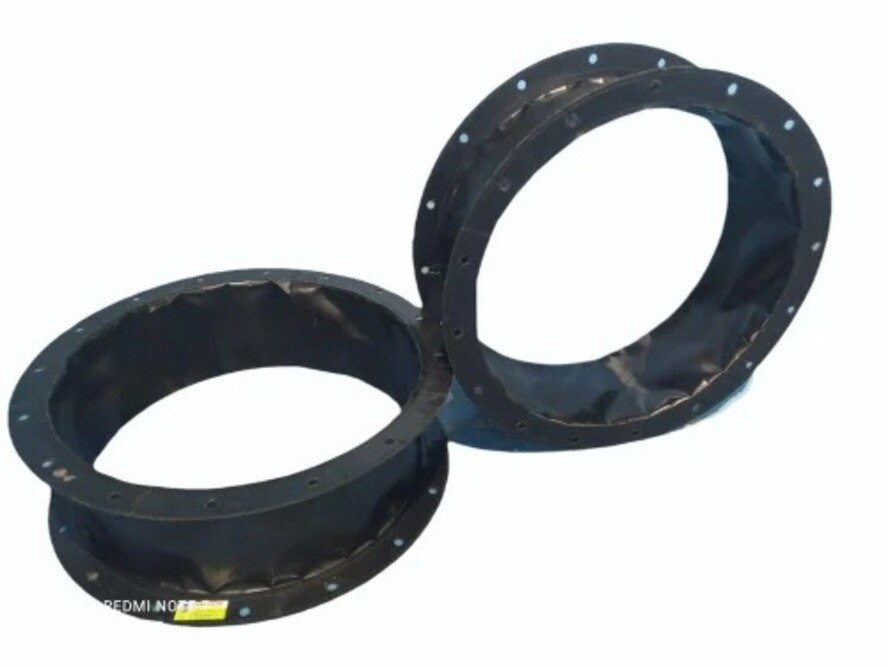
Heat damage does not depend only on the temperature shown by a nearby sensor: coatings, seams, threads, folds and clamps can fail at different limits. You will be able to identify the failure mechanism, measure the movement the bellow must absorb, separate design problems from installation faults, and decide whether to repair, replace or specify another expansion solution.
Key takeaways
- Measure axial, lateral, and angular movement before selecting a bellow.
- Inspect coatings, seams, folds, and hardware for heat-related damage.
- Replace the bellow when fibres, reinforcement, or attachment seams have failed.
- Choose another expansion connection when temperature or movement exceeds fabric limits.
How heat and thermal cycling destroy a fabric expansion bellow
High heat first attacks the coating that seals a fabric expansion bellow. It can soften polyurethane, scorch textile fibres, embrittle silicone or PTFE laminates, and weaken adhesive-backed seams. Once the surface loses flexibility, folds crack instead of bending smoothly.
Repeated heating and cooling causes fabric expansion bellow damage even when each cycle stays below the stated peak limit. The layers expand at different rates, so the laminate separates, stitching loosens, and clamps work against the fabric. Each cycle grows small cracks until the first fold, seam, or mounting edge tears.
Look for these physical failure modes:
- Coating blistering, peeling, cracking, or becoming sticky
- Delamination between the coating and base fabric
- Scorched, brittle, punctured, or abraded cloth
- Stretched stitching, opened seams, and torn corner reinforcement
- Flattened folds caused by lost flexibility
- Slipping clamps or holes elongated by thermal movement
The mounting arrangement can accelerate failure. Misaligned end frames, a sharp clamping edge, or a frame moving against its guide concentrates stress at one fold. A rigid attachment can also tear the bellow when the machine frame and cover frame grow at different rates; slotted or floating details may be necessary.
Do not rate the bellow by air temperature alone. The coating, thread, seam treatment, window, and hardware each have limits. Hot chips can burn through instantly or lodge in a fold and abrade it during travel. Coolant and retained moisture then promote delamination, mildew, dirt retention, and clamp corrosion.
How to measure movement before blaming the bellow
Calculate thermal growth before inspecting the fabric. For a duct or frame, use ΔL = α × L × ΔT, where α is the material’s thermal-expansion coefficient, L is the fixed length, and ΔT is the actual temperature change.
Measure the cold and hot positions with a dial indicator, laser tracker, or travel gauge; do not estimate movement from fold appearance.
- Mark the neutral position, then record axial compression or extension, lateral offset, angular change, and any twist through the full operating stroke.
- Measure the installation gap at cold, hot, and maximum-travel positions. Compare each result with the design drawing and the supplier’s movement limits; axial stroke does not prove capacity for lateral movement or torsion.
- Calculate pressure thrust where a pressurised duct joint is involved: force equals pressure multiplied by effective area. Check that anchors and guides carry this load rather than the fabric. A machine-tool cover is not a pressure boundary.
- Inspect guides, anchors, hangers, clamps, and duct supports while the machine moves. Record sag, shifted anchors, uneven clearances, fold contact, and rubbing against the guideway.
- Classify the damage only after comparing the measurements. Expected motion produces movement within the rated envelope, with folds clearing one another and the mounting edge staying stable. A failed support system produces excess travel, skewed motion, bottoming folds, or loads transferred into seams.
The specification for bellow covers for expansion movement must include combined axial, lateral, angular, and torsional movement, not just temperature. If measured motion exceeds the rating, repair will not correct the cause; realign, support, or redesign the system first.
When fabric is the wrong expansion connection
Choose a fabric expansion joint only when the connection needs flexible sealing around calculated movement and the complete construction is rated for the gas, temperature, pressure, and motion. A machine-tool bellow cover is a different component: it protects guideways, cables, and slides from chips, coolant, dust, and heat, but it is not pressure-rated.
| Option | What it means | When it applies |
|---|---|---|
| Fabric expansion joint | Flexible duct connection for thermal movement; construction includes fabric, coating, seams, insulation, and hardware | Use for air or flue-gas ducts when pressure, temperature, axial movement, lateral offset, angle, and twist are within the supplier’s tested limits |
| Metal expansion joint | Corrugated metal element with high temperature and pressure capability; requires correct guides and anchors | Use for severe heat, pressure thrust, vacuum, or chemical exposure that exceeds fabric or rubber capability |
| Rubber expansion joint | Elastomeric connector that absorbs vibration and movement while sealing fluids or gases | Use at moderate temperatures when vibration, corrosion resistance, and flexibility matter more than extreme heat |
| Bellow cover | Protective machine cover, not a pressure boundary | Use around moving guideways, screws, cables, and slides; never contain combustion gas or a hazardous release without specific design approval |
| Rigid duct connection | Fixed, leak-tight connection with no intended movement | Use only after guides, anchors, and supports eliminate movement; otherwise duct loads transfer into equipment and tear the connection |
Check the combined movement, not axial stroke alone. If thermal growth creates lateral offset or torsion, select a larger or differently constructed connection, or redesign the supports.
How to inspect damage and use operating records
Inspect the bellow at every shift change for visible changes, then perform a documented close inspection monthly and after any overheating, jam, collision, coolant leak, washdown, or ductwork alteration. A fabric expansion bellow for problems in Kolhapur needs extra attention after wet storage or prolonged exposure to humid, coolant-laden air.
Look for a glossy, brittle, scorched, or discoloured coating; pinholes; exposed reinforcement; frayed stitching; loose seam tape; distorted folds; and rubbing marks at the first fold or mounting edge. Check for trapped moisture, mildew, coolant residue, dirt packed into folds, rusty clamps, loose bolts, and sharp frame edges cutting into the fabric.
Once reinforcement is exposed, cleaning will not restore the barrier.
| Sign | Likely operating clue | What to record |
|---|---|---|
| Glossy coating, scorch marks | Hot chips, peak temperature, long dwell | Temperature and alarm history |
| Cracked coating, loose seams | Repeated heating and cooling | Cycle count and start-stop times |
| Rubbing, torn first fold | Misalignment, failed guide, or restricted travel | Travel readings and maintenance work |
| Mildew, swollen laminate, rusty clamps | Wet storage, washdown, coolant retention | Leak, cleaning, and storage conditions |
| Pinholes or widespread brittleness | Chemical attack or prolonged overheating | Coolant changes and exposure duration |
Photograph each defect with a scale, mark its position against travel and hot zones, and compare it with operating records. A sudden temperature excursion explains scorching; gradual worsening after frequent cycling points to fatigue. A tear after a jam or frame movement suggests mechanical overload, not ordinary ageing.
When fabric expansion bellow repair is safe—and when replacement is better
Use fabric expansion bellow repair only when the damage is local and the surrounding laminate, reinforcement, seams, and fold geometry remain sound. A compatible patch must bond or sew securely without creating a hard stress edge, then pass inspection through the complete machine stroke.
Replace the damaged section or complete bellow when you find:
- A torn or distorted fold that carries movement
- A failed mounting edge, loose clamp, or fabric pulled from the flange
- Widespread embrittlement, scorching, delamination, or exposed reinforcement
- Repeated cracking after an earlier patch
- Damage caused by misaligned frames, sharp clamping edges, failed guides, or excessive lateral movement
A patch cannot restore lost flexibility or correct a mounting arrangement that keeps concentrating stress at the first fold.
| Local repair | Use it when | Verification |
|---|---|---|
| Patch or seam repair | One pinhole, short cut, or loose seam exists in otherwise flexible material | Check adhesion or stitching, clearance, and the full travel cycle |
| Damaged-section replacement | Heat or rubbing affects one fold, panel, or edge | Match the original laminate, reinforcement, seam treatment, and movement capacity |
| Complete bellow replacement | Damage is widespread or the mounting geometry is wrong | Recheck axial, lateral, angular, and twist movement before installation |
Judge temperature by the complete construction, not air temperature alone. Ask GURUKRUPA BELLOWS PVT LTD to state continuous temperature, peak temperature, exposure duration, and movement limits for the exact laminate, thread, adhesive, window, and hardware. A nominal rating that ignores those components can produce another failure.
Related products
 | Fabric Expantion Bellow ₹1000 Make in Heavy duty Fabric’s View product → |
 | Product Details: Brand Gurukrupa Material Nylon Fabric coated with polyurethane Max Temp Resistance 1000 C Offered in the market at the most... View product → |
Frequently asked questions
How does heat and thermal cycling damage a fabric expansion bellow?
Heat attacks coatings, textile fibres, laminates, and adhesive-backed seams. Repeated heating and cooling then makes the material crack, harden, or lose flexibility at the folds.
How should you measure movement before blaming the bellow?
Record the fixed points, operating temperature, pressure, and movement in axial, lateral, and angular directions. Compare cold and hot positions instead of judging movement by appearance.
When is fabric the wrong expansion connection?
Choose another connection when temperature, pressure, chemical exposure, abrasion, or movement exceeds the fabric construction’s limits. Metal expansion joints or engineered flexible connectors may suit those conditions better.
When is fabric expansion bellow repair safe?
Repair is reasonable when damage is localised, the reinforcement remains sound, and the attachment frame has not distorted. Replace the bellow when folds, fibres, seams, or multiple areas have failed.