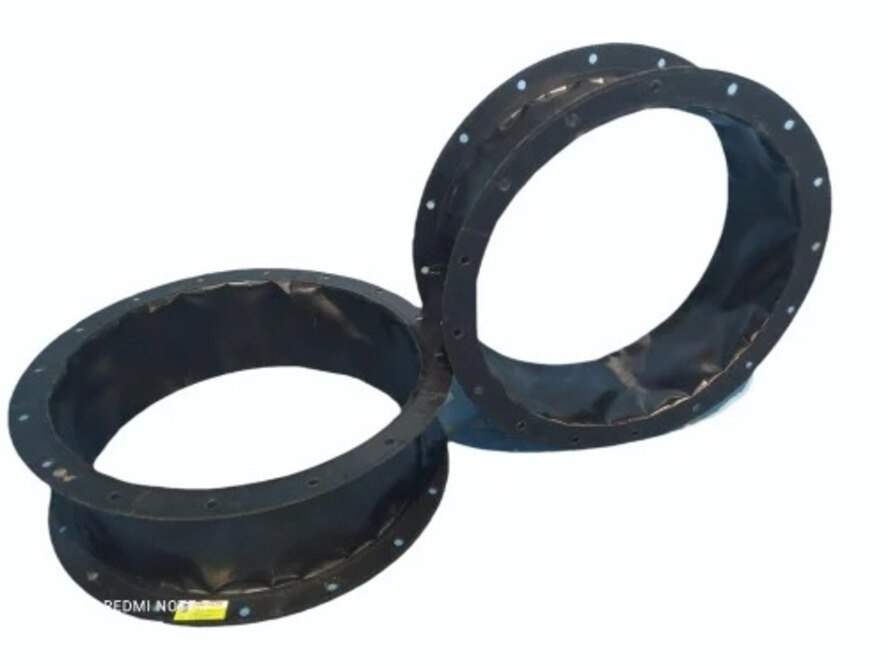
Choosing between a fabric expansion bellow cover and a conventional cover depends on the movement, contaminants, available space and mechanical abuse at the machine interface. By the end, you will know which construction fits your duty, which specifications to request, and how to test the cover before committing to a long service interval.
Key takeaways
- Choose fabric for fast travel and low moving mass, not heavy impact.
- Match the cover material to coolant, chips, temperature and movement speed.
- Use steel or hybrid protection where falling chips or crushing loads threaten fabric.
- Validate folded length, travel, mounting dimensions and test results before purchase.
What Each Type of Bellow Cover Is Designed to Protect
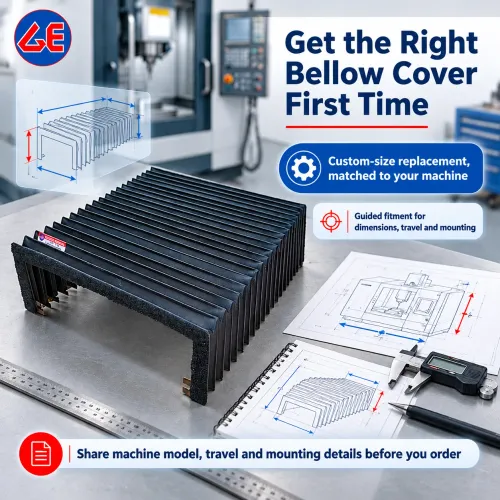
A fabric expansion bellow cover protects guideways, slides, screws, cables and other moving machine components from chips, dust, coolant and abrasion while folding through a defined travel. Its low moving mass suits high-speed axes, but it is not a load-bearing shield; heavy impact or standing chips can damage it.
The name “expansion” describes movement, not one universal product. Compare the protected item, the movement and the consequence of failure:
| Type | Designed to protect or accommodate | Typical movement |
|---|---|---|
| Fabric expansion bellow cover | Machine guideways, actuators, cables and precision slides from contamination | Axial travel, with engineered lateral or angular movement |
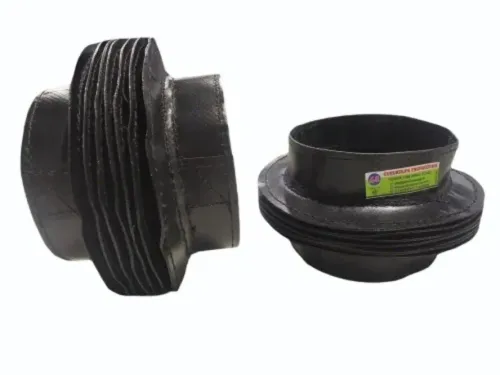
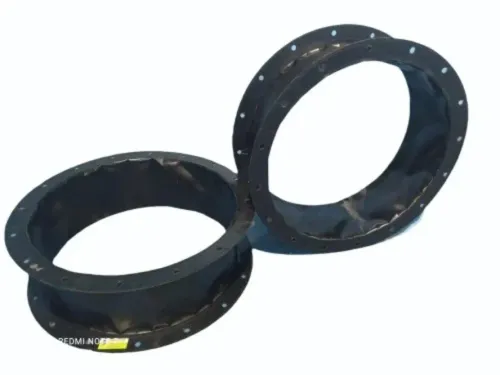
| Fabric expansion joint | Piping, ducts or equipment connections from thermal growth and vibration | Axial, lateral and angular displacement between connected sections |
| Machine-tool way cover | Guideways and machine beds from chips, coolant and impact | Sliding or telescopic travel; rigid sections carry more surface abuse |
| Duct compensator | Exhaust, dust-extraction or process ductwork from thermal strain and vibration | Thermal axial movement, lateral offset and vibration |
| Air-delivery bellows | Flexible air paths, air tools or moving air equipment from leakage and disconnection | Repeated flexing, compression and positional change |
Fabric expansion bellow covers therefore belong to machine protection, not fluid conveyance. A fabric expansion joint or duct compensator must preserve a sealed connection under pressure, while a way cover prioritises mechanical shielding. Air-delivery bellows prioritise airflow integrity.
These distinctions define expansion bellow cover applications: CNC axes, robotic slides and inspection equipment need contamination control; piping, exhaust and ventilation systems need movement compensation or pressure containment. A flange transition that leaks dust can defeat an otherwise impermeable cover.
Fabric Versus Coated Fabric, Rubber, Leather, Polyurethane and Steel
Fabric alone is a reinforcement, not a complete sealing specification. A woven textile supplies low mass and repeated flexing, while the coating, seams and support arrangement determine resistance to coolant, oil, heat, abrasion and leakage.
| Option | Flexibility and sealing | Mechanical protection | Main trade-off |
|---|---|---|---|
| Fabric textile | Highly flexible, but porous unless laminated or coated | Minimal resistance to chips and fluids | Light and compact; unsuitable as a standalone barrier |
| Coated fabric | Flexible with sealing provided by PVC, polyurethane, neoprene or silicone layers | Moderate protection, depending on coating and reinforcement | Best balance, but hot swarf, folding abrasion and incompatible coolant can cause failure |
| Rubber | Excellent elastic sealing and vibration isolation | Fair resistance to impact; compound-specific resistance to oil and heat | Heavier and less dimensionally stable than textile constructions |
| Leather | Good flexing and moderate abrasion resistance | Better surface toughness than plain fabric | Variable sealing, moisture sensitivity and limited chemical and heat resistance |
| Polyurethane | Strong abrasion resistance with good flexibility and sealing | Better against rubbing and sharp dust than many fabrics | Can stiffen, crack or degrade when the chemistry and temperature are wrong |
| Segmented steel | Limited flexing between sections; strong physical barrier | Highest resistance to chips, impact and loads placed on the cover | Heavy, noisy, bulky when folded, and vulnerable to dents or corrosion |
This fabric bellow covers comparison must include the support system. Sewn-in hoops, internal baffles and guides prevent collapse into the travel path, but add folded height, mass and wear points. Choose fabric for fast, long travel where low moving mass matters; choose steel at impact zones, or combine a fabric bellows with rigid chip deflectors.
Match Movement, Media and Heat to the Construction
Specify axial stroke before you specify fabric. Record maximum extension, compression, lateral offset, angular deflection, folding radius, cycle rate, acceleration and whether the cover moves continuously or only during setup. A cover sized for axial travel can wrinkle, bind or tear when the machine also shifts sideways.
| Service condition | Construction detail to define | Failure if missed |
|---|---|---|
| Coolant, oil or additives | Coating chemistry, seam sealing and attachment overlap | Swelling, softening, leaks or delamination |
| Heat near the cover | Continuous and peak temperature, radiant heat and contact exposure | Coating embrittlement or cloth damage |
| Chips and dust | Outer abrasion layer, fold geometry and chip-shedding shape | Punctures, folding abrasion and contamination entry |
| Welding spatter or hot swarf | Heat shield, sacrificial layer and safe clearance | Burn-through despite a suitable base-cloth rating |
| High-speed travel | Low moving mass, minimum fold radius and acceleration limit | Fold fatigue, seam failure or axis overload |
“Fabric” is not a material specification. Compare PVC-, polyurethane-, neoprene- and silicone-coated textiles against the actual coolant chemistry, oil, abrasive dust and temperature; a base-cloth temperature rating does not prove resistance to direct hot chips or incompatible additives.
For custom fabric expansion bellows, request a representative motion-and-media test that reproduces stroke, folding rate, acceleration, contamination and temperature. Inspect the flange transition and overlap as closely as the fabric: a sealed textile cannot protect a guideway through a leaking end attachment.
Where Fabric Covers Win—and Where Steel or a Hybrid Is Safer
Choose fabric for high-speed movement and low moving mass; choose steel when impact resistance matters more than acceleration. A sound fabric bellow covers comparison therefore evaluates the complete protection system, not fabric against steel in isolation.
| Option | Strength | Suitable expansion bellow cover applications |
|---|---|---|
| Fabric | Light, quiet and compact; follows fast or long travel | High-speed machine axes, cable and hose protection, dust extraction, thermal piping movement, vibration isolation and equipment interfaces away from hot swarf |
| Conventional steel | Resists hot chips, sharp debris, impact and loads placed on the cover | Machine tools producing heavy chips, grinding areas, welding zones, exhaust systems and covers exposed to accidental tool contact |
| Hybrid | Combines flexible travel with local impact protection | Long or rapid travel where rigid shields, chip deflectors or steel panels can protect the hottest or most abrasive zones |
Fabric works only when the complete coated construction matches the environment. Check the coating, seam design and fold geometry against coolant additives, oil, abrasive dust, folding abrasion and the actual heat source; a base-cloth temperature rating does not prove resistance to direct hot-chip exposure.
Select steel when a torn fold would stop production or when chips strike the cover at speed. Select a hybrid when fabric handles the movement efficiently but steel is needed at entry points, impact zones or unsupported horizontal spans. That arrangement reduces moving mass without leaving vulnerable folds exposed.
How to Specify and Validate a Cover Before Purchase
Specify the cover as a complete moving assembly, not by nominal stroke alone. For fabric expansion bellows in mumbai, give the supplier closed and extended lengths, cross-section, available envelope, axis orientation, mounting and flange details, access points, speed, acceleration, cycle rate, temperature, required service life and inspection interval.
1. Identify the working environment: coolant or lubricant chemistry, chip size and shape, abrasive dust, coolant mist, monsoon humidity, ambient temperature, storage conditions and any pressure difference. Ask for material-compatibility evidence, not a suitability claim based on local availability.
2. State the movement precisely: axial stroke, lateral offset, angular movement, folding rate and acceleration. Request the proposed fold geometry, seam construction, end attachment, overlap or sealing transition, plus any internal baffles, hoops or guides. These supports prevent collapse but add folded height, mass and wear points.
3. Require a representative service test using the proposed production construction. Run the specified stroke, folding rate, acceleration and cycle count while applying the actual coolant or oil, temperature and chip contamination. A static dimensional inspection will not expose fold fatigue, seam failure or coating delamination.
4. Define acceptance before ordering: no exposed guideway, torn seam, delamination, unacceptable dimensional change or interference through the test, with photographs and cycle records supplied. GURUKRUPA BELLOWS PVT LTD can be included in the comparison by requesting the same drawing, support details and test evidence from every shortlisted supplier.
Related products
 | Bellow Cover We are considered a well-known name in the business that manufactures and supplies Bellow Cover. View product → |
 | Fabric Expantion Bellow ₹1000 Make in Heavy duty Fabric’s View product → |
Frequently asked questions
What are fabric expansion bellow covers designed to protect?
They protect guideways, slides, screws, cables and other moving machine components from chips, dust, coolant and abrasion during defined travel.
How do fabric bellow covers compare with rubber, leather, polyurethane and steel?
Fabric offers low moving mass and high-speed movement; coated fabric, rubber, leather and polyurethane suit different chemical, abrasion and temperature conditions, while steel provides stronger impact protection.
How do you match an expansion bellow cover to movement, media and heat?
Specify the axis travel, folded and extended dimensions, motion speed, coolant or chemical exposure, chip type, abrasion risk and operating temperature before selecting the construction.
When is steel or a hybrid bellow cover safer than fabric?
Choose steel or a hybrid design when falling chips, hot material, standing debris or crushing forces could puncture or compress a fabric cover.
What should you validate before purchasing a custom fabric expansion bellow?
Check travel and mounting dimensions, folded height, material construction, seam and attachment details, temperature and media compatibility, and test evidence for the operating conditions.