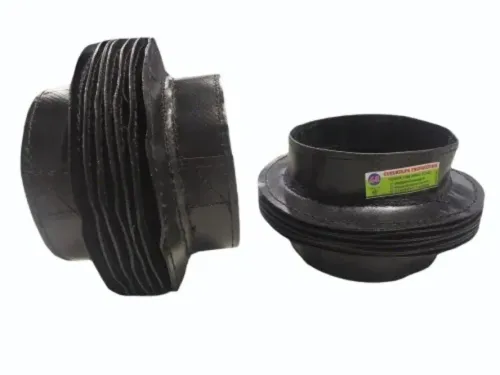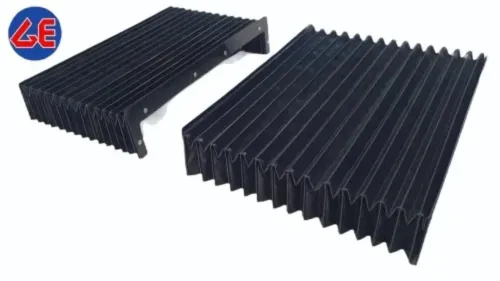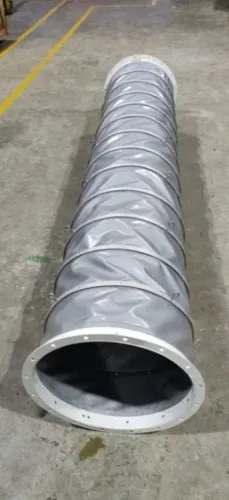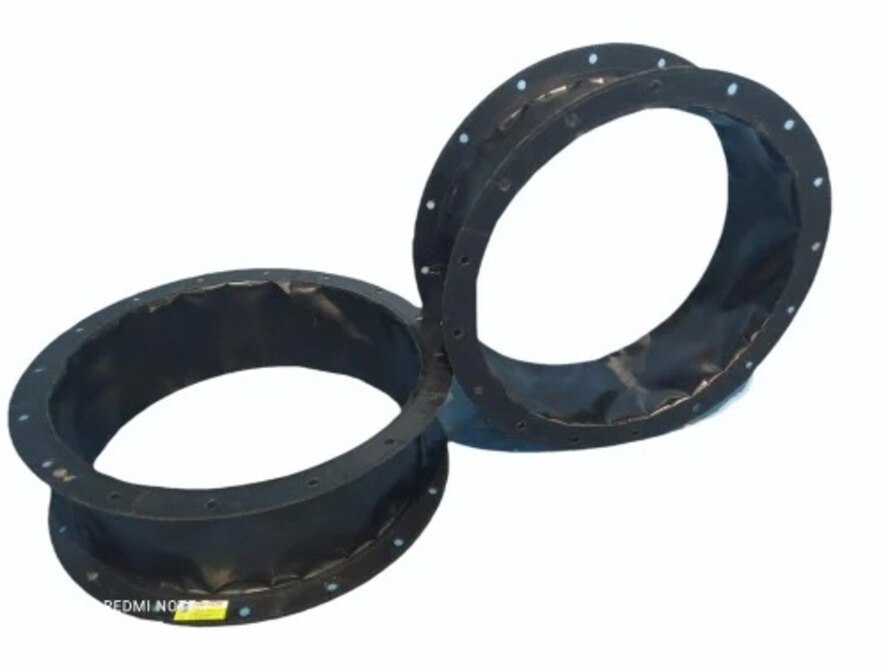
A flexible joint for hot ducting is not interchangeable with a machine-tool cover that blocks chips and coolant. By separating the application, movement, construction, and operating conditions, you can choose between fabric expansion joint bellow covers and rigid protection covers without ordering the wrong product category.
Key takeaways
- Match the cover to axial, lateral, angular, or vibration movement.
- Choose fabric for heat and complex movement; rigid covers suit impact and fixed geometry.
- Specify temperature, pressure, dimensions, movement, material, and inspection access.
- Plan installation clearances and replacement access before approving the joint design.
Identify the Movement and the Product You Actually Need
Identify the movement before choosing the cover: axial growth, lateral offset, angular movement, vibration, pressure fluctuation, or equipment misalignment. The protected medium matters just as much; hot flue gas, coolant, cables, and machine ways demand different designs.
Use this checklist:
- Duct sections that expand with temperature or vibrate relative to fans, boilers, or equipment need a duct expansion joint. Fabric expansion joint bellow covers and industrial expansion bellows suit this role when their temperature, pressure, gas chemistry, and movement ratings match the service.
- A moving machine axis needs a machine bellows cover that folds around travel while shielding guideways from chips, dust, and coolant.
- A travelling cable or hose route needs a cable-path cover, such as a protective bellows or cable carrier enclosure, sized for bend radius and repeated cycles.
- A pump, fan, engine, or process connection needing vibration isolation needs a flexible equipment connector. It must be selected for the conveyed gas or fluid and operating pressure.
- A fixed hazard barrier needs a rigid guard or fabricated enclosure. Choose it for impact, sharp swarf, coolant jets, sparks, or accidental contact rather than thermal movement.
Do not substitute one product by appearance. A generic HVAC fabric joint is not a machine-tool cover, and a rigid guard cannot absorb significant multi-axis movement unless it uses telescoping, sliding, hinged, or dedicated expansion sections.
Compare the Construction Before Comparing the Materials
A useful fabric expansion bellow comparison starts with construction, not cloth grade. A hot-flue-gas joint may combine an inner gas-sealing membrane, insulation blanket, abrasion-resistant outer fabric, retaining hardware, and a flow liner or baffle to absorb axial growth, lateral offset, angular movement, vibration, and small flange misalignment.
A machine-axis cover instead needs a folding bellows pack, guided folds, and attachment frames.
| Feature | Fabric expansion joint | Rigid protection cover |
|---|---|---|
| Layers | Membrane, insulation, outer fabric, liner, and hardware are selected separately | One or more formed sheets, telescopic sections, seals, hinges, and support frames carry the load |
| Materials | PTFE, coated glass fabric, silicone fabric, aramid, elastomer, or ceramic textile may suit the exposure | Steel, stainless steel, aluminium, or composite panels resist impact, chips, coolant, and abrasion |
| Pressure | Handles specified duct pressure only with a rated membrane, liner, and support arrangement | Provides structural shielding, but is not automatically a pressure vessel or flexible seal |
| Movement | Accommodates thermal growth, vibration, lateral offset, and repeated flexing | Resists movement; guides, sliding sections, or clearance must be designed into the assembly |
| Limits | Heat, condensate, vacuum, pulsation, erosive dust, chemicals, and folding radius can shorten life | Impact, weight, corrosion, sharp edges, and limited travel govern performance |
Do not let a heat-rated outer fabric define the whole joint: the gas seal may fail first. Excessive flange compression, trapped folds, unsupported weight, or a hot internal edge can cause leakage and tearing.
A generic HVAC fabric joint is not a machine-tool guard for high-speed chips or coolant jets; specify those hazards separately, or choose a rigid enclosure.
Fabric or Rigid: Which Cover Handles Your Main Hazard?
Choose fabric when thermal growth, vibration, axial movement, lateral offset, angular movement, or equipment misalignment is the main hazard. Fabric expansion joint bellow covers accommodate that motion with low reaction force, protecting fan casings, duct flanges, and equipment nozzles from loads that a rigid cover could transfer.
Fabric is the weaker choice when the cover itself must absorb punishment. Compare the options against the actual failure threat:
| Option | Fabric cover | Rigid cover |
|---|---|---|
| Movement | Handles thermal expansion, vibration, offset, and angular movement | Resists movement and needs accurate alignment or sliding sections |
| Reaction force | Low; reduces loads on connected equipment | Higher; supports the assembly but transfers more load |
| Impact and abrasion | Vulnerable to cutting, sharp chips, swarf, and repeated rubbing | Better resistance when made from steel, aluminium, composite, or formed sheet |
| Sealing | Uses separate membrane layers; the outer fabric is not automatically gas-tight | Provides a continuous barrier when joints, doors, and seals are correctly designed |
| Structural support | Protects and encloses but does not carry substantial loads | Supports guards, withstands impact, and contains debris |
| Replacement | Light, accessible, and often faster to change | Heavier; fabrication and alignment can increase downtime |
Select rigid protection for a machine-tool work zone exposed to high-velocity chips, coolant jets, sparks, or impact. Select fabric for duct connections and industrial expansion bellows where movement and low transmitted force dominate.
Do not substitute a generic HVAC fabric joint for an axis cover. Specify fabric only after checking chip shape, coolant chemistry, travel speed, folding radius, temperature, pressure, and required cycle life.
Include Installation, Inspection, and Replacement in the Decision
Mounting accuracy can decide lifecycle cost more than the purchase price. A fabric cover needs aligned flanges, controlled flange compression, correct liner clearance, and no trapped folds; excessive compression or unsupported weight causes leakage, chafing, and tearing. A rigid cover tolerates less thermal growth and misalignment, but its bolted frame can provide structural support.
| Option | Installation and inspection | Cleaning, repair, and service life |
|---|---|---|
| Fabric expansion bellow cover | Check movement clearance, flange compression, liner position, and hot-part contact. Inspection access is usually quick because the cover is light and removable. | Clean without sharp tools; patching is limited to approved repairs. Cycle count, temperature, dust, and condensation determine life, so keep a spare and plan short replacement downtime. |
| Rigid protection cover | Accurate mounting prevents binding during thermal growth or axis travel. Hinged panels, removable sections, or inspection ports add access but increase fabrication cost. | Wash or brush-resistant surfaces more easily and repair dents or fasteners. Steel or formed-sheet covers can last longer under impact and abrasion, but removal is heavier and downtime is longer. |
Count expected axial, lateral, and angular movements rather than relying on calendar life. A useful fabric expansion bellow comparison also names the protected medium: hot flue gas, coolant, or a moving machine axis requires different sealing, cleaning, and cycle assumptions.
Include removal space and spare-cover availability in the quote; a cheaper cover that stops production for a full shift can cost more than a higher-priced unit replaced during planned maintenance.
Specify a Custom Joint That Can Be Quoted and Accepted
A fabric expansion joint in Mumbai cannot be quoted from “custom size” alone. Give the supplier a drawing with revision number, free length, installed length, available clearance, flange dimensions, bolt-hole pattern, and the required replacement access.
Include these operating details:
- Axial, lateral, and angular movement in millimetres or degrees
- Vibration, misalignment, movement frequency, and total design cycles
- Operating and design temperature, positive or negative pressure, and pressure pulsation
- Gas or fluid composition, dust loading, condensate, and cleaning method
- Humidity, monsoon water ingress, ultraviolet exposure, salt air, chemicals, and shutdown condensation
- Required inner membrane, insulation, outer fabric, abrasion layer, liner, baffle, stitching, and fastener materials
Ask for the quoted fabric and coating separately from the insulation and gas seal; an outer layer that survives hot dust does not prove the membrane will resist the process gas. Vacuum, erosive particulate, aggressive chemicals, and high differential pressure require a stated pressure rating and support arrangement, not a generic fabric cover.
For custom fabric joints in Mumbai, define inspection points, dimensional tolerances, leak or pressure testing, drawing approval, and acceptance criteria in the purchase order. State whether replacement occurs from outside the duct, requires flange separation, or must fit around fixed equipment.
GURUKRUPA BELLOWS PVT LTD should receive these records before recommending construction, because cycle count and access often determine service life more than nominal dimensions.
Related products
 | Fabric Expantion Bellow ₹1000 Make in Heavy duty Fabric’s View product → |
 | Bellow Cover ₹1000 Product Details: Brand GE Color Black-Blue - Gray -White Size ANY ( C shape, Square, Round, Rectangular) Ours is a trustworthy name in the business... View product → |
Frequently asked questions
How do you identify the movement an expansion joint cover must accommodate?
Measure axial growth, lateral offset, angular movement, vibration, pressure fluctuation, and equipment misalignment. Record movement direction, amplitude, cycle frequency, and operating temperature.
When should you choose a fabric expansion joint bellow cover instead of a rigid cover?
Choose a fabric cover for hot flue gas, large movement, irregular geometry, vibration, or limited installation clearance. Choose a rigid cover when impact resistance, fixed geometry, and mechanical shielding are the main requirements.
What should you compare before selecting fabric or rigid protection?
Compare the construction first: layers, seams, frames, fasteners, clearances, support points, access panels, and movement allowance. Then compare material compatibility with heat, chemicals, abrasion, moisture, and pressure.
What information makes a custom expansion joint specification quote-ready?
Provide joint length and width, movement in each direction, temperature range, pressure, medium, duty cycles, hazard exposure, connection details, inspection access, and required replacement method.