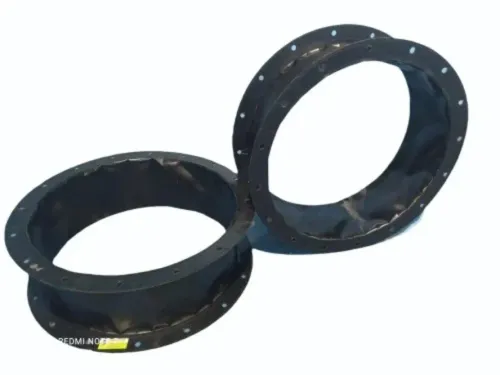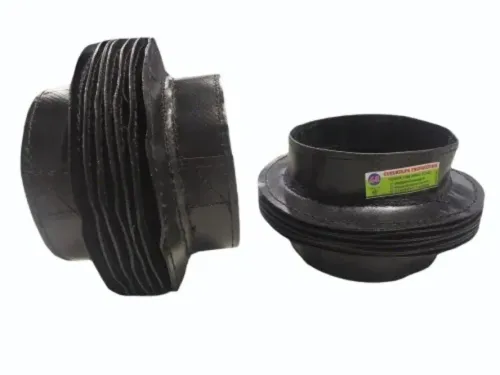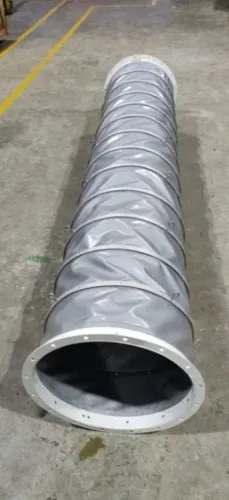

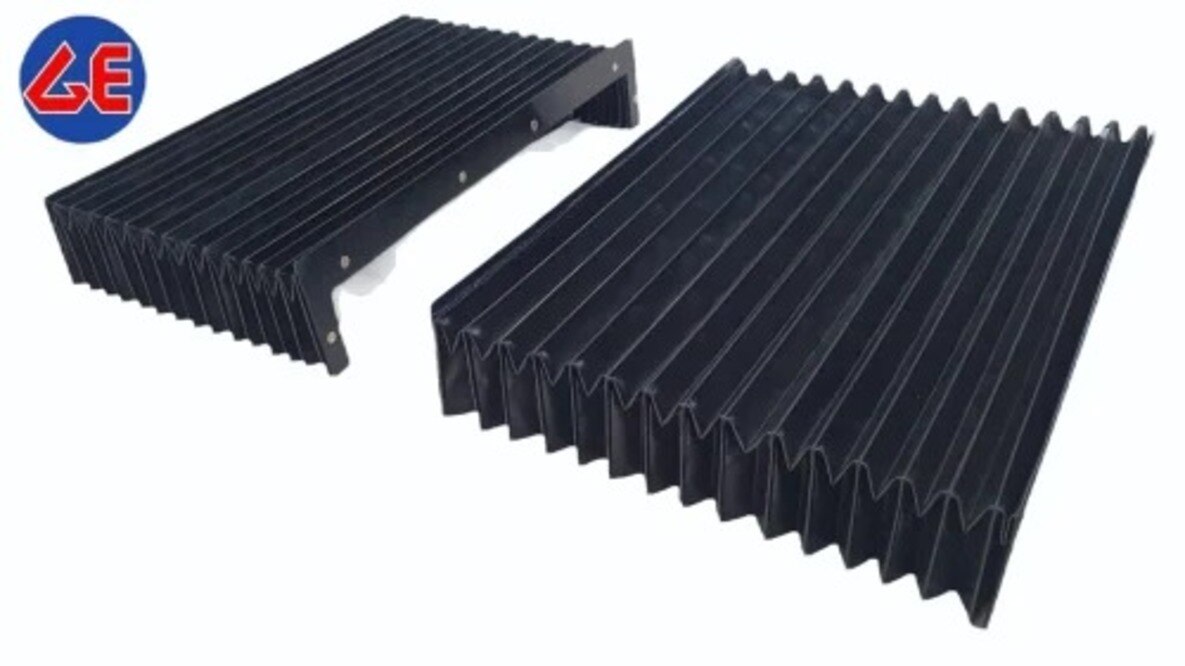
A request that says “all size” or names only PVC and PU leaves critical decisions unresolved: travel, fold geometry, coating chemistry, mounting, motion and contamination all determine whether the cover survives. By the end, you will have the measurements, material questions, supplier documents and acceptance checks needed to order a cover that fits and performs its intended job.
Key takeaways
- Put travel, compressed length, expanded length and mounting dimensions on the drawing.
- Specify fold geometry, material, bonding method and reinforcement before requesting a quotation.
- Check clearance, bend radius, speed, temperature and contamination against machine motion.
- Require drawings, material data and inspection criteria before production starts.
Which dimensions and machine measurements belong on the drawing?
Put these measurements on the drawing before requesting thermally bonded bellow covers for specifications:
- Minimum compressed length, maximum extended length, usable travel, number of folds, fold pitch or fold depth, outside width and height, and the inside opening protecting the guideway or moving component.
- Mounting-hole diameter, hole pitch, edge distance, slot orientation, datum surfaces and movement direction.
Measure the fixed-end and moving-end faces separately. Record flange thickness, usable mounting surface and the distance between attachment points.
Travel divided by fold pitch does not independently determine fold count. End folds, mounting allowances, compression clearance and the supplier’s forming method alter the finished length.
| Face | Record | Why it matters |
|---|---|---|
| Fixed end | Flange thickness, usable mounting surface, attachment-point spacing | Defines the stationary fit |
| Moving end | Face size, flange thickness, attachment-point spacing | Prevents interference during travel |
| Opening | Inside width and height around the guideway or component | Sets the protected clearance |
Show the complete clearance envelope at both ends of travel, including cables, lubrication lines, tooling, guards and nearby structures. Add the required stroke; a drawing that says only “all size” cannot define a cover.
Record lateral shift, angular movement, torsion, guideway orientation, cycle frequency, acceleration and deceleration. Do not measure a worn or permanently compressed existing cover as the required size, or the replacement may inherit its shortened travel and distorted geometry.
What does thermally bonded bellow cover construction require?
Thermally bonded bellow cover construction requires a defined stack-up, not a label such as “PVC bellows.” Record the base textile—polyester, nylon or aramid—the coating polymer—PVC, polyurethane or TPU—the coated side, total thickness, fabric mass, colour, reinforcement and sacrificial wear layer.
| Welding method | Suitable use | Main distinction |
|---|---|---|
| Hot-air | Accessible continuous seams in compatible thermoplastic coatings | Heated air softens the coating before pressure is applied |
| Hot-wedge | Long, straight overlapping seams | A heated wedge controls the fusion zone |
| Impulse | Short or controlled seam geometries | Heat is applied in timed electrical pulses |
| Radio-frequency | Compatible polar thermoplastics and shaped seams | Electromagnetic heating fuses the coating internally |
| Sewn | Coated or uncoated fabrics | Needle holes and thread paths remain |
| Vulcanised | Rubber-based constructions | Chemical curing is not thermoplastic welding |
| Heat-sealed | Compatible thermoplastic films or coated textiles | Seal quality depends on heat, pressure and dwell |
| Glued | Materials unsuitable for direct fusion | Adhesive chemistry and cure control the joint |
Ask the supplier to identify the welding temperature, pressure, dwell time, overlap width and surface-preparation controls. Require the adhesive or fusion chemistry, if used; incompatible coatings cause incomplete fusion, seam peel or delamination.
The assembled cover should show fabric or polymer layers, continuous bonded seams, corner transitions, reinforcement, end frames and attachment hardware. Require a defined peel, seam-tear or tensile test with traceable process records. Flat-coupon data does not prove fatigue life in folded seams or corners.
Will the selected geometry, material and mounting survive the machine’s motion?
A linear-speed rating does not prove survival at high acceleration: folds can slap, buckle, rub against guides or collide with adjacent folds. Require the supplier to state allowable speed, acceleration, deceleration, cycle frequency, duty cycle, orientation, and limits for reciprocating, telescoping and multi-axis movement.
Select fold depth and count from the stroke, bend radius, lateral movement and compression ratio. Too few folds overstretch seams; too many create excess compressed length, rubbing and unstable folds. Require these details before approval:
- State whether mounting uses flanges, clamps, Velcro, plates, guide frames, end fittings, internal slats, rings, guide strips, sliders or anti-collapse supports.
- Specify pressure direction and magnitude when extraction airflow, fan suction or pressurised coolant could collapse the cover; a thermally bonded bellows is not automatically vacuum-tight.
- Name the full material stack-up: PVC-coated polyester, PU-coated fabric, TPU-coated textile or aramid-reinforced fabric, including continuous and peak temperature, oil, water-miscible coolant, alkaline cleaner, ester fluid, biocide, UV, abrasion, welding spatter, sharp chips and hot-swarf limits.
| Option | Strength | Limitation |
|---|---|---|
| Thermally bonded bellows | Flexible, compact, serviceable | Needs correct folds, supports and exposure limits |
| Sewn fabric or simple sleeve | Low cost, flexible | Needle holes, weaker sealing and less stable folds |
| Steel telescopic cover | Rigid containment and impact resistance | More space, weight and maintenance |
| Roller shutter | Compact retraction | Less suitable for complex multi-axis movement |
Choose rigid telescopic protection for large hot-chip impact, unsupported long spans, extreme temperatures or a need for rigid containment.
What evidence should a supplier provide before quotation and production?
1. Before requesting a quotation, send a dimensioned sketch and data sheet showing compressed and extended lengths, usable travel, fold count and depth, inside and outside dimensions, mounting-hole pattern, end-frame details, motion orientation, speed, acceleration, cycle rate, duty cycle, temperature, pressure or suction, contaminants, cleaning chemicals and mounting method.
Ask the thermally bonded bellows supplier in Mumbai to identify every missing dimension rather than assume “standard size.”
2. Require a material certificate or identification sheet naming the textile, coating polymer, coating side, total thickness, fabric mass, reinforcement, wear layer and working limits.
Request sample drawings, welding temperature, pressure, dwell time, overlap and surface-preparation controls, plus peel, bond-strength or seam-tear results, dimensional tolerances, inspection records, batch or job-number traceability, service-life basis and replacement lead time. Flat-fabric data does not prove folded-seam fatigue.
3. Make the quotation identify tooling, sample approval, delivery requirements, packaging, installation hardware and the supplier’s response to unresolved dimensions. Require written confirmation that production will reproduce the approved geometry and weld the specified coating, not substitute stitched fabric or incompatible PVC-coated textile.
GURUKRUPA BELLOWS PVT LTD belongs in the same comparison only after its manufacturing capability, inspection process, service arrangements and failure response are documented.
Related product
 | Thermally Bonded Bellows ₹1000 Product Details: Brand GURUKRUPA Color BLACK & OTHER Size ALL On offer from us is available Thermally Bonded Bellows for the clients. View product → |
How do you inspect, maintain and accept the finished cover?
1. Accept the cover only after inspecting every bonded seam for uniform width, smooth fusion, pinholes, skipped areas, wrinkles, delamination and exposed reinforcement. Check fold symmetry, fold pitch, compressed and extended dimensions, end-frame squareness, mounting-hole alignment and hardware security. These checks expose ordering errors such as incorrect travel, hole patterns or compressed length.
2. Mount the cover on the actual machine or a representative fixture, then run it through full travel at operating speed and acceleration. Reject interference from rubbing, fold-to-fold collision, buckling, trapped cables, guide contact or collapse under airflow.
Use a coolant spray or leakage test when fluid exclusion is part of the function, and record pass limits before production.
3. Set the inspection interval by cycle count or operating hours. Inspect after the first installation period and after every chip-impact event. Remove chips with a soft brush or low-pressure air; use only a cleaner approved for the coating, because solvents and sharp tools can crack or cut the folds.
4. Repair only after the supplier approves a compatible patch and bonding method. Replace the cover for repeated seam peeling, cracked coating, exposed reinforcement, permanent deformation, pinholes, lost travel or mounting distortion. Put these checks in the purchase order so the approved folded, mounted sample—not a flat material coupon—defines acceptance.
Frequently asked questions
Which dimensions belong on a thermally bonded bellow cover drawing?
Include the protected area, travel, compressed and expanded lengths, folded height, width, mounting dimensions, clearance and attachment details.
What does thermally bonded bellow cover construction require?
Define the cover material, fold geometry, bonding method, reinforcement, end frames and mounting arrangement so the supplier can build to one controlled specification.
How do you check whether the cover will survive machine motion?
Compare the selected geometry and material with travel, speed, cycle frequency, bend radius, temperature, chips, coolant, oil and mounting constraints.
What evidence should a supplier provide before production?
Request an approved dimensional drawing, material details, construction description, mounting layout, quotation assumptions and inspection criteria before authorising production.
How should you inspect and accept the finished cover?
Check dimensions, fold consistency, bond quality, mounting holes, clearances, smooth movement and visible damage against the approved drawing.