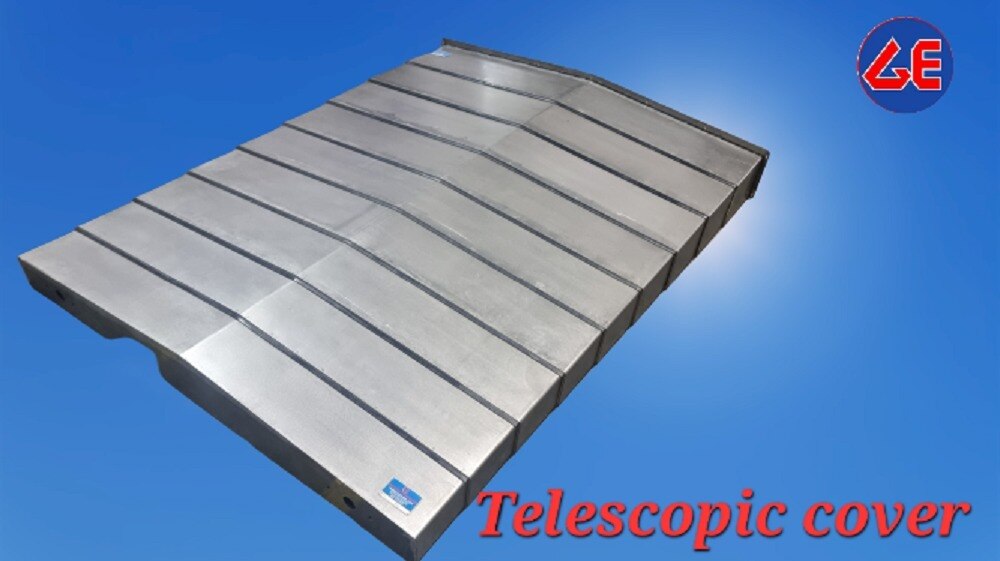
The right cover depends on more than whether a machine uses steel or fabric: travel geometry, chip impact, heat, speed, available space and moving mass all change the decision. By the end, you will be able to compare both designs, measure the machine correctly and test whether a proposed cover can complete its full stroke without interference.
Key takeaways
- Choose telescopic covers for rigid chip loads and long guided travel.
- Choose flexible bellows where low weight and compact folded depth matter.
- Send travel, dimensions, speed, exposure and mounting details to the supplier.
- Check folded length, full-stroke clearance and access before approving installation.
How the two cover designs protect a machine
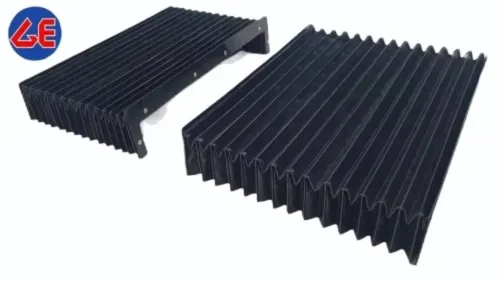
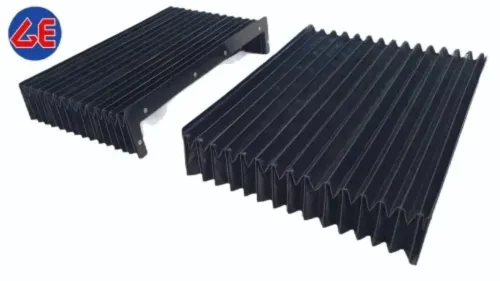
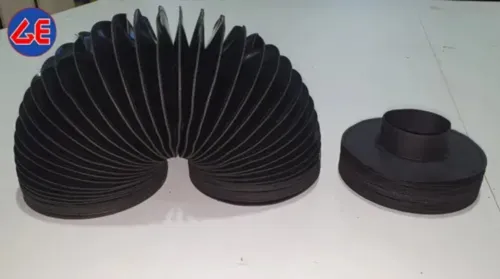
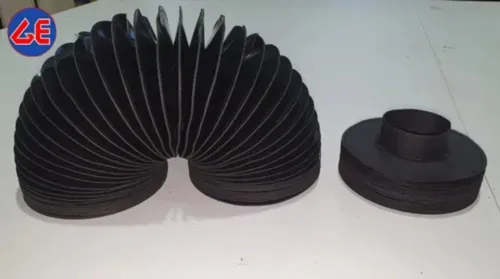
Telescopic bellow covers versus flexible bellows differ in construction and load path: telescopic covers use overlapping formed or fabricated steel boxes that slide on guides, while flexible bellows use sewn, bonded, or heat-welded coated fabric folds, often supported by frames, slats, or lamellae.
A telescopic cover creates a rigid, overlapping barrier over the guideway; a flexible bellows protects by expanding and compressing around the moving part.
| Feature | Telescopic steel cover | Flexible bellows |
|---|---|---|
| Construction | Nested steel sections on guides | Folded coated fabric with optional frames or slats |
| Movement | Best suited to straight-axis travel | Follows inclined, vertical, compound, or irregular paths |
| Protection | Resists impact, hot chips, and abrasive swarf | Protects against dust, coolant, and debris when correctly specified |
| Retracted space | Needs room for the nested section stack | Can provide a shorter folded package |
The distinction also changes how the cover carries its own weight. On a vertical axis, a steel cover needs a defined guide and support path, while a flexible bellows may require a guided frame to prevent sag, tension, or compression forces from damaging the folds.
Flexible bellows are not automatically suitable for sharp or hot chips. Add PVC or polyurethane protection, aramid layers, stainless-steel lamellae, sewn-in slats, or a separate chip shield where the fabric faces cutting swarf, sparks, or welding spatter. A bellows forced below its designed fold pitch or rubbed sideways can fail at its fabric or seams.
Match the cover to movement, exposure and available space
Choose a telescopic steel cover for a straight machine-way movement exposed to heavy chips, abrasive swarf, sparks, or impact. Its nested steel sections need room to stack when retracted, so confirm that the available space accommodates the closed length and guide arrangement.
For a telescopic bellow cover comparison, use these conditions as the first filter:
| Option | Machine condition | Why it favours the design |
|---|---|---|
| Telescopic steel cover | Straight horizontal axis with heavy chip or spark exposure | Rigid sections tolerate impact and provide a defined load path |
| Telescopic steel cover | Long travel with generous space behind the stroke | The machine can accommodate the nested section stack |
| Flexible bellows | Inclined, vertical, compound, or irregular geometry | Fabric folds can follow paths that nested boxes cannot |
| Flexible bellows | Restricted retracted length or low moving mass requirement | The folded package can be smaller and lighter |
| Flexible bellows | Protected motion around cylinders, lifting mechanisms, or offset guides | Flexible construction adapts to changing profiles |
Do not select a flexible bellows solely because space is tight. Its fold pitch, frame, and support must match the stroke; compressing it below that pitch or forcing it sideways causes rubbing, seam damage, and early failure.
Vertical travel requires a separate load-path check. A flexible bellows may need a guided frame to prevent sag, while a telescopic cover needs guides and, where necessary, counterbalance-compatible support. If the cover must bridge a wide unsupported span, verify deflection and acceleration loads before choosing either design.
Compare protection against chips, coolant, heat and machine loads
Steel telescopic covers take heavier machine loads and resist sharp, hot chips better; fabric or elastomeric bellows reduce moving mass and follow more complex motion. That trade-off determines whether you prioritise impact protection or compact, low-inertia travel.
| Protection condition | Telescopic steel cover | Fabric or elastomeric bellows |
|---|---|---|
| Chips and abrasive grit | Overlapping steel boxes and replaceable scraping elements tolerate impact, swarf loading and grinding grit. | Coated fabric can be cut, punctured or abraded; add PVC, polyurethane, aramid, lamellae or a separate chip shield for aggressive swarf. |
| Coolant, oil and chemicals | Sealed joints and wipers protect the way, but damaged scrapers or blocked drainage can let coolant reach the guide. | Coatings and elastomers must match the coolant, oil or chemical; trapped chips in folds can wear the material and hold contamination. |
| Heat, sparks and spatter | Steel is the stronger barrier against hot chips and welding spatter. | Specify a non-combustible or heat-resistant layer and clearance from the hazard. Continuous-use temperature alone does not prove resistance to intermittent hot swarf. |
| Motion and loads | Greater mass and inertia increase drive and guide loads, which can restrict acceleration and impose higher support requirements. | Low mass suits fast motion, but long or vertical runs may need frames, anti-sag supports or internal slats. |
| Service limits | Needs accurate guides, joint maintenance and space for nested sections. | Handles inclined, vertical, compound or irregular paths, but folds and seams remain vulnerable to heat, sharp edges and stretching. |
Choose telescopic machine protection covers for severe chip impact and rigid straight-axis travel. Choose flexible construction where geometry, retracted length or acceleration matters more than unarmoured resistance.
What to send a supplier before requesting a cover
A supplier needs the machine’s actual envelope, motion and hazards—not only a nominal width and length—to design a cover that fits.
| Detail | Telescopic cover | Flexible bellows |
|---|---|---|
| Axis travel | Full stroke, direction and cycle rate | Full stroke, direction and cycle rate |
| Closed and extended size | Nested length, section count and height | Folded length, extended length and fold pitch |
| Mounting | Guideway width, mounting faces and fixing holes | Frame dimensions, attachment points and support method |
| Movement | Speed, acceleration, vibration and moving mass limit | Speed, acceleration, sideways deflection and unsupported span |
| Exposure | Chip size, chip temperature, coolant, oil, sparks and abrasive grit | Coolant chemistry, oil, heat, welding spatter and chemical vapour |
Send a dimensioned drawing or photographs with scale, including the machine datum, maximum envelope, nearby tooling, cable carriers, lubrication lines and every obstruction along the stroke. Mark horizontal, vertical or inverted orientation; gravity changes support and drainage requirements.
Also provide the required seal direction, cleaning method, maintenance access and the acceptable retracted length. State whether the cover must clear a rotating tool, cylinder rod or lifting mechanism at its worst position.
- Record the axis travel in millimetres.
- Measure both closed and extended lengths.
- Specify maximum speed and acceleration.
- Identify coolant type, chip temperature and environmental conditions.
- Show mounting tolerances and available fixing space.
If you are sourcing flexible bellow covers in mumbai, GURUKRUPA BELLOWS PVT LTD still needs this documented design information before quoting; local availability cannot correct a missing fold pitch or an inaccurate stroke.
Related products
 | Telescopic Bellow Cover ₹1000 Product Details: Brand GURUKRUPA Ours is a distinguished name in the business that manufactures and supplies Telescopic Bellow Cover that is vastly... View product → |
 | Bellow Cover We are considered a well-known name in the business that manufactures and supplies Bellow Cover. View product → |
Verify full-stroke clearance and plan installation and maintenance
Confirm safe operation by checking the cover at both ends of travel and at several intermediate positions, not just against its closed and extended dimensions. Use the machine drawing or a full-stroke trial installation to verify the travel, nested length, maximum speed, acceleration, moving mass, and available space for guides, attachments, drainage, and maintenance access.
- Check that no section, fold, wiper, fastener, guide, or support contacts the machine, tooling, chips, or coolant lines.
- Confirm that a flexible bellows keeps its designed fold pitch and minimum bend radius without sideways forcing, rubbing, stretching, or sagging.
- Confirm that a telescopic cover has aligned guides, adequate section overlap, fixed and moving attachment points, and no excessive lateral load.
- For a vertical axis, calculate the cover’s weight and compression or tension forces, then verify the support or counterbalance carries that load throughout the stroke.
- Run the axis at operating speed and acceleration; investigate vibration, stick-slip, uneven extension, scraping, or abnormal noise before acceptance.
Plan service access before fixing the cover in place. Inspect wiper contact, section overlap, guide condition, fasteners, fold seams, drainage, and signs of coolant or grinding-dust ingress at a defined interval.
Remove packed chips and clear blocked drains; debris trapped between telescopic sections can deform boxes, while a damaged flexible fold can spread failure to adjacent folds. Keep replacement wipers, fasteners, or bellows repair parts identified by drawing number and dimensions.
Frequently asked questions
How do telescopic and flexible bellow covers protect machine components?
Telescopic covers use overlapping formed or fabricated sections that slide on guides. Flexible bellows use folded coated fabric, with frames, slats or lamellae added when the application needs support or improved protection.
When should you choose telescopic machine protection covers instead of flexible bellows?
Choose a telescopic cover when the machine produces heavy chips, abrasive debris or coolant impact, or when the cover must carry a rigid load path along a guided axis.
What information should you send a supplier before requesting a cover?
Provide the protected component, axis travel, closed and extended lengths, width, height, speed, acceleration, mounting points, operating temperature, chip and coolant exposure, available space and maintenance access.
How do you verify clearance before installing a bellow cover?
Check the cover at full extension and full compression, then inspect side, top and underside clearances through the complete machine stroke. Confirm that folds, guides and mounting frames cannot contact moving parts.
Related product
 | Bellow Cover ₹1000 We are offering an excellent quality of Protective Bellows for all type Guideways. This design covers three sides of the rail. View product → |