
A Rome address does not identify a replacement cover or prove where it was manufactured. You need the machine model, axis geometry, exposure conditions, fabrication records and fit checks to distinguish a genuine local production job from a cover merely supplied to a customer in Rome.
Key takeaways
- Confirm the named Rome production site before treating an origin claim as manufacturing proof.
- Match fabric, coatings, seams, and reinforcements to heat, sparks, debris, and travel speed.
- Require drawings, motion data, fit checks, and acceptance tests before approving production.
- Record dimensions, materials, tolerances, tests, revisions, and warranty terms in the quotation.
What does “made in Rome” mean before fabrication begins?
“Made in Rome” means the cover is fabricated at a named production site in Rome, not merely sold, assembled, stored, or shipped there. The phrase “trumpf laser bellow covers rome” does not prove manufacturing origin, and compatibility is a separate question.
1. Ask the supplier to state the actual production address, country of origin, and shipping location. A Rome sales office or warehouse is not a Rome manufacturing site.
2. Request the drawing number, revision, and production status: TRUMPF OEM component, approved replacement, or reverse-engineered aftermarket cover. The quotation should identify who owns the design and which revision will be built.
3. Identify the machine series, model, axis, and protected opening. Record the original cover’s extended length, compressed length, travel, width, folded height, fold pitch, end-frame dimensions, flange shape, and mounting-hole pattern.
4. Define operating conditions before material selection. Include speed, acceleration, temperature range, hot-spatter exposure, cutting dust, coolant, oil, and abrasive contamination. Specify cable-carrier clearance separately; a carrier routes cables, while a bellows cover protects a guideway or opening.
5. Approve a dated specification sheet that links every dimension to the drawing revision. It should say how trumpf laser bellow covers are made in rome only after the supplier confirms where cutting, forming, joining, frame installation, inspection, and packing occur.
Without that record, “made in Rome” remains a sales description rather than a verifiable manufacturing claim.
How does a Rome workshop turn the drawing into a finished cover?
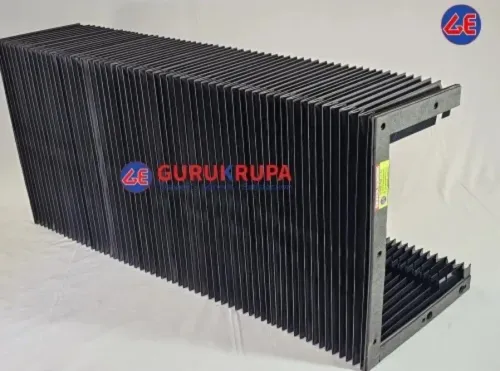
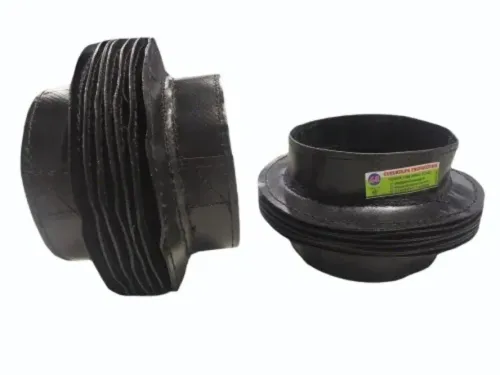
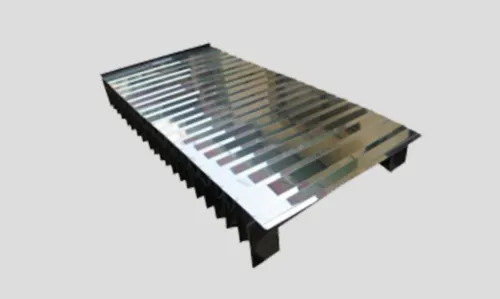
A Rome workshop turns the drawing into a finished cover by converting machine geometry into a controlled fabrication sequence. The Trumpf laser bellow cover process starts with the machine model, protected axis, opening, extended and compressed lengths, fold pitch, width, height, end-frame dimensions, hole pattern, support arrangement, speed and acceleration.
1. The technician reviews the drawing against a dimensional survey. Missing travel, folded height or mounting details are resolved before material is cut; otherwise a precise-looking cover can still foul the guideway.
2. The fabric and coating are selected for hot particles, laser-cutting residue, coolant, oil and abrasive dust. Glass-fibre fabric with an elastomeric or fluoropolymer coating is one common construction, but exposure determines the actual laminate.
3. Patterns are cut to the approved dimensions, with allowances for seams, hems and attachment strips. Panels are then formed into the specified folds so the cover reaches its extended length without excessive compression.
4. The bellows body is joined by sewing, bonding, welding or a combined method. That choice controls flexibility, leak resistance, repairability and resistance to hot-particle attack.
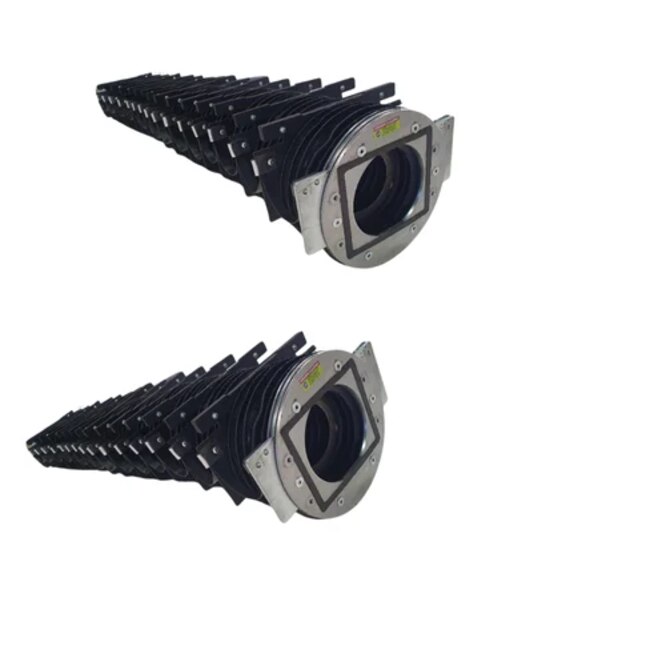
5. End frames, flanges, retaining strips and fasteners are installed to match the machine interface. Poorly supported ends transfer load into the folds and can split seams prematurely.
6. Inspection checks dimensions, fold count and pitch, frame alignment, hole positions, compressed and extended lengths, and unobstructed movement.
The completed Trumpf laser bellows manufacturing job is cleaned, protected from crushing and packed with its inspection record, drawing revision and identification label.
Which materials and joining methods suit the laser environment?
Laser heat and hot spatter demand more than a flexible fabric: specify a coated technical textile against the actual exposure. Glass-fibre fabric with an elastomeric or fluoropolymer coating suits abrasive cutting residue, sparks, coolant and lubricants; the laminate must state its operating-temperature and chemical-resistance limits.
A sacrificial outer ply protects the flexible inner ply, while the fold pitch and folded height must prevent rubbing, sagging or bottoming out.
| Exposure | Material and ply choice | Joining method | Main risk if mismatched |
|---|---|---|---|
| Hot spatter and laser residue | Coated glass-fibre outer ply with protected inner ply | Welded or bonded seams, with mechanical fastening at exposed ends | Punctures, delamination or seized folds |
| Coolant and oil | Elastomeric or fluoropolymer coating specified for those fluids | Bonded or welded seams with sealed edges | Swelling, softening and leakage |
| Abrasive guideway dust | Closed, abrasion-resistant outer surface | Sewn seams with protected stitching, or bonded seams | Dust enters the fold pack and wears the substrate |
| Tight repeated motion | Flexible multi-ply laminate with controlled fold pitch | Sewing or flexible bonding where repairability matters | Cracked seams, restricted travel or trapped folds |
The Trumpf laser bellow cover specifications must identify the fabric, coating, ply order, fold pitch, folded height and joining method—not merely state “laser compatible.” The Trumpf laser bellow cover process should inspect every seam and frame attachment after forming, because a perfect material fails if a hot particle reaches an open stitch or the compressed package occupies cable-carrier clearance.
How do you prove a Trumpf cover will fit and survive motion?
Trumpf compatibility means a geometry-specific match, not a brand name. “Trumpf laser bellow covers Rome” does not identify the machine model, protected axis or opening, mounting arrangement, or whether the part replaces an original cover. The Trumpf laser bellow cover specifications must come from the machine record and a dimensional survey.
1. Record the exact Trumpf model, axis, enclosure location, and OEM or custom replacement status.
2. Measure the required extended length, compressed length, axis travel, fold pitch, number of folds, overall width, and folded height. Compare these figures with the original cover, not a catalogue size.
3. Measure each end frame, flange geometry, flange orientation, and mounting-hole pattern, including hole diameter, spacing, and edge distance.
4. Map clearance through the complete stroke, including the parking position. Check for contact with way covers, tooling, clamps, sheet metal, guides, and the cover itself when folds compress.
5. Give the supplier the axis speed and acceleration limits. Reserve space for the cable carrier and its bend radius; a carrier routes cables, while a bellows protects the guideway, so they cannot share the same envelope automatically.
6. At acceptance, measure the cover extended and compressed, verify the holes and flange orientation, then run it through full travel at operating speed. Reject uneven fold opening, fold-to-fold rubbing, loose threads, unbonded seams, fabric cuts, or distorted frames.
A static fit proves little. The cover must clear every neighbouring component while moving under maximum travel and acceleration.
What should the quotation and acceptance record contain?
Do not approve a quotation that says only “Trumpf-compatible.” It must identify the machine model, protected axis or opening, drawing number and revision, and whether the cover is an OEM component, an approved replacement or a reverse-engineered aftermarket part.
Document how Trumpf laser bellow covers are made in Rome by naming the actual production site, country of origin, and any separate assembly or shipping location.
Request one signed specification sheet. The trumpf laser bellow cover specifications should include:
- Overall width and height, extended and compressed lengths, travel, folded height, fold count and fold pitch
- End-frame dimensions, flange orientation, mounting-hole pattern and cable-carrier clearance
- Fabric, laminate, coating thickness, operating-temperature range, minimum bend radius, and resistance to sparks, coolant, oil and abrasive dust
- Permitted speed and acceleration, drawing revision, material batch or lot, and quotation validity
GURUKRUPA BELLOWS PVT LTD should state these values rather than substitute “size: any” for a measured design.
| Status | Evidence to retain | Approval consequence |
|---|---|---|
| OEM component | OEM part number and traceable supplier documentation | Accept only if identity matches the machine record |
| Approved replacement | Written compatibility basis and controlled drawing | Accept after dimensional and motion checks |
| Aftermarket or reverse-engineered | Survey dimensions, revision-controlled drawing and test record | Require full buyer acceptance before installation |
The final record should include extended and compressed measurements, hole-pattern verification, uniform fold opening, and a full-stroke run at maximum acceleration and parking position. Reject cuts, unbonded seams, loose threads, distorted frames, fold rubbing or contact with tooling, way covers or sheet metal.
Related product
 | Trumpf Laser Bellows Product Details: Minimum Order Quantity 1 Number Brand GE Color Black Size any We offer bellows made specifically for your Trumpf® laser machine. View product → |
Frequently asked questions
What does “made in Rome” mean for a Trumpf laser bellow cover?
It means fabrication takes place at a named production site in Rome. A Rome sales address, warehouse, shipment, or keyword phrase does not prove manufacturing origin.
How is a Trumpf laser bellow cover made in a Rome workshop?
The process starts with the machine drawing and motion requirements, then converts them into measured panels, reinforcements, seams, mounting features, and a finished cover checked against the required geometry.
Which materials and joining methods suit a laser environment?
Choose the cover fabric, coating, thread, seam construction, shields, and reinforcements according to radiant heat, sparks, molten particles, dust, coolant, chemicals, abrasion, and the cover’s travel speed.
How do you prove a Trumpf laser bellow cover will fit and survive motion?
Provide the machine interface dimensions, compressed and extended lengths, travel direction, clearances, mounting points, speed, acceleration, and interference risks. Verify the finished cover through dimensional inspection and repeated motion checks.
What belongs in the quotation and acceptance record?
Record the revision-controlled drawing, dimensions and tolerances, materials, joining methods, mounting hardware, test conditions, inspection results, delivery scope, warranty, and the procedure for handling deviations.