Dust, grinding grit, coolant mist, metal chips and humid air do not create the same protection problem on a machine. Match the cover construction to the contaminant, movement and available clearance, then verify the dimensions and installation details before requesting a quotation.
Key takeaways
- Match fabric, coatings and seams to dust, heat, oil and coolant exposure.
- Measure compressed length, extended length, stroke, diameter and mounting clearances.
- Use steel covers for hot chips and bellows for flexible, enclosed protection.
- Inspect folds, clamps, seams and end mounts before contamination reaches moving parts.
What makes a bellow cover cylindrical, and where does it fit?
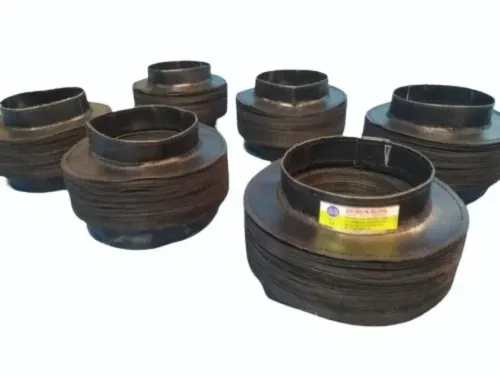
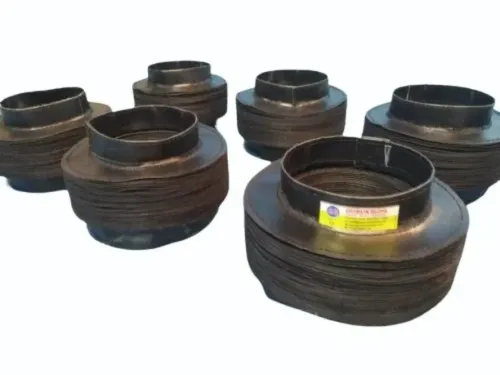
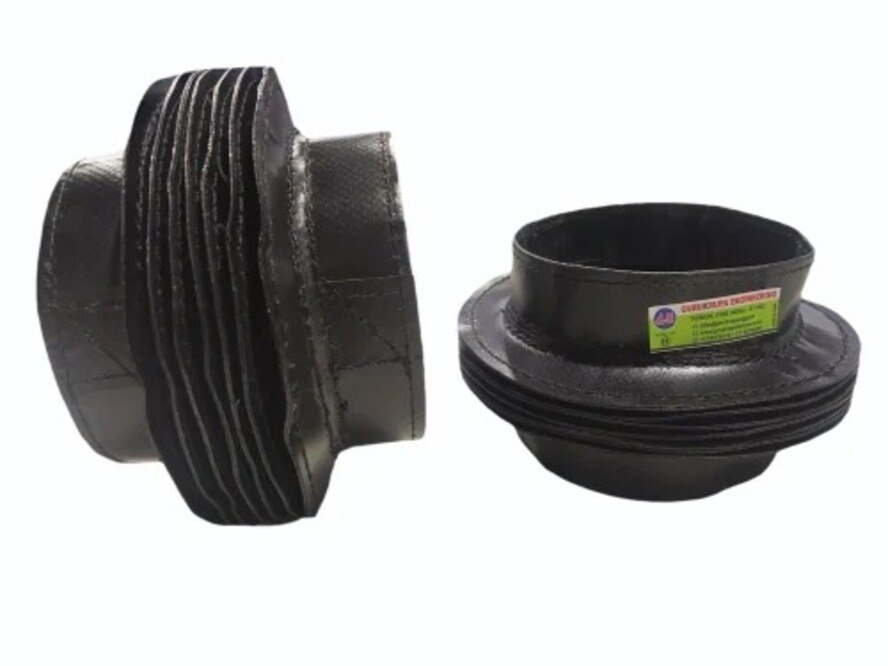
A cylindrical bellow cover is a flexible sleeve with a circular cross-section that expands and contracts along an axis. It fits linear components such as machine guideways, slides, ballscrews, hydraulic rods and pneumatic cylinders, where the protected part moves in and out rather than side to side.
“Cylindrical” describes the envelope, not the fold pattern. A concertina cover uses pleats and can be cylindrical; a simple round tube has no folding travel; a telescopic steel cover uses overlapping rigid boxes. Cylindrical bellows for machine guideways suit applications needing low mass, compact collapsed length and flexibility.
| Design | Movement and construction | Best fit |
|---|---|---|
| Cylindrical bellows | Axial extension and compression through pleated fabric or elastomer folds | Guideways, slides, rods and enclosed linear shafts |
| Telescopic steel cover | Rigid nested sections slide over one another | Hot chips, impact and heavy machining |
| Flat or rectangular bellows | Folded cover moves over a broad, non-round section | Wide beds, tables and rectangular guideways |
Do not select a stationary guideway bellows for a rotating shaft. A rotating installation needs a separate review of balance, centrifugal loading, peripheral speed, drag and entanglement risk.
Check the cover dynamically, not only during static fit-up. Cycle it through full travel at operating speed and acceleration, then inspect for fold inversion, rubbing, sag, edge movement and trapped grit. Fine abrasive dust can enter through pleat folds or unsealed end plates, while excessive compression can buckle folds and pull an attachment loose.
Long or fast covers may need support hoops, internal rings or a guide tube.
Match Surat’s contamination to the cover construction
Fine dust needs a sealed, flexible laminate; hot chips need a shield that will not tear. Match the cover to both the contaminant and its impact energy, not merely to the machine’s stroke.
For cylindrical bellow cover dust protection in Surat, close the leak paths at pleat folds, end frames and mounting gaps. A fabric bellows still leaks if its end plates do not seal against the machine or if compression crushes the designed fold geometry.
| Contaminant | Suitable construction | Critical protection detail |
|---|---|---|
| Fine dust and abrasive grit | Coated polyester or polyurethane fabric with sealed seams and retained end frames | Clamp the frame evenly; inspect pleats for packed grit |
| Coolant, oil and mist | Chemically compatible polyurethane-coated laminate with sealed or welded edges | Confirm resistance to the specific coolant; an unsealed edge can delaminate |
| Humidity and monsoon moisture | Corrosion-resistant stainless hardware or a specified coating system | Drain the lower edge and remove water traps around fasteners |
| Metal chips and heavy process debris | Telescopic steel cover, chip deflector or hybrid bellows-and-shield arrangement | Fabric alone can puncture, sag or trap sharp swarf |
| Hot chips and welding spatter | Heat-rated fabric with a sacrificial shield for light exposure | Use steel or dedicated heat shielding for sustained sparks and heavy spatter |
Persistent wet contamination attacks end frames, bolts and guides even when the fabric looks sound. Specify the temperature range, chemical exposure limits and cleaning method, then test full travel for rubbing, fold inversion, trapped debris and edge movement. A mechanically retained frame is easier to inspect than adhesive-only bonding.
Specify the dimensions and motion before ordering
A manufacturable quotation needs more than a diameter: record the guideway’s stroke, fully compressed and fully extended lengths, inside and outside diameters, mounting arrangement, clearances and motion profile. These dimensions determine whether cylindrical bellows for machine guideways can fold without rubbing, buckling or pulling free.
Give the manufacturer:
- Stroke, compressed length and extended length
- Inside diameter, outside diameter and the allowable minimum bend radius
- End-flange dimensions, bolt-hole pattern, clamp or bonded attachment, and sealing surface
- Guideway, shaft or cylinder clearance, including the maximum offset during travel
- Guide tube, support hoop, internal ring or external support requirements
- Operating speed, acceleration, cycle frequency and cycle count per shift
- Temperature, coolant, oil, abrasive dust and chip exposure
- Whether the cover is stationary around a moving shaft or rotates with it
| Measurement | Why it matters | Failure if omitted |
|---|---|---|
| Stroke and lengths | Sets pleat count and fold geometry | Over-compression, sag or incomplete coverage |
| Inside and outside diameters | Defines clearance and material envelope | Rubbing against the shaft, guideway or adjacent fold |
| Mounting details | Holds the ends square and sealed | Edge movement, dust leakage or detachment |
| Speed and acceleration | Determines support and dynamic stability | Buckling, heat and accelerated fold-root cracking |
| Rotation and balance | Governs centrifugal loading and peripheral speed | Drag, imbalance or entanglement |
Test the proposed cover through full travel at the intended speed and acceleration. Inspect fold roots, end attachments and support points for rubbing, inversion, sag, trapped grit and edge movement; static fit-up will not reveal dynamic contact.
Choose between bellows, steel covers, wipers and guards
Choose a cylindrical bellows when the moving part needs low-mass protection through extension and compression, especially around guideways, shafts, cylinders or slides with limited clearance. It suits airborne dust, coolant mist, oil and light debris, but fabric alone is the wrong barrier for hot, sharp or heavy chips.
| Option | Main advantage | Choose it when |
|---|---|---|
| Cylindrical bellows | Flexible, lightweight and compact when collapsed | Dust, grit, coolant mist or oil threaten a moving shaft, slide or guideway |
| Telescopic steel cover | Resists impact, hot chips and abrasive swarf | Ferrous machining produces heavy, sharp or hot chips |
| Wiper or scraper | Removes contamination at a moving edge | A guideway needs a contact seal against chips, coolant or grit |
| Brush seal | Blocks loose debris while allowing movement | You need a simple perimeter barrier against dust or light chips |
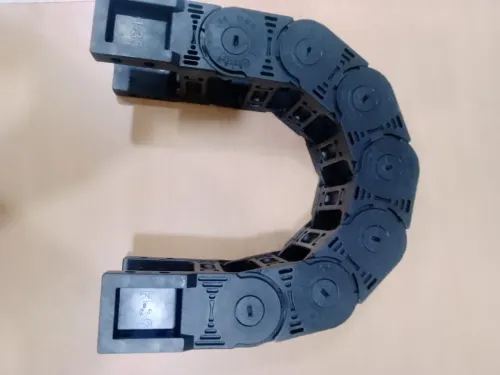
| Flexible guard | Covers irregular paths and exposed moving parts | Cables, hoses or linkages need protection rather than a sealed guideway cover |
| Hybrid arrangement | Shares impact and flexibility duties | A steel chip shield protects the outside while bellows seal the moving interface |
Cylindrical bellow covers for contamination problems in Surat need sealed end frames and mounting gaps; otherwise fine abrasive dust enters through the folds. Do not compress the bellows beyond its specified geometry, because pleat inversion and fold-root cracking follow.
Ask a cylindrical machine bellows supplier in Surat for a drawing showing free and compressed length, fold pitch, temperature and chemical limits, mounting details, cleaning method and replacement identification. GURUKRUPA BELLOWS PVT LTD can use those details to make replacement procurement practical after relocation or failure.
Related products
 | Bellow Cover The range of CNC Bellow Cover is manufactured on our premises, under the guidance of our expert professionals. View product → |
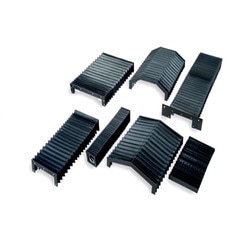 | CNC Bellow Cover Product Details: Brand GURUKRUPA Color BLACK Size ANY We are considered a well-known name in the business that manufactures and supplies CNC Bellow... View product → |
Install and inspect the cover before contamination causes failure
A static fit-up proves very little. Align the cylindrical bellows concentrically with the guideway or shaft, keep both end frames square, and cycle it through the complete stroke before accepting the installation.
1. Clean the mounting faces, bolt holes and flange edges. Remove grit, oil and coolant residue, then check that the supplied bolt pattern matches the machine. Uneven faces twist the cover and force one side of each fold to rub.
2. Mount the end frames mechanically where possible, using the specified clamps, bolts and seals. Do not rely on an adhesive that the fabric, coolant or operating temperature can attack. Seal the frame-to-machine joint without closing the drainage or inspection path needed by the design.
3. With power isolated, move the slide slowly by hand through its collapsed and extended positions. Confirm that no fold pinches, inverts, contacts a rail, or catches a bolt head. Correct alignment before connecting the drive.
4. Run the cover through full travel at its intended speed and acceleration. Watch for pleat contact, edge movement, unsupported sag and separation; then inspect folds for trapped dust, chips or coolant. Static clearance will not reveal dynamic buckling.
5. Examine fold roots and clamped or bonded edges after the first operating cycles and during scheduled maintenance. Replace the cover when you find cracking, delamination, loose clamps or a leaking seam rather than patching a damaged fold.
Fine abrasive dust can enter through end-frame gaps, creating a cylindrical bellow cover failure in Surat even when the outer surface looks closed. Never use a stationary guideway cover around a rotating shaft without checking balance, peripheral speed, drag and entanglement risk.
Frequently asked questions
What is a cylindrical bellow cover used to protect?
It protects axially moving components such as machine guideways, slides, ballscrews, hydraulic rods and pneumatic cylinders from contamination.
How do you match a cylindrical bellow cover to Surat’s contamination?
Identify the contaminant first, then select construction and materials for conditions such as dust, metal chips, coolant, oil, heat and corrosion.
What dimensions are needed before ordering a cylindrical bellow cover?
Provide the protected component’s diameter, compressed and extended lengths, stroke, mounting dimensions, motion speed and available clearances.
When should you choose a bellow instead of a steel cover or wiper?
Choose a bellow for flexible enclosed protection around axial motion; choose steel covers for hot, sharp chips, and wipers for exposed sliding surfaces.
What should you inspect after installing a cylindrical bellow cover?
Check smooth full-stroke movement, fold compression, end mounts, clamps, seams and clearance before running the machine under production conditions.
Related products
 | Round Bellow Covers ₹1000 To match with our reputation in the market, we are here to present an unparalleled assortment of Round Bellow Covers. View product → |
 | Bellow Cover ₹5000 Product Details: Brand GURUKRUPA Color Black-Blue Size Customised With the support of our excellent team workers, we have been delivering the best... View product → |