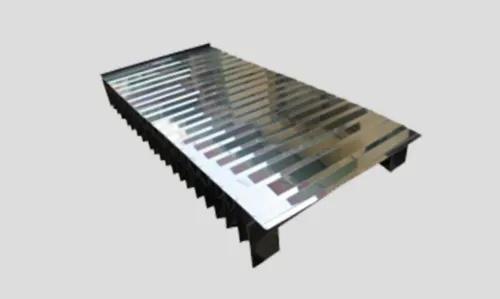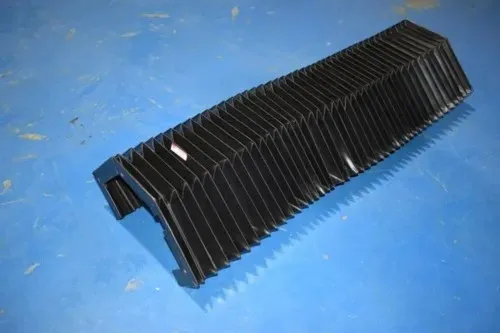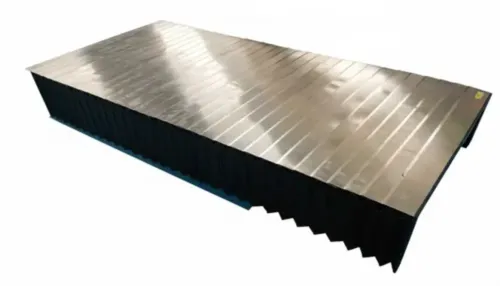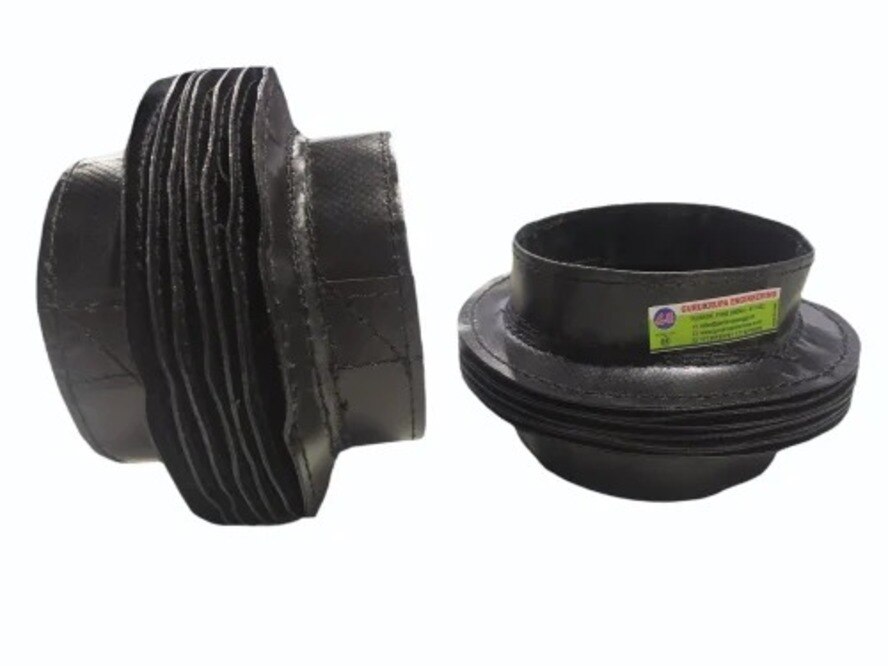
An exposed ball screw can turn chips, abrasive dust, coolant and cutting oil into friction, positioning errors and an avoidable axis failure. By comparing protection methods, application hazards, fit requirements and lifecycle cost, you can decide whether a ball screw bellow cover is sensible for your machine or an expensive mismatch.
Key takeaways
- Buy protection when exposed screws face chips, coolant mist, dust, or abrasive debris.
- Compare bellows with telescopic covers, wipers, and sealed enclosures before choosing.
- Measure compressed length, extended length, height, width, travel, and mounting clearance.
- Inspect the moving assembly to confirm the cover will not rub or restrict travel.
When protection pays for itself
Yes, contamination justifies buying ball screw bellow covers when the screw operates outside a clean, sealed enclosure. Leaving it exposed lets particles enter the nut’s ball-return path, score the raceway, increase friction, and reduce positioning accuracy. Coolant mist can also dilute or remove the grease film that separates the balls from the raceway.
The case is strongest when the axis faces:
- Metal chips from turning, milling, or drilling
- Abrasive dust from grinding or cast materials
- Grinding swarf and fine debris
- Coolant mist or cutting oil directed toward the screw
A ball screw protection cover reduces exposure, but it does not make the assembly contamination-proof. Nut wipers, end seals, bearing seals, lubrication, and nearby chip guards still need to work together; an exposed mounting gap can let coolant reach the screw even when its middle is covered.
Compare the cover’s installed cost with cleaning, seal replacement, lost axis availability, and a failed ball-screw assembly. Protection pays back fastest on expensive or difficult-to-access axes, where one contamination-related failure creates a long maintenance interruption. It is less compelling on a low-duty axis inside a genuinely clean enclosure.
Treat the cover as a replaceable wear component, not a permanent shield. Inspect it for a pinhole, cut, separated seam, loss of fold shape, or rubbing mark; attachment alone proves nothing. Replace it when damage permits contamination through, and verify that no part contacts the rotating screw or nut across the full stroke.
How bellows compare with other barriers
A ball screw bellows is the better choice when the screw needs continuous coverage through a long, moving stroke and space is too tight for a steel enclosure. It is worse when sharp swarf, hot chips, steam cleaning or severe abrasion will attack the folds.
| Option | Main strength | Better or worse choice |
|---|---|---|
| Ball screw bellows | Flexible, enclosed coverage across moving strokes | Better for dust, coolant mist and restricted spaces; worse for hot or sharp chips |
| Wiper | Scrapes contamination at the nut or screw interface | Better as a secondary seal; inadequate as the only barrier against falling chips |
| Brush | Low-cost exclusion of coarse debris | Better for light contamination; bristles do not seal coolant or fine abrasive dust |
| Spiral guard | Compact protection around a rotating screw | Better where rotation and limited clearance dominate; less suitable for heavy chip impact or complex motion |
| Telescopic cover | Rigid steel protection from chips and impact | Better for heavy, hot swarf; needs more space and careful guidance |
| Rigid machine guard | Fixed, durable separation from the cutting zone | Better for stationary exposure; cannot follow a long moving axis without another barrier |
Treat the bellows as a contamination barrier, not a chip conveyor or drain. Upward-facing folds can hold swarf and coolant, while a gap at either mounting end can defeat an otherwise sound machine tool ball screw cover.
Check the actual acceleration, reversal rate, orientation and stroke frequency. A cover that survives slow positioning can fail when folds rub or strike during rapid reversals. For heavy chip loads, combine a rigid chip shield with bellows to close the remaining gaps.
The dimensions that determine whether it will fit
Fit depends on the moving envelope, not only the ball screw’s nominal length. Before ordering a ball screw protection cover, provide measurements from both ends of the stroke and record the nut’s actual position in each.
1. Measure the screw’s outside diameter, overall exposed length, thread or raceway length, and the nut’s maximum outside diameter, length, flange shape, and mounting-hole pattern.
2. Measure the available radial clearance around the screw, nut, coupling, bearing housing, and nearby guides. Include the smallest gap; a frame that clears one end can strike the machine at the other.
3. State the working stroke, then request both maximum extended length and minimum compressed length. A single nominal stroke figure hides the packed-space requirement: more folds add stroke capacity but also increase folded length and fatigue locations.
4. Measure the distance between the proposed mounting faces, their widths and heights, bolt spacing, bolt size, and any offset from the screw centreline. Identify whether the cover mounts to the fixed end, moving nut, or both.
5. Mark the motion direction, screw-and-nut arrangement, and required orientation. Send a dimensioned drawing or CAD model plus photographs showing both end positions when requesting custom ball screw bellow covers.
Check every measurement against the moving assembly, not an idealised drawing. State coolant direction and nearby obstructions too; an accurate cover with the wrong mounting gap can still leave an entry path for chips and fluid.
Check the moving assembly, not just the drawing
A cover that matches the drawing can still fail when the axis moves. Check the complete moving assembly at both end positions, because the compressed pack may occupy the ball nut’s travel space or strike a nearby casting.
A safe installation checklist includes:
- Measure required stroke, extended length and compressed length. Request both length figures; “nominal stroke” alone does not show how much space the folded ball screw bellows need.
- Check the available installation envelope, mounting-frame dimensions and screw-and-nut clearance. Photograph the assembly fully extended and fully retracted.
- Record whether the screw rotates or the nut rotates, and show the screw’s position relative to the moving member. This affects rubbing, twisting and mounting direction.
- Describe the motion profile: feed rate, acceleration, reversal frequency and cycles per hour. A cover that survives slow positioning can fatigue when folds repeatedly impact during rapid reversals.
- State the orientation—horizontal, vertical or inclined—and identify unsupported spans. Gravity can make folds sag into the screw or rub against the nut.
- Specify chips, abrasive dust, coolant, cutting oil, steam cleaning and radiant heat. Obtain continuous and peak temperature limits for the fabric, coating, adhesive, stitching, frame and mounting hardware separately.
- Confirm that the mounting method allows the bellows to move freely through the full stroke. Tight frames, misalignment or a sharp edge can cut the cover before contamination becomes the problem.
A machine tool ball screw cover is ready for approval only after its folded pack clears every moving and fixed part in a physical or CAD motion check. A custom design earns its cost when restricted clearance, unusual nut geometry or a rotating-nut arrangement makes a standard cover unsafe.
A buying decision based on total operating cost
Compare each quote with one production interruption, not with another cover’s purchase price. The useful calculation is installed cost plus design time, fitting, inspection and replacement against cleaning the screw, replacing seals or the ball-screw assembly, lost axis availability and requalification after accuracy loss.
| Option | Purchase and design cost | Inspection and failure exposure | Best economic fit |
|---|---|---|---|
| Standard cover | Lowest initial cost; confirm stroke and clearance | Lower design effort, but a poor fit can rub or leave gaps | Clean, accessible, low-duty axes |
| Custom ball screw bellow covers | Higher design cost; require drawings, photos and operating data | Correct fit reduces exposure; inspect the same failure points | Restricted, high-value or difficult-to-access axes |
| Rigid or hybrid protection | Higher installation cost and space demand | Better against hot or sharp chips; still inspect seals and gaps | Heavy swarf, heat or impact hazards |
Include the cover’s extended length and compressed length in the quotation. More folds can support longer travel, but increase packed length, fatigue locations and replacement burden. GURUKRUPA BELLOWS PVT LTD is one supplier to evaluate by asking for those dimensions and the mounting details rather than accepting a nominal stroke alone.
Inspect for pinholes, cuts, exposed reinforcement, separated seams, cracked coating, distorted frames, lost fold shape and rubbing marks. Replace on condition; attachment does not prove the cover still blocks contamination. Ball screw bellow covers earn their cost fastest where a failed assembly would halt an expensive axis or require difficult requalification.
Related products
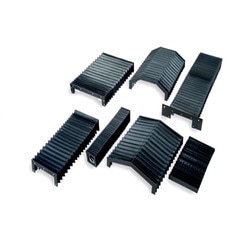 | CNC Bellow Cover Product Details: Brand GURUKRUPA Color BLACK Size ANY We are considered a well-known name in the business that manufactures and supplies CNC Bellow... View product → |
 | Bellow Cover ₹5000 Product Details: Brand GURUKRUPA Color Black-Blue Size Customised With the support of our excellent team workers, we have been delivering the best... View product → |
Frequently asked questions
When do ball screw bellow covers pay for themselves?
They pay for themselves when contamination can damage the ball-return path, raceway, lubrication film, positioning accuracy, or maintenance schedule.
How do ball screw bellows compare with other barriers?
Bellows suit moving axes that need a flexible barrier, while telescopic covers, wipers, and sealed enclosures suit different space, travel, and contamination conditions.
Which dimensions determine whether a ball screw protection cover will fit?
Check compressed and extended lengths, cover height and width, axis travel, mounting points, folded thickness, and clearance from nearby moving parts.
Why inspect the moving assembly before ordering custom ball screw bellow covers?
A drawing can miss cable loops, coolant lines, fasteners, and interference points that cause rubbing, restricted travel, or premature cover failure.
How should you compare machine tool ball screw cover options by cost?
Compare purchase price with installation time, cleaning, relubrication, downtime, replacement frequency, and the cost of lost accuracy or damaged components.
Related products
 | Bellow Cover ₹1000 Product Details: Brand GE Color Black-Blue - Gray -White Size ANY ( C shape, Square, Round, Rectangular) Ours is a trustworthy name in the business... View product → |
 | Telescopic Bellow Cover ₹1000 Product Details: Brand GURUKRUPA Ours is a distinguished name in the business that manufactures and supplies Telescopic Bellow Cover that is vastly... View product → |