A metal flap bellow is more than a row of stainless-steel strips: its performance depends on overlapping lamellas, flexible joints, wipers, frames, seals, and support hardware working together. By the end, you will know what to inspect in the construction, how to match the cover to your machine and environment, and which dimensions and performance details to put into a quotation request.
Key takeaways
- Ask for lamella grade, thickness, finish, and temperature limits.
- Measure travel, compressed length, extended length, and mounting dimensions.
- Choose metal lamellas for impact; avoid them where tight bending dominates.
- Demand drawings, materials, seals, hardware, and testing details in the quotation.
What a Metal Flap Bellow Actually Includes
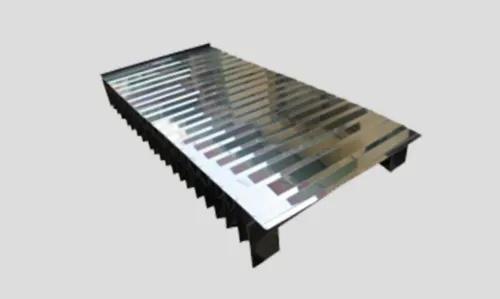
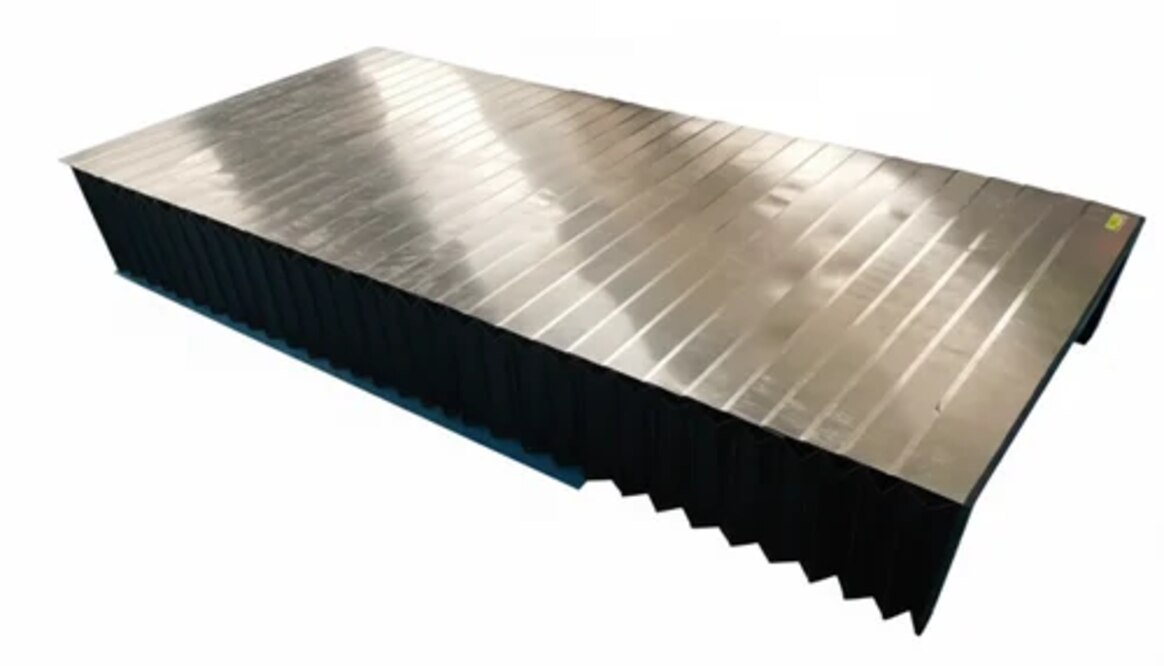
A metal flap bellow combines overlapping metal lamellas, a flexible bellows body, joining materials, seals, and mounting hardware. Together, these parts provide metal flap machine protection: the slats take the direct chip impact while the folded body follows the machine’s axis travel.
- Metal lamellas or flaps: Overlapping stainless-steel or coated-metal slats form the exposed wear surface. They deflect sharp swarf, abrasive chips, and intermittent hot chips away from the guideway.
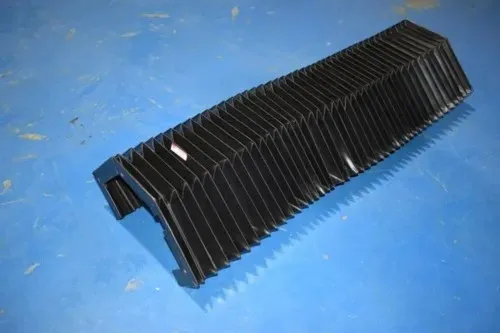
- Flexible bellows body: Fabric, elastomer-coated fabric, or another flexible substrate connects the folds and allows the cover to compress and extend repeatedly.
- Lamella attachments: Rivets, stitching, bonded sections, or flexible links hold each slat to the bellows without preventing fold movement.
- Side seals and inter-lamella overlaps: These reduce the paths through which chips, coolant, and dust can enter. They do not make the cover automatically liquid-tight.
- Wipers or scrapers: Contact strips remove chips and excess coolant as the cover moves, protecting the folds and guideway edges.
- End frames and mounting plates: These secure the cover to the machine at both ends and transfer movement loads into the structure.
- Guides, supports, and fasteners: These control sag, lateral drift, and rubbing when the cover is extended or compressed.
A quotation for an SS lamella bellow cover should identify the lamella thickness, bellows substrate, coating, wiper material, fold pitch, frames, fasteners, and guide hardware. “Stainless-steel bellow” alone does not define those working parts.
Lamella Material, Stainless-Steel Grades, and Exposure Limits
Stainless steel offers corrosion resistance and chip durability, but “stainless” does not identify a grade. SS lamella bellow covers should state the lamella grade and thickness; stainless steel bellow covers in Vadodara should not be specified from a supplier’s label alone.
A flexible bellows substrate, coating, wipers, seals, fasteners, and frames may have lower exposure limits than the slats.
| Option | What it means | Main trade-off |
|---|---|---|
| Stainless steel | AISI 304 suits many coolant and humid machining environments; AISI 316 is preferred for chloride, saline washdown, or harsher chemicals | Strong corrosion resistance, higher weight and cost |
| Coated steel | Steel protected by paint, plating, or another stated coating | Lower initial cost, but chips, scratches, heat, and chemicals can expose the base metal |
| Aluminum | Lightweight, naturally corrosion-resistant in many environments, and easier to move | Lower stiffness and abrasion resistance; verify compatibility with alkaline or acidic coolant |
Before approval, obtain written limits for:
- AISI grade, lamella thickness, bellows fabric and coating, wiper material, and fastener material.
- Continuous and intermittent temperature ratings for the complete assembly, not just the metal.
- Named coolant and chemical compatibility, including concentration, washdown method, and chloride exposure.
- Chip size, sharp-edge impact, abrasive dust, and expected chip volume; fine chips can enter overlaps and wipers.
- Fire classification and response to sparks, hot chips, flame, and combustible coolant. Metal slats do not make the fabric, seals, or coating fireproof.
How the Cover Moves and When Metal Is the Wrong Choice
A metal flap bellow should span the complete axis travel while folding into a verified compressed package at one end and extending without binding at the other. Overlapping lamellas must remain engaged through every fold; flexible joints and bellows material absorb the repeated movement, while the metal takes the chip and abrasion load.
Check the folded stack, brackets, wiper holders, coolant lines, tool changer, and neighbouring guards at both travel limits. Axis speed, acceleration, vibration, mounting orientation, and cycle frequency determine life. A design that survives a slow vertical axis can fail on a fast horizontal machining centre when inertia repeatedly slams the folds together.
Metal flap machine protection suits sharp swarf, abrasive chips, and intermittent hot chips. Do not select it for grinding sparks, welding spatter, or continuous high-temperature exposure until the material rating and fire-resistant construction are documented.
| Option | Choose it when | Reject it when |
|---|---|---|
| Metal flap bellow | Sharp or abrasive chips strike a moving guideway | The cover must tolerate unverified sparks, spatter, or continuous heat |
| Fabric bellows | You need low mass, tight folding, and high flexibility with light chips | Sharp swarf or abrasion will contact the fabric |
| Rubber bellows | Oil, coolant sealing, and moderate flexing matter more than chip impact resistance | Hot, sharp, or heavy chips will cut or burn the rubber |
| Aluminum apron | A broad, relatively straight guideway needs a rigid sliding or rolling shield | The path requires tight bends or rapid, high-acceleration flexing |
How to Measure the Machine Before Ordering
Supply more than the axis travel: SS lamella bellow covers need the machine envelope, motion profile, mounting details, and folded length to fit at both ends of travel. Measure the guideway and record the cover’s required width, height, compressed length, extended length, and fold count.
- Provide axis travel, speed, acceleration, vibration level, mounting orientation, and cycle frequency. A cover sized for a slow vertical axis can fail on a fast horizontal machining centre when fold inertia causes repeated impact.
- Measure available space above, below, and beside the guideway, including the folded package. Check the retracted stack, not only the individual lamella thickness.
- Photograph both ends of the axis and mark mounting-hole positions, bracket faces, guideway edges, and the required inspection or replacement access.
- Identify interference from wiper holders, coolant pipes, tool changers, neighbouring guards, cable carriers, clamps, and doors.
- State chip size, coolant type, ambient temperature, and whether chips strike from above or below.
| Position | Confirm | What goes wrong if missed |
|---|---|---|
| Retracted | Folded length, stack height, brackets, nearby hardware | The cover bottoms out or collides before full retraction |
| Extended | Overall length, lamella overlap, end mounting, guideway exposure | Overstretch or open gaps expose the guideway |
| Mid-travel | Lateral clearance, sag, piping, cable movement | Folds rub, buckle, or trap hoses during cycling |
What a Vadodara Quotation Should Identify
A quotation should let you compare identical scope, not merely compare “stainless steel bellow covers in Vadodara.” Require the supplier to identify every load-bearing, sealing, mounting, and service component. The word “stainless” alone does not state the grade, thickness, or liquid-resistance of the finished cover.
- Specify lamella grade and thickness, such as AISI 304 or 316, plus the bellows substrate, coating, fold pitch, overlap, wiper material, mounting frames, fasteners, and guide or support hardware.
- State the guideway travel, speed, acceleration, installation envelope, and support arrangement. Unlisted support hardware can cause sagging, rubbing, or interference at full extension.
- Define the sealing system: side seals, seam construction, end-frame sealing, lamella overlap, and the coolant or chemical compatibility of each elastomer and wiper.
- Ask how the cover will be inspected and repaired. Require replacement-lamella availability, wiper replacement method, access points, expected inspection intervals, and the parts included in the price.
- Request a drawing showing extended and compressed lengths, mounting-hole locations, clearances, material grades, temperature limits, coolant limits, and exclusions such as grinding sparks or welding spatter.
| Item | Weak quotation | Comparable quotation |
|---|---|---|
| Construction | “Stainless flap cover” | Grade, thickness, substrate, pitch, overlap, and frames stated |
| Support and sealing | “Guide rails and seals included” | Hardware, wipers, seams, side seals, and compatibility identified |
| Documentation | “As per requirement” | Drawing, travel limits, maintenance instructions, repair parts, and warranty terms listed |
For metal flap bellow covers in Vadodara, GURUKRUPA BELLOWS PVT LTD can be asked to place these details on the quotation rather than leaving them to verbal confirmation.
Related product
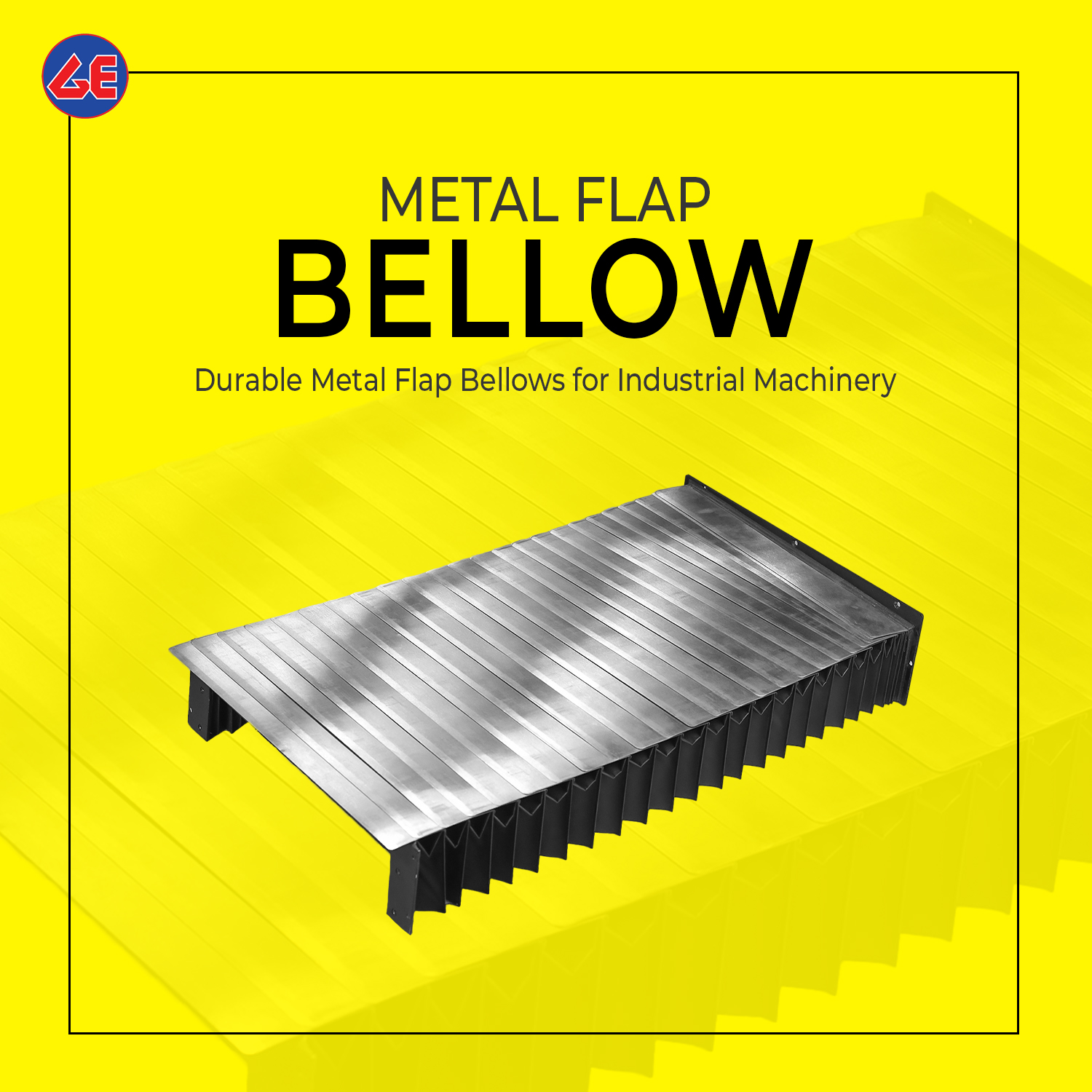 | Flexible Bellows ₹5000 Heavy-Duty Machine Protection At Gurukrupa Bellows Pvt. Ltd., we manufacture high-quality Metal Flap Bellows designed to protect machine guideways,... View product → |
Frequently asked questions
What does a metal flap bellow cover include?
It includes overlapping metal lamellas, a flexible bellows body, joining materials, seals, and mounting hardware.
Which stainless-steel details should you compare for SS lamella bellow covers?
Compare the stainless-steel grade, lamella thickness, surface finish, joining method, and stated limits for heat, corrosion, and exposure.
When is a metal flap bellow the wrong choice?
Choose another design when the application needs very tight bending, low moving mass, or movement that exceeds the cover’s flex and travel limits.
What measurements should you provide before ordering?
Provide machine-axis travel, cover width and height, compressed and extended lengths, mounting points, clearances, and the required opening direction.
What should a Vadodara quotation identify?
It should identify the lamella and bellows materials, dimensions, travel, seals, mounting hardware, operating limits, drawing revision, quantity, and delivery terms.