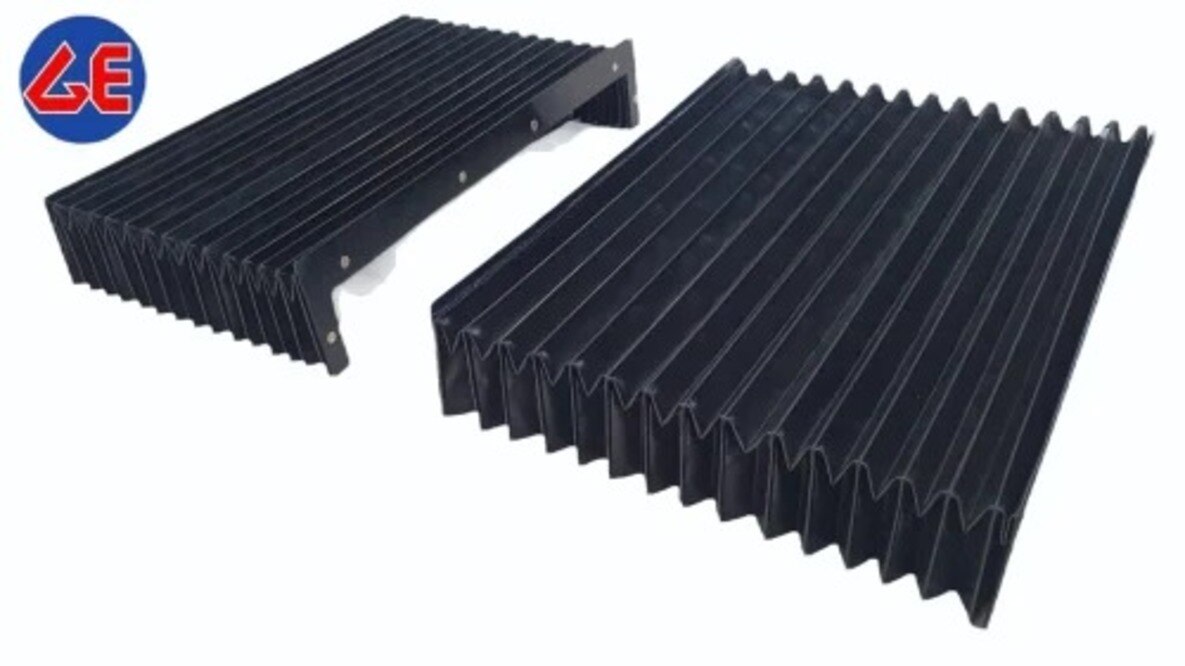
A bellow cover can keep chips, coolant and abrasive dust away from a CNC machine’s moving elements, but it is not automatically an operator guard. You will be able to match the cover type to your hazards, measure the machine safely and write a procurement specification that separates contamination control from safeguarding.
Key takeaways
- Match the cover to chips, coolant, heat, chemicals, and washdown exposure.
- Measure travel, compressed length, extended length, width, height, and mounting space.
- Use telescopic steel covers for severe heat, sharp chips, or heavy impact.
- State materials, motion, dimensions, testing, and delivery requirements in procurement documents.
What hazards do Washington CNC shops need to control?
The answer to “are bellow covers right for cnc machine operators washington dc” is yes when the cover matches the process and protects internal machine components. It is machine protection for operators, not a substitute for guarding. Washington’s indoor climate matters less than the shop’s contamination, chemistry, heat and washdown conditions.
Control these exposures before selecting a cover:
- Metal chips can score guideways, jam ball screws and damage seals.
- Coolant and hydraulic oil can penetrate folds, swell incompatible materials and carry abrasive particles into moving parts.
- Abrasive grinding dust can wear slideways, seals and cover fabric.
- Welding sparks can burn ordinary bellows; isolate the welding process or specify a spark-resistant design.
- Washdown chemicals can attack coatings, elastomers, stitching and adhesives.
- Temperature changes in unconditioned spaces can cause condensation, dimensional changes and material fatigue.
A cover prevents guideway damage that could produce unexpected axis motion when contamination interferes with travel. It also helps contain chips from damaged moving components and reduces maintenance exposure to sharp debris, oil and coolant. It cannot replace a fixed enclosure, an interlocked guard or point-of-operation safeguarding.
Private-sector employers generally fall under federal OSHA jurisdiction, including machine-guarding rules and lockout/tagout requirements under 29 CFR 1910.212 and 1910.147. Verify coverage separately for public-sector employers before relying on the same requirements.
Which machine parts need coverage, and which cover type fits?
Map the cover to the moving part and the process, not to a product name. Linear guideways, ball screws, slideways, racks, hydraulic cylinders and spindle-related moving parts need contamination protection; the correct design depends on travel, heat, chip shape and access.
| Cover type | Best fit | Main trade-off |
|---|---|---|
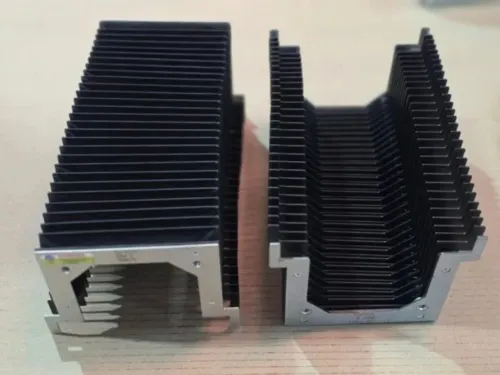
| Sewn fabric bellows | Ordinary chips, coolant mist and dust on guideways or screws | Flexible and accessible, but poor against sharp, hot or heavy swarf |
| Formed or laminated bellows | Guideways or cylinders needing consistent folds and better dimensional stability | More structured, with less flexibility and potentially harder cleaning |
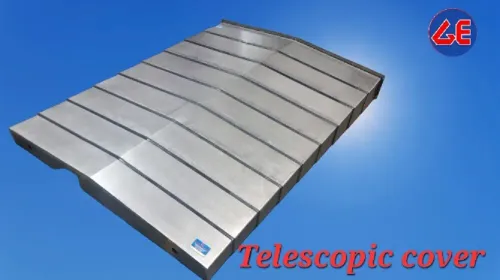
| Telescopic steel covers | Heavy or hot swarf over slideways, racks and other rigid ways | Strong heat and chip retention, but heavier and less adaptable |
| Concertina covers | Compact folding travel around cylinders, screws or spindle mechanisms | Saves space, but folds can trap coolant and chips |
| Simple chip guards | Local deflection near a rack, hose or spindle-moving part | Easy access, but leaves the component partly exposed |
Use industrial machine bellow protection for linear guideways and ball screws exposed to abrasive dust or coolant. Protect slideways and racks from direct chip impact; shield hydraulic cylinders where chips can score rods. Spindle-related moving parts need clearance checked through the full motion.
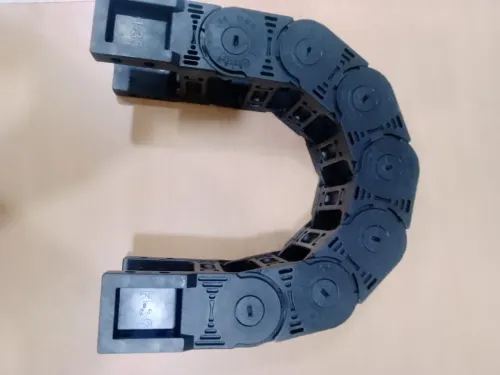
A bellow is not a general-purpose cable carrier. Power and signal cables need a rated carrier, specified dynamic bend radius, separation where required, strain relief and compatibility with coolant and chips. A cover carrying cables without that design can cause conductor fatigue and intermittent signals.
Choose between access, flexibility, heat resistance, chip retention and cleaning effort. These trade-offs matter more than the phrase bellow covers for CNC operators.
How do you measure a CNC machine for a bellow cover?
Nominal axis stroke alone is not enough: a cover can reach the stated travel and still bottom out, overextend or form a pinch point. Measure the machine in its actual installation, not from a drawing.
1. Record the axis limits and the cover’s required compressed length and extended length. Include the available compressed-space limit, folded height and width.
2. Measure both mounting surfaces: length, width, hole pattern, offsets and parallelism. Record the travel direction and specify the attachment method, such as flanges, frames, guides or brackets.
3. Map the complete clearance envelope through the approved cycle range. Include the workpiece, fixture, toolholder, spindle hardware, adjacent guards, hoses and cable routing—not only the bare axis.
4. Check the cover’s minimum bend radius against its folded geometry. Allow clearance for misalignment and side movement so folds do not rub, invert or collapse into a pinch point.
5. Record maximum speed and acceleration, including rapid moves and reversals. Acceleration can drive a cover into its end stop before the axis reaches its nominal limit.
6. Use the machine’s slow service mode to observe the full motion. Isolate the machine before taking close measurements, keep hands outside the travel envelope and never place a temporary ruler, block or string where it could become trapped.
7. Photograph each limit and note obstructions, then give the supplier these measurements for industrial machine bellow protection. Confirm the proposed cover moves freely at both axis limits without bottoming, overextending or contacting equipment.
When is a bellow cover the wrong choice?
A generic fabric bellow is the wrong choice for sustained flame, molten metal, sharp or high-velocity hot chips, severe chemical attack, high-pressure coolant, or axis motion beyond its folding geometry. Reject ordinary fabric for welding-spark exposure, grinding debris, and very hot swarf; use a metal, slat, telescoping, or specially heat-resistant design instead.
Do not accept “oil resistant” as compatibility evidence. Require data for the actual water-soluble coolant, neat oil, alkaline cleaner, tramp oil, and washdown chemical, including effects on the fabric, elastomers, adhesives, coatings, seams, and reinforcement.
After installation, treat the cover as a maintenance item, not a fit-and-forget shield. Specify cleaning access, drainage or fold orientation, and a documented cleaning interval suited to the chip and coolant load.
Folds can retain chips and coolant, hide leaks, and conceal punctures, delamination, torn stitching, loose frames, collapsed or inverted folds, and damage inside the reinforcement.
- Stop the machine and follow the approved inspection or service procedure before moving the axis.
- Inspect the full travel, each fold, mounting frame, fastener, seam, and drainage path; remove trapped chips and coolant.
- Move the axis only in the approved service mode and only after confirming that people are outside the travel envelope.
- Record defects and replace or repair the cover before production resumes.
Never reach around or under a moving cover. It supports machine protection for operators indirectly; it is not a substitute for fixed or interlocked safeguarding.
What should a Washington, DC procurement request include?
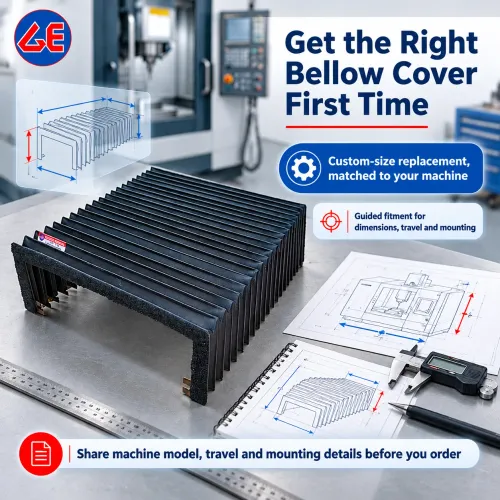
A supplier-ready request starts with the machine, not the search term bellow covers Washington DC. State the protected component and the complete operating envelope so a cover does not bottom out, overextend or create a pinch point.
- Identify the axis stroke, compressed-space limit, extended length, fold height, width, mounting geometry, travel direction and attachment method.
- Specify minimum bend radius, cycle rate, speed, acceleration and required inspection access.
- Describe chip shape, coolant, cleaning chemistry, temperature range and washdown pressure.
- State whether you need contamination protection, operator safeguarding or both.
Ask for compatibility instructions covering the actual water-soluble coolant, neat oil, alkaline cleaner, tramp oil and washdown chemical. Require maintenance instructions that explain how to inspect folds, mounts, fasteners, leaks and trapped chips through an approved service procedure.
Local sourcing becomes useful when you need a site discussion, trial fit, replacement timing or clarification of unusual geometry. A Washington-area supplier such as GURUKRUPA BELLOWS PVT LTD should be evaluated on its answers to these machine-specific questions, not on location or a generic catalogue match.
The phrase are bellow covers right for cnc machine operators washington dc is not a specification.
Use a bellow when the hazard, geometry and maintenance plan fit. Pair it with compliant guarding when people remain exposed; a flexible cover alone is not point-of-operation safeguarding.
Related products
 | Bellow Cover The range of CNC Bellow Cover is manufactured on our premises, under the guidance of our expert professionals. View product → |
 | CNC Bellow Cover Product Details: Brand GURUKRUPA Color BLACK Size ANY We are considered a well-known name in the business that manufactures and supplies CNC Bellow... View product → |
Frequently asked questions
Are bellow covers right for Washington, DC CNC machine operators?
Yes, when the cover matches the machine’s chips, coolant, heat, chemicals, travel, and washdown conditions. It protects machine components but does not replace operator guarding.
Which CNC machine parts need bellow coverage?
Use bellow covers for exposed guideways, linear rails, screws, shafts, and other moving components that collect chips or coolant. Select fabric bellows, slat covers, roller covers, or telescopic steel covers based on the hazard.
How do you measure a CNC machine for a bellow cover?
Record the required travel, compressed length, extended length, folded height, width, mounting points, clearance, motion direction, and attachment method. Confirm measurements against the machine’s full stroke and nearby tooling.
When is a bellow cover the wrong choice?
Choose another design when sharp hot chips, heavy impact, extreme heat, aggressive chemicals, or high-pressure washdown exceed the bellows material and construction limits. Telescopic steel or roller covers fit those conditions better.
What should a Washington, DC CNC cover procurement request include?
Include machine and axis details, cover dimensions, travel, speed, cycle frequency, contamination, temperature, coolant or chemical exposure, mounting drawings, material requirements, inspection criteria, and delivery terms.
Related products
 | Bellow Cover Product Details: Brand GURUKRUPA Color Black-Blue Size Customised With the support of our excellent team workers, we have been delivering the best... View product → |
 | Round Bellow Covers To match with our reputation in the market, we are here to present an unparalleled assortment of Round Bellow Covers. View product → |
 | Bellow Cover We are considered a well-known name in the business that manufactures and supplies Bellow Cover. View product → |