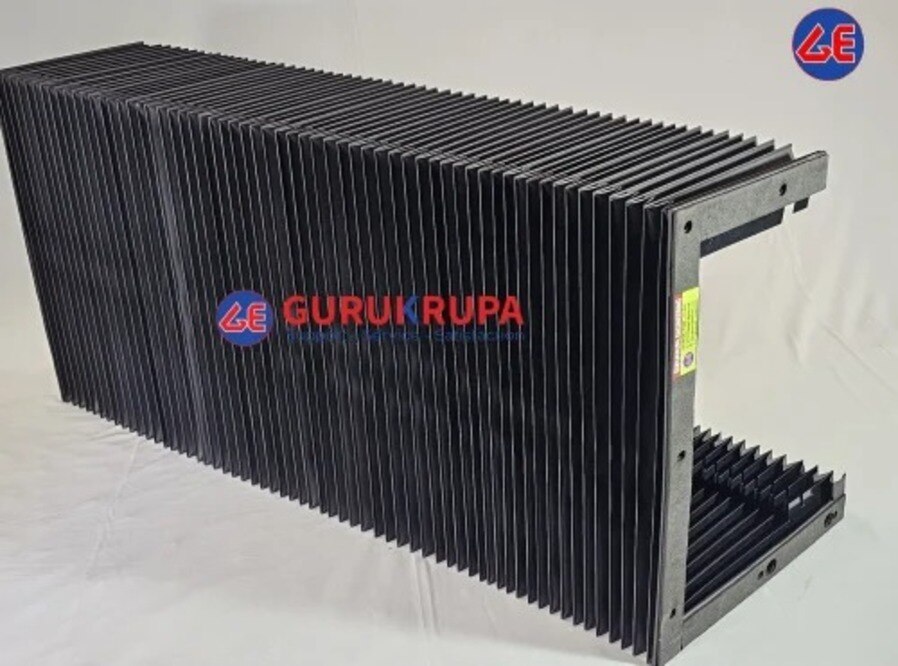
The choice depends on whether you are protecting a moving machine component or allowing a duct or piping connection to move without leaking. By the end, you will be able to classify the application, collect the specifications an end user must provide, compare construction and alternatives, and issue a quotation that can be checked after installation.
Key takeaways
- Use bellows to shield moving machine parts; use expansion joints to accommodate duct or pipe movement.
- Check axial, lateral, and angular movement against pressure and operating-cycle requirements.
- Specify fabric, coatings, layers, temperature, chemicals, and fire exposure—not temperature alone.
- Reject fabric when abrasion, pressure, leakage, or movement exceeds its construction limits.
Start with the job: protection or movement accommodation?
The deciding question is simple: does the product shield a moving machine part, or does it let a duct or pipe connection move without losing containment?
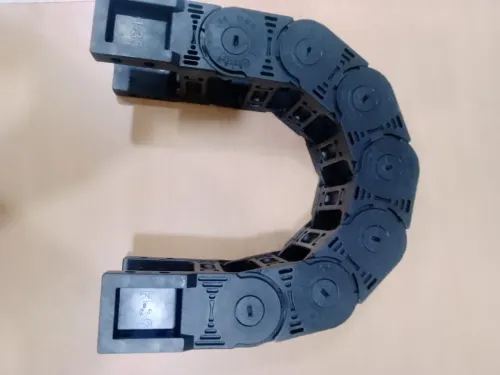
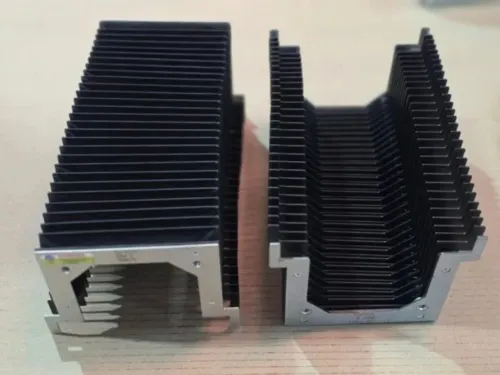
1. Choose a fabric bellow cover when the protected object is a guideway, ballscrew, slide, actuator, cable, or hose. It folds as the machine travels and blocks chips, dust, coolant, and abrasive debris. It normally operates at atmospheric pressure and is not a pressure boundary.
2. Choose a fabric expansion joint when the product joins ducting or piping. It accommodates thermal growth, vibration, lateral offset, angular movement, or equipment misalignment while retaining conveyed air, gas, or process material. Specify it for the pressure, vacuum, leakage, and movement loads rather than treating it as a machine cover.
3. Reject the cover for operator safeguarding. A bellow can shield contamination-sensitive mechanisms, but it does not automatically provide guarding, interlocking, stopping performance, or required safety distance.
For fabric bellow covers or fabric expansion joints washington buyers, classify the installation before requesting a quote:
- Machine carriage or actuator movement: fabric bellow cover.
- Fan, blower, furnace, kiln, HVAC, or dust-extraction connection: fabric expansion joint.
- Pressurized, vacuum, hot-gas, or process-media connection: pressure-rated flexible connector, not an unqualified bellow cover.
This distinction helps fabric bellow covers for equipment distributors avoid a costly substitution: a cover protects equipment; a joint manages movement and containment.
Match the joint to movement, pressure, and operating cycles
Suitability depends on the forces the joint will experience, not its temperature rating alone. Record axial compression and extension, lateral offset, angular deflection, torsion, vibration amplitude, pressure, vacuum, gas composition, particulate loading, and cycle frequency.
An axial rating does not grant equal lateral or angular capacity; obtain allowable movement in every direction and the permitted combinations for the actual operating cycle.
| Movement or force | What to verify | Consequence of mismatch |
|---|---|---|
| Axial growth or compression | Travel, spring force, and thermal-cycle count | Excess compression creates folds, leakage, and early fatigue |
| Lateral offset | Offset at each flange and movement during operation | A joint rated only axially can tear at the corners |
| Angular movement | Deflection angle and whether it combines with axial travel | Localized loading can split fabric layers |
| Vibration and misalignment | Frequency, amplitude, startup forces, and flange parallelism | Repeated flexing loosens hardware and abrades plies |
| Pressure or vacuum | Positive and negative pressure, pressure pulses, and leakage class | A fabric bellow cover is not a pressure boundary |
For fabric expansion joints for industrial equipment, specify the movement sequence, not just maximum values: startup expansion, fan vibration, shutdown contraction, and any shock load. Include liner clearance and insulation; internal hot gas can leave the outer fabric cooler than the conveyed medium, while particulate flow can erode an exposed liner.
This fabric expansion joint comparison exposes unsuitable selections before installation. Over-tightened bolts or forced alignment can cause leakage that no material change will cure.
Specify the construction and environment instead of quoting temperature alone
A temperature number alone cannot define a reliable construction. Specify the continuous operating temperature, short-term excursion temperature, and temperature at the fabric layer; hot gas at 500°F may require insulation so the outer cover remains far cooler.
Your purchasing specification should identify:
- Base fabric, coating or laminate, insulation, liner, retaining hardware, and thread or stitching construction
- Media chemistry, moisture or condensation, oil, solvents, corrosive gases, and particulate size and loading
- Internal pressure or vacuum, leakage limit, and whether the fabric contacts the flow or faces external abrasion, chips, or sparks
- Axial, lateral, and angular movement, cycle frequency, required service life, and cleaning method
- For a machine-tool cover, the chips, coolant, hot swarf, and moving surfaces that the bellows must shield
- For fabric expansion joints for industrial equipment, the gas velocity, flow direction, pressure pulses, fan vibration, and thermal cycling
- Required fire performance: flame spread, smoke production, fire resistance, or a named test classification required by the owner, code official, or insurer
A fabric bellow cover normally works at atmospheric pressure and is not a pressure boundary. Do not substitute it for a pressure-rated connector. In any fabric expansion joint comparison, document flange geometry, insulation clearances, and the temperature at every layer; missing those details creates folds, leakage, and premature burn-through.
Check dimensions, installation geometry, and regional exposure
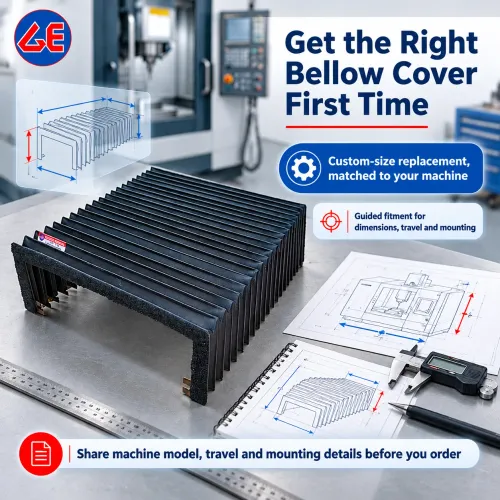
A drawing is not ready for quotation until it shows the installed envelope, not just the nominal opening. For fabric bellow covers or fabric expansion joints Washington resellers should obtain a dimensioned sketch, photographs, and the equipment maker’s flange details before ordering.
1. Measure the required length at neutral position, plus allowable compression and extension. Record inside diameter or width, outside clearance, corner radii, flange bolt-circle diameter, bolt-hole count, hole diameter, and flange thickness. For a machine cover, measure the fully open and fully closed positions so folds do not bottom out.
2. Confirm installation geometry: flange faces must be parallel, duct or guideway centerlines must align, and the joint must not carry unsupported pipe weight. Record lateral offset, angular deflection, torsion, liner clearance, insulation thickness, and nearby brackets or guards. Over-tightened bolts or a blocked liner can cause folds and leaks.
3. Document the site: indoor or outdoor location, rain, ultraviolet exposure, washdown chemicals, freeze-thaw cycles, and the lowest unheated-space temperature. Add gas temperature at the fabric layer, pressure or vacuum, particulate load, abrasion points, and cycle frequency.
This record gives fabric bellow covers for equipment distributors a defensible basis for selecting dimensions and materials. A machine cover remains atmospheric; specify a pressure-rated connector when the fabric boundary contains process pressure.
Compare alternatives and identify applications where fabric is wrong
Recommend fabric expansion joints for industrial equipment when the connection carries low-pressure air or gas and needs thermal growth, vibration isolation, or lateral movement without adding much stiffness. They suit furnace and kiln ducting, dust extraction, fans, blowers, and process-air systems when the fabric layer, liner, insulation, and flange geometry match the service.
| Option | Best fit | Reject or question it when |
|---|---|---|
| Fabric | Large duct sizes, low pressure, thermal cycling, lateral or angular movement | Pressure boundary, vacuum, sharp particulate, internal abrasion, or frequent torsion |
| Rubber | Pumps, piping, water, oils, and moderate vibration | Gas exceeds the compound’s temperature or attacks the elastomer |
| Metal bellows | High pressure, vacuum, clean media, and precise axial movement | Large lateral movement, severe particulate, or external impact |
| Braided connector | Small-bore piping, vibration, and limited offset | Large duct transitions or substantial axial compression |
| Flexible duct | Routing adjustment and low-pressure ventilation | High heat, fire exposure, pressure surges, or abrasion |
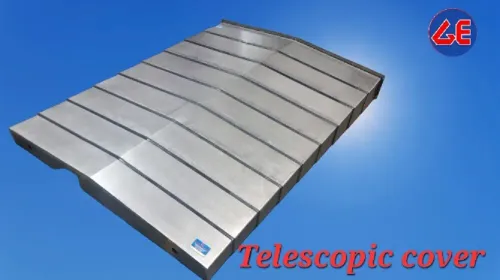
| Sliding or telescopic steel cover | Machine-tool guideways facing chips, coolant, and impact | A sealed duct connection requiring thermal compensation |
Reject fabric if pressure, vacuum, leakage control, or conveyed-media containment makes it a pressure-rated connector requirement. A fabric bellow cover normally works at atmospheric pressure; do not substitute it for a sealed expansion joint. Also reject it for uncontrolled abrasion, chemical attack, or movement beyond the allowable axial, lateral, angular, and torsional combination.
Misaligned flanges and over-tightened hardware can cause leakage even with the correct fabric.
Build a documented reseller quotation and approval process
Require a written application record before requesting a price; it prevents a distributor from quoting a pressure-bearing joint for an atmospheric machine cover. For fabric bellow covers for equipment distributors, use this approval sequence:
- Record the function, medium, pressure or vacuum, temperature at each layer, movement by axis, cycle frequency, dimensions, flange details, clearance, and installation date.
- Attach marked-up drawings, photographs, operating data, and the customer’s leakage, insulation, fire, and abrasion requirements.
- Request an itemised quotation separating fabric layers, liners, insulation, frames, hardware, freight, installation assistance, testing, and replacement parts. Compare total installed cost, not cloth price alone.
- Obtain written confirmation of exclusions, tolerances, expected service conditions, lead time, and approval drawings before releasing the purchase order.
For the search phrase “fabric bellow covers or fabric expansion joints washington,” ask GURUKRUPA BELLOWS PVT LTD to review the completed data sheet and drawing; that record gives the manufacturer evidence to correct dimensions or layer selection before fabrication.
Related products
 | Fabric Expantion Bellow Make in Heavy duty Fabric’s View product → |
 | Bellow Cover We are considered a well-known name in the business that manufactures and supplies Bellow Cover. View product → |
Frequently asked questions
What is the difference between fabric bellow covers and fabric expansion joints?
A fabric bellow cover protects moving machine components from dust, chips, heat, corrosion, and wear. A fabric expansion joint connects ducts or pipes while accommodating axial, lateral, or angular movement without losing containment.
How do you select a fabric expansion joint?
Match the joint to axial, lateral, and angular movement, pressure, operating cycles, temperature, media, chemical exposure, and installation geometry. Confirm the construction uses suitable fabric, coatings, insulation, and sealing layers.
What dimensions and installation details should a reseller collect?
Collect opening dimensions, face-to-face length, flange pattern, bolt-hole locations, available clearance, movement direction, equipment alignment, mounting access, and the expected operating position.
When is a fabric expansion joint the wrong choice?
Choose another solution when the application has severe abrasion, high pressure, aggressive chemicals, demanding leak-tightness, unsupported loads, or movement beyond the fabric construction’s tested limits.
Related products
 | Product Details: Brand Gurukrupa Material Nylon Fabric coated with polyurethane Max Temp Resistance 1000 C Offered in the market at the most... View product → |
 | Accordion Bellow Cover Ours is a trustworthy name in the business that brings forth Accordion Bellow Cover that is used for delivering controlled pressurized air to a... View product → |