The right cover depends on what reaches the moving machine surface: fine dust, abrasive chips, hot swarf, coolant, sparks, or impact. By comparing materials, motion requirements, construction details, and measured installation dimensions, you can select a fabric bellows, a metal telescopic cover, or a hybrid arrangement without relying on a catalogue photograph or machine model alone.
Key takeaways
- Choose bellows for flexible motion, irregular shapes, and low moving mass.
- Choose metal covers for rigid impact protection and heavy chip loads.
- Check temperature, chemicals, travel, compressed length, and maintenance access.
- Send a dimensioned machine sketch with travel, clearances, and hazard details.
Choose the Cover by the Hazard, Not the Name
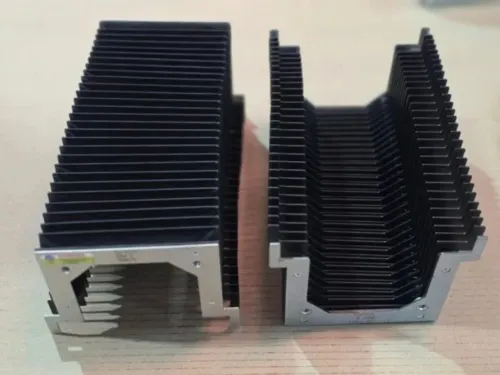
A fabric or elastomeric telescopic bellow cover is a flexible motion solution; a rigid steel cover is an impact shield. Sewn, molded, or welded bellows follow irregular shapes, rotary axes, compound motion, and tight spaces with low moving mass and quiet travel.
| Option | Practical advantage | Best fit | Main limitation |
|---|---|---|---|
| Fabric or elastomeric bellow | Flexible, light, quiet | Irregular openings, rotary axes, compound motion, fine dust, controlled chips | Puncture, abrasion, trapped chips, coolant damage, heat and welding-spark damage |
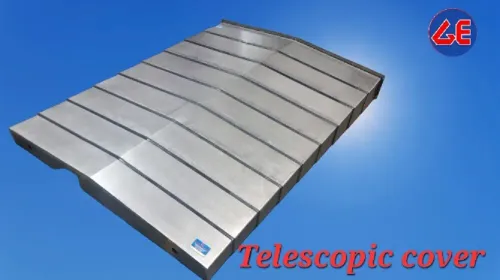
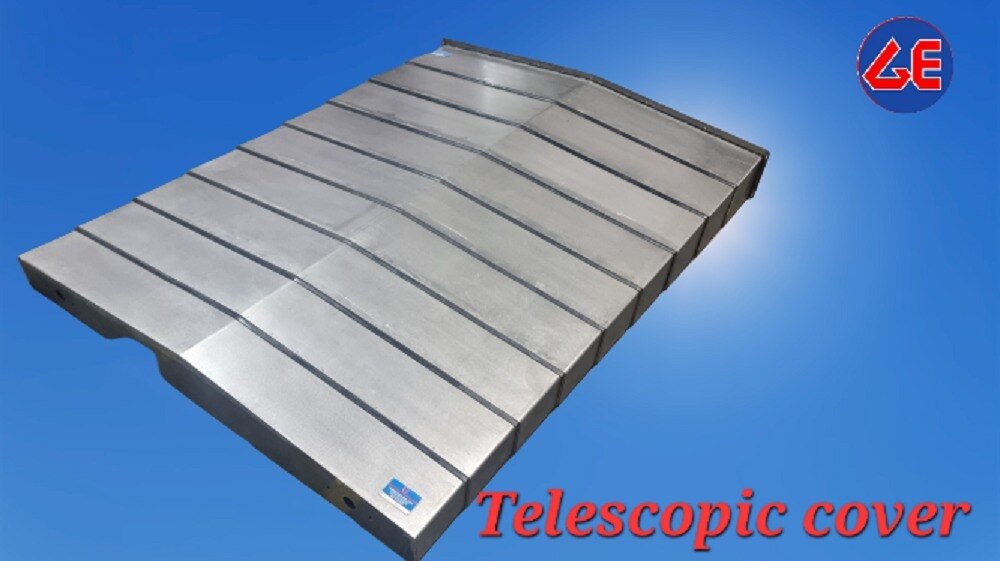
| Metal telescopic machine cover | Overlapping steel box sections resist impact and hot swarf | Machine-tool ways, heavy chip loads, large coolant volumes, abrasive chips | More mass and space; dents, distorted overlaps, seized rollers, and resonance |
| Hybrid arrangement | Metal shields the main hazard while bellows follow complex motion | Hot chip flow at one face with a secondary axis or irregular opening elsewhere | Requires coordinated mounting and maintenance |
Metal telescopic machine covers usually outperform bellows against abrasive chips, concentrated impact, hot swarf, and welding sparks. Neither option wins automatically against fine dust or coolant: a steel cover is not dust-tight or coolant-tight unless overlap, inter-box seals, scrapers, wipers, drainage, and mounting alignment work together.
Choose a properly sealed bellows for low-mass motion where sharp chips are controlled; choose steel for severe chip loading and coolant volume. Neither cover is a walking surface or a substitute for a machine enclosure.
Compare Materials, Temperature, and Chemical Exposure
Material choice follows the actual hazard, not the label. Ask for continuous and short-duration temperature limits in °C or °F; “silicone” or “aramid” alone does not prove suitability for your cycle.
| Material | Strength | Check before approval |
|---|---|---|
| Coated polyester | General flexible protection and economical low-to-moderate heat service | Coating, seams, coolant, abrasion, and spark exposure |
| Neoprene | Oil resistance and abrasion resistance | Swelling, cracking, and temperature limits |
| Silicone | Elevated-temperature service | Tear strength, flame behaviour, hot-swarf contact, and adhesive limits |
| Aramid fabric | Higher heat and tear resistance | Coating compatibility and welding-spark performance |
| Polyurethane | Abrasion resistance and selected coolant exposure | Exact alkaline, ester-based, or chlorinated-fluid formulation |
Require compatibility evidence for oil, alkaline coolant, ester-based fluid, chlorinated fluid, flame, and high-pressure spray across the complete assembly: coating, adhesive, stitching, sealant, wipers, and drain parts. An incompatible coolant can crack, delaminate, swell, or embrittle a bellows.
Painted or plated steel needs the right coating and regular inspection of scratches, chips, and exposed edges; stainless steel improves corrosion resistance. Steel still can corrode, dent, or seize at moving interfaces. Hot swarf and welding sparks favour metal or a tested heat-resistant assembly, while abrasion life depends on fold design and chip evacuation.
For telescopic bellow covers Washington DC buyers should request these limits in writing, not infer them from a catalogue material name.
Account for Motion, Mass, Space, and Maintenance
Fabric bellows add little moving mass and inertia, so the axis accelerates and decelerates with less servo loading and can reach higher speed. They run quietly and follow non-rectangular or compound motion, but folds trap chips and can suffer puncture, abrasion, cracking, delamination, or heat damage.
| Option | Performance effect | Upkeep and space |
|---|---|---|
| Fabric or elastomeric bellows | Low inertia, quiet travel, flexible geometry | Inspect pleats for trapped chips, punctures, abrasion, coolant cracking, delamination, and heat damage |
| Metal telescopic machine covers | Higher moving mass can reduce acceleration, increase deceleration load, and limit maximum speed; better against impact and hot chips | Require collapsed space for section pitch, overlap, wipers, rollers, guides, and drainage |
| Hybrid arrangement | Separates heavy chip protection from lightweight or irregular secondary motion | Use metal toward concentrated impact and bellows around the lighter, compound-moving axis |
Inspect metal telescopic machine covers as a complete mechanism, not as painted boxes alone. Check telescoping box sections, required overlap, interlocking panels, guides, rollers, scrapers, wipers, drainage, and access for cleaning.
- Match each wiper to chip type, coolant, temperature, and guideway finish; a worn or wrongly selected wiper can drag chips behind the cover.
- Check for resonance, dented boxes, distorted overlaps, seized rollers, and mounting misalignment. High-pressure coolant can force debris through gaps and damage seals or wipers.
- Confirm that the cover has room to collapse without striking clamps, hoses, or guards; insufficient pitch or drainage space creates recurring service failures.
Measure the Machine Before Requesting a Quotation
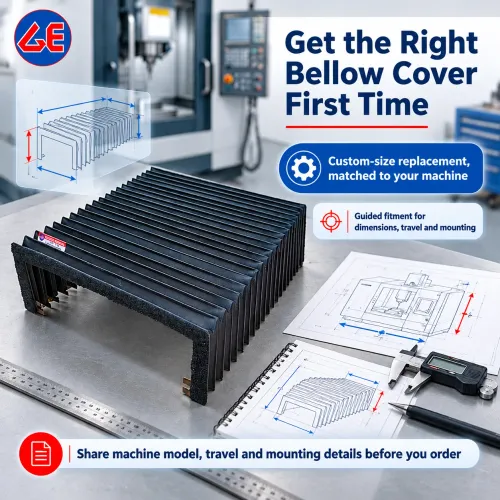
A machine model and nominal travel do not establish overlap or collapsed length. Send measured dimensions to a telescopic cover supplier Washington DC before requesting a quotation; otherwise the cover can bottom out, leave the guideway exposed, or strike an end guard.
1. Provide the motion and envelope data: closed length, extended length, usable stroke, cover width, cover height, number of sections, section pitch, guideway profile, fixed and moving ends, mounting-hole pattern, mounting-surface orientation, available side and top clearance, and minimum allowable compression height.
2. Provide operating conditions: maximum speed, maximum acceleration, ambient temperature, chip type, coolant chemistry, and expected chip or spark direction. Section count is limited by box width, minimum overlap, wiper space, guide hardware, and available compression height; adding sections cannot arbitrarily shorten the collapsed cover.
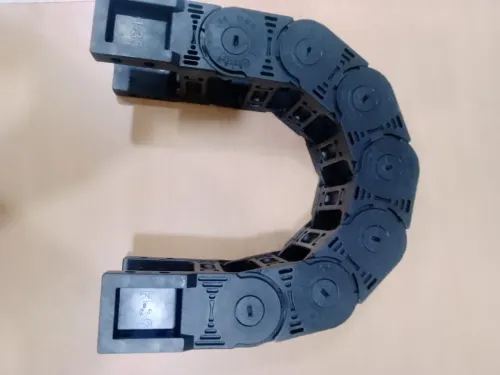
3. Photograph both ends and the guideway, mark the travel direction, and show nearby guards, clamps, hoses, cable carriers, and obstructions. Ask for a dimensional drawing showing minimum and maximum lengths, section overlap, mounting points, replacement access, guides, support hardware, and drainage.
These details matter whether you search for telescopic bellow covers Washington DC or specify rigid metal boxes. A catalogue photograph and extended length alone cannot verify fit, wiper access, mounting alignment, or clearance at full compression.
Use a Supplier Comparison That Tests the Real Decision
Compare offers by hazard, motion, space, and serviceability—not by the label alone. For telescopic bellow covers vs metal telescopic covers Washington DC, use this decision test:
| Option | Hazard and motion | Space and serviceability |
|---|---|---|
| Bellows | Choose for fine dust, controlled chips, low moving mass, quiet travel, complex geometry, or compound motion. | Fits irregular openings and tight spaces; inspect folds for puncture, abrasion, cracking, delamination, and heat damage. |
| Metal | Choose for hot swarf, impact, concentrated chip loading, sparks, or high coolant volume. | Needs section pitch, overlap, guides, wipers, drainage, and collapsed space; dented boxes or seized rollers can stop travel. |
| Hybrid | Use metal on the chip-facing axis or face and bellows around a lightweight, irregular, or secondary motion. | Separates severe hazards instead of forcing one cover type to handle every exposure. |
A steel cover is not automatically dust-tight or coolant-tight. Wipers, inter-box seals, alignment, and drainage decide whether chips enter behind the sections.
Ask every telescopic cover supplier Washington DC for:
- Rated speed and acceleration of the complete assembly
- Minimum and maximum length, mounting drawing, and section overlap
- Material, coating, wiper compound, fire behaviour, corrosion protection, and coolant compatibility
- Cleaning method, replacement parts, and access for wiper replacement
A supplier serving Washington, DC or the wider US market should quote from a drawing, not a photograph or extended length alone. Use GURUKRUPA BELLOWS PVT LTD’s industrial protection experience to request a configuration matched to measured clearances, hazards, and maintenance access.
Related products
 | Telescopic Bellow Cover Product Details: Brand GURUKRUPA Ours is a distinguished name in the business that manufactures and supplies Telescopic Bellow Cover that is vastly... View product → |
 | Telescopic Cover Product Details: Brand GURUKRUPA Being one of the trustworthy names of the industry, we bring forth CNC Telescopic Cover that can be availed at... View product → |
Frequently asked questions
When should you choose telescopic bellow covers instead of metal covers?
Choose a bellow cover when the machine needs flexible protection around irregular shapes, rotary axes, compound motion, tight spaces, or low moving mass. Choose metal when rigid impact protection is the priority.
How do temperature and chemicals affect the cover choice?
Match the cover material to the machine’s heat, coolant, oil, solvent, corrosion, and fire exposure. Confirm the material’s operating range and chemical compatibility before ordering.
What machine details should you provide for a quotation?
Provide the protected component, travel length, extended and compressed dimensions, width and height, mounting points, clearances, motion speed, orientation, and the specific hazards.
What should you compare when reviewing telescopic cover suppliers?
Compare the supplier’s proposed material, construction, travel capacity, moving mass, clearances, mounting method, maintenance access, replacement process, and ability to address your actual hazards.
Related products
 | Steel Telescopic Cover Product Details: Brand GURUKRUPA Our company is considered a renowned name in the field that manufactures and supplies Steel Telescopic Cover. View product → |
 | Telescopic Cover Product Details: Brand GURUKRUPA Color Steel Material Steel Size Customised We are one of the pre-eminent names of the industry to manufacture and... View product → |
 | Industrial Telescopic Covers Our company is known as one of the eminent names of the industry to manufacture and supply Industrial Telescopic Covers. View product → |