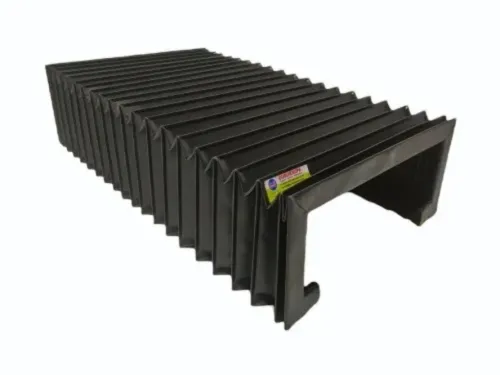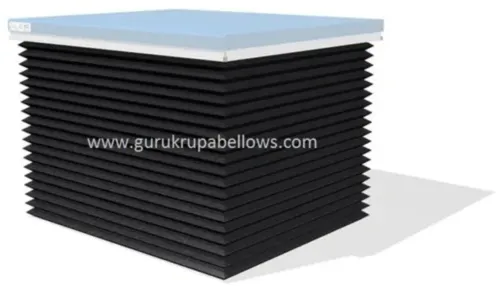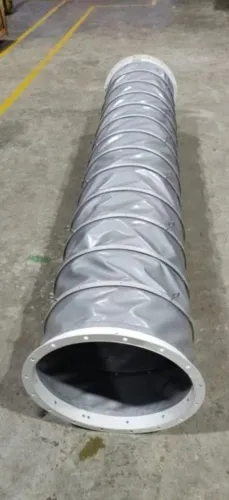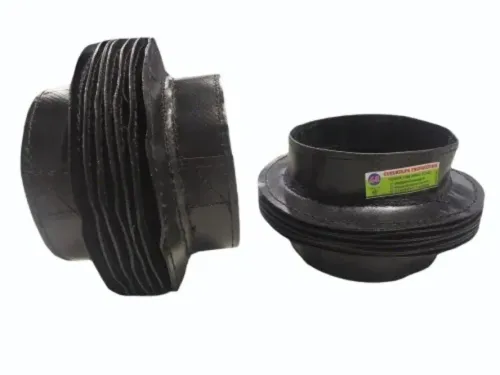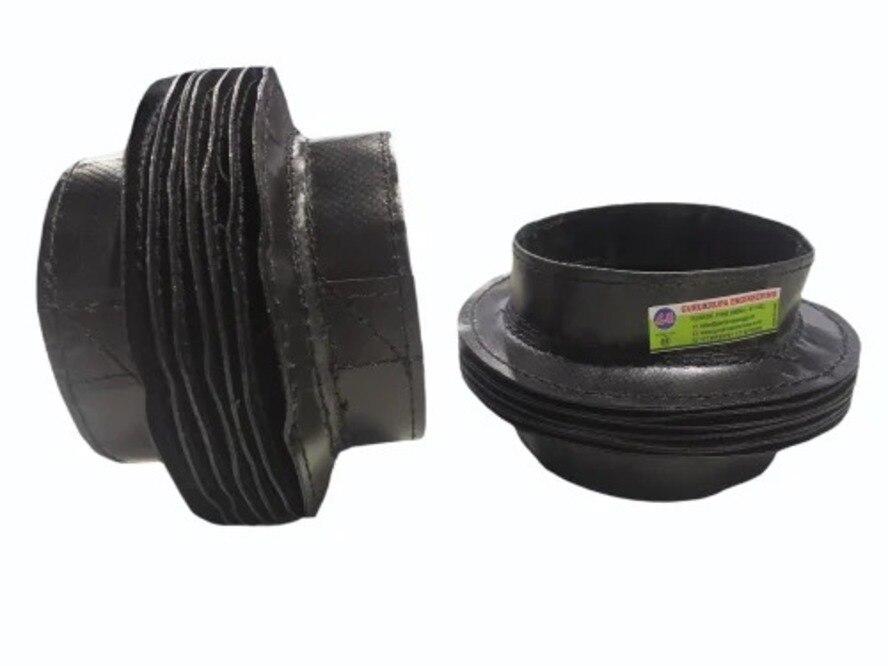
An external accordion cover can keep chips, moisture, weld spatter, and abrasive dust away from an exposed piston rod, but only when its folded length, movement, material, and mounting suit the cylinder. Use the checks below to decide whether a bellow cover for cylinders will protect your equipment or create a new source of friction, interference, and maintenance.
Key takeaways
- Protect the piston rod, but do not treat a bellow as a replacement for the rod wiper.
- Measure the full cylinder envelope, stroke, and mounting clearance before ordering.
- Match fabric, coating, and fold design to speed, heat, chemicals, and debris.
- Inspect compressed folds and attachment points for rubbing, tears, and trapped contamination.
What a cylinder rod bellow protects—and what it does not
A cylinder rod bellow shields an exposed piston rod from abrasive dust, chips, moisture, weld spatter, ice, and washdown debris. Sewn or moulded accordion folds expand with the rod’s stroke and compress when it retracts, reducing the contamination that reaches the cylinder’s rod wiper.
Cylinder road bellow covers for industrial equipment are commonly called cylinder rod bellows; “road” is a spelling variant, not a separate product.
| Protection method | What it protects | Important limitation |
|---|---|---|
| Cylinder road bellow covers | The exposed rod and external rod surface | They do not contain hydraulic or pneumatic pressure |
| Rod wiper or scraper | The rod as it enters the cylinder | It remains necessary; a bellow does not replace it |
| Simple rod boot | The rod against light dust and splash | It may not withstand chips, heat, or repeated industrial cycles |
| Telescopic steel cover | The rod or cylinder against severe impact and hot debris | It needs more space and careful guidance |
| Guideway bellow | Machine slides, ways, and larger moving surfaces | It is not designed around a cylinder rod |
A bellow cover for cylinders cannot repair a leaking rod seal or seal the cylinder chamber. If the cover encloses the rod end, provide pressure equalization and drainage so repeated compression does not build pressure or trap condensation and oil.
Reject it when retracted space is too tight, continuous rod rotation is required, or hot debris can burn the selected material; use heat-resistant construction, a deflector, or another protection method.
Measure the full cylinder envelope before specifying a cover
A cover fits only when its entire folded-and-extended envelope matches the cylinder, not when its open length merely matches the stroke. Measure with the rod fully retracted and fully extended; a bellow cover for cylinders that clears the rod at extension can still bottom out, buckle, or rub when retracted.
Record these dimensions before specifying the cover:
- Rod outside diameter and cylinder-end attachment diameter.
- Maximum extension, full stroke, and the required cover length at extension.
- Minimum available installation length and the cover’s compressed or folded height.
- Radial clearance around the rod, barrel, fittings, hoses, and nearby structure.
- Attachment locations, mounting-face diameter, and any clamp or flange space.
- Side-to-side deflection, angular movement, and any rod rotation during operation.
| Position | Measure | Fit risk |
|---|---|---|
| Fully extended | Exposed rod length and maximum cover extension | An undersized cover stretches, separates at its mount, or restricts the final stroke. |
| Fully retracted | Available length between mounting points and minimum folded height | Excess folds bottom out, interfere with the barrel, or buckle inside the available space. |
| Every position | Rod diameter, end attachment diameter, radial clearance, and angular offset | Contact creates friction and wear; a tight cover can transmit side load into the cylinder. |
| Mounting points | Centre distance, flange shape, and usable attachment faces | Misaligned mounts pull the bellows sideways instead of allowing free compression. |
Treat extended length and compressed length as separate specifications. Fold geometry and material determine the minimum folded height, so forcing a longer-stroke bellows into a short space commonly causes fold interference and premature wear.
Check friction as well: bellow covers for equipment must not alter breakout force, repeatability, or force balance on small-bore or low-force actuators.
Match the construction to speed, movement, and the working environment
A slow, straight hydraulic stroke needs a different cover from a high-cycle pneumatic or servo axis. Select construction from actual motion and exposure, not from a generic “industrial” rating; repeated folding, friction, acceleration, vibration, rod rotation, or lateral movement can fatigue the fabric and tear attachment points.
| Condition | Selection focus | What goes wrong |
|---|---|---|
| High speed or frequent cycling | Use a flexible, fatigue-resistant sewn or moulded construction with folds suited to the stroke | Folds heat, rub, and crack; the cover fails before the cylinder |
| Rod rotation or lateral movement | Specify a design that permits the movement, or use another protection method | The bellows twists, binds, or transfers side load into the cylinder |
| Oil, coolant, or chemicals | Check the exact elastomer or coating against the fluid and temperature | Swelling, hardening, softening, or loss of flexibility causes leakage paths and split folds |
| Chips or abrasive debris | Use reinforced fabric and adequate clearance from the rod and folds | Chips cut the cover or become trapped between folds |
| Heat, sparks, or incandescent particles | Choose heat-resistant fabric, a coated construction, or a metal deflector shield | Standard material burns, embrittles, or develops pinholes |
| Ultraviolet light or ozone | Require resistance data for both exposures | Surface cracking lets contamination reach the rod |
For industrial cylinder protection, treat the bellow as supplementary: the rod wiper and primary seal still perform the cleaning and sealing. If you are comparing cylinder road bellow covers for industrial equipment, confirm that “road” means the usual cylinder rod bellow, then request material compatibility data for every fluid, temperature, and cleaning chemical present.
A cover that survives coolant but not solvent is not a suitable cover.
Install and inspect the bellows without creating a new failure point
A bellow that is mounted under tension can turn a protective part into a side-load source. Install it concentrically, with the cylinder fully retracted, and attach the fixed end to the cylinder body or a rigid bracket and the moving end to the rod-end attachment without twisting the folds.
Use the manufacturer’s collars, clamps, or flanges rather than drilling into the cylinder or clamping across the rod wiper. Leave radial clearance around every fold and check that the cover cannot rub a guide, hose, bracket, or nearby machine surface. Cylinder road bellow covers must not carry the rod’s working load.
- Isolate hydraulic or pneumatic pressure and support the moving assembly.
- Fit the cover at its specified compressed length; do not force excess material into the retracted space.
- Extend and retract the cylinder slowly by hand or at low operating speed.
- Check every fold for uniform opening, collapse, rubbing, and pinching.
- Repeat the cycle at normal speed, then compare breakout force, end position, and repeatability with the cover removed if safe.
Inspect after the initial cycles and during planned maintenance. Look for split seams, cracked folds, loose collars, trapped chips, oil swelling, and contact marks. Confirm that the rod wiper still contacts a clean, undamaged rod; bellow covers for equipment supplement that seal rather than replace it.
For replacement, depressurize first, retract and support the rod, remove the old cover without dragging debris through the wiper, and inspect the rod, wiper, attachments, and clearance before fitting the new one. A damaged mounting point must be corrected, not hidden by a new bellows.
Use a decision test before choosing industrial cylinder protection
Choose a rod bellow when the exposed rod faces abrasive or wet contamination, and the cover can reduce the load on the cylinder’s wiper without carrying hydraulic or pneumatic pressure. Select another method when the cover would bind, trap fluid, or face heat that destroys its material.
Use this decision test:
| Situation | Best decision | Why |
|---|---|---|
| Intermittent chips, dust, moisture, or washdown; adequate folded space | Rod bellow | It shields the rod while leaving the wiper as the primary sealing barrier. |
| Continuous rod rotation, inadequate retracted clearance, or frequent maintenance access | Wiper, scraper, telescopic guard, or another protection method | A bellow can twist, obstruct access, or collapse against the rod. |
| Weld spatter, incandescent chips, severe chemicals, or unknown material compatibility | Tailored design with heat-resistant fabric, a coating, deflector, or metal shield | Standard fabric or elastomer bellows can burn, crack, soften, or puncture. |
| Unusual stroke, side loading, enclosed rod end, or uncertain drainage | Tailored design | Movement, pressure equalization, and drainage need verification before installation. |
For industrial cylinder protection, request a drawing that shows the full retracted envelope, extended length, attachment points, rod rotation, drainage path, and the hottest contamination. GURUKRUPA BELLOWS PVT LTD can use those details to develop a bellow cover for cylinders rather than forcing a standard size onto the application.
Treat bellow covers for equipment as supplementary guards, not replacements for leaking seals or damaged wipers. Replace the cover when folds stay compressed, roots split, or cuts reach the rod path.
Related products
 | Round Bellow Covers To match with our reputation in the market, we are here to present an unparalleled assortment of Round Bellow Covers. View product → |
 | Bellow Cover Product Details: Brand GE Color Black-Blue - Gray -White Size ANY ( C shape, Square, Round, Rectangular) Ours is a trustworthy name in the business... View product → |
Frequently asked questions
What does a cylinder rod bellow protect?
It shields the exposed piston rod from abrasive dust, chips, moisture, weld spatter, ice, and washdown debris. It reduces contamination reaching the cylinder’s rod wiper but does not replace the wiper or protect every cylinder component.
What measurements do you need for a cylinder rod bellow cover?
Measure the rod diameter, extended and retracted lengths, stroke, cylinder envelope, mounting points, and available clearance around the cover through the full movement.
How should you match a bellow cover to equipment conditions?
Select construction according to rod speed, stroke frequency, movement, temperature, chemicals, washdown exposure, sharp chips, weld spatter, and other hazards in the work area.
How do you inspect an installed cylinder bellow?
Cycle the cylinder and check for rubbing, twisting, over-compression, restricted movement, torn folds, loose attachments, and debris trapped inside the cover.
Related product
 | Bellow Cover Product Details: Brand GURUKRUPA Color Black-Blue Size Customised With the support of our excellent team workers, we have been delivering the best... View product → |