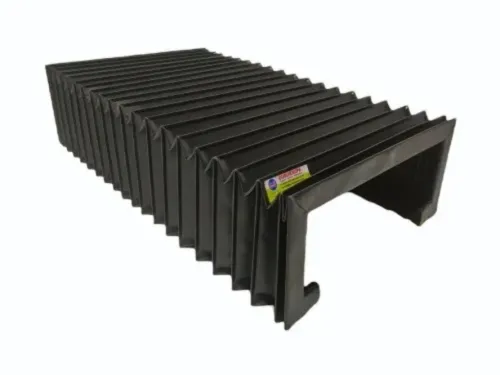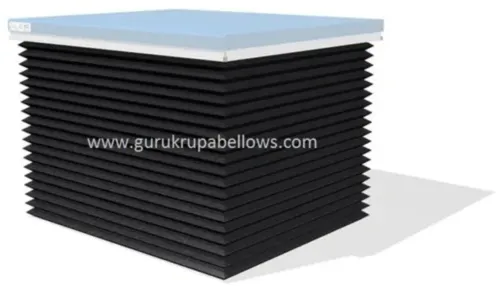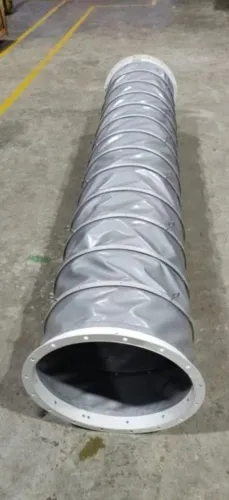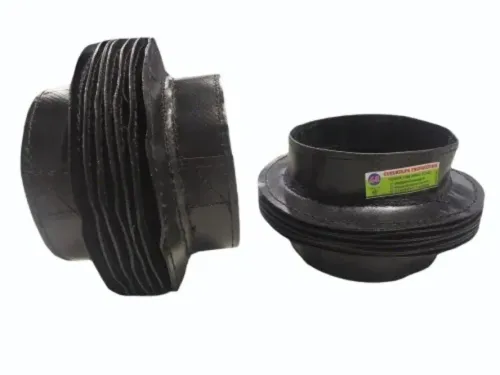

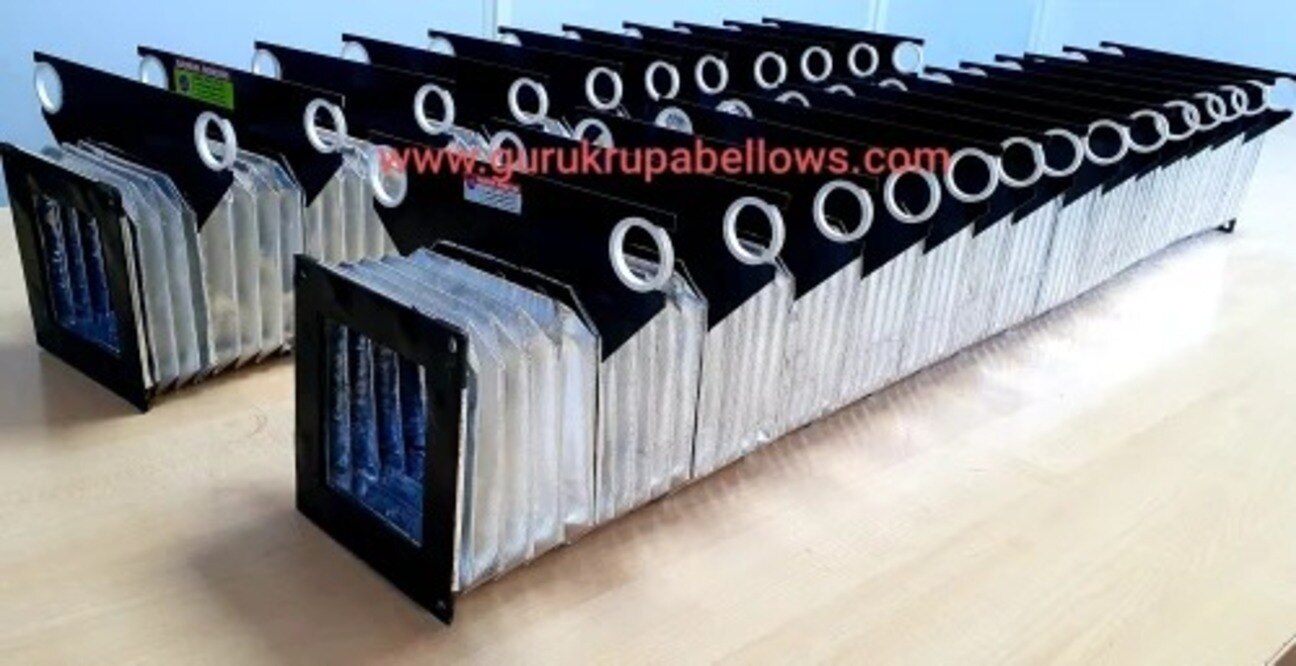
A laser cutting machine bellow cover is built around an axis, its available installation space, and the hazards that reach the moving protection—not chosen from nominal width alone. By following the measurement, material, forming, joining, testing, and packing stages, you can evaluate whether a proposed cover will travel freely and keep protecting the machine after repeated cycles.
Key takeaways
- Start with axis travel, mounting points, and clearance measurements.
- Match cover materials to heat, sparks, dust, coolant, and abrasion.
- Use pleat geometry to control travel, friction, and folded height.
- Test movement, seals, mounting, and packing before installation.
1. The Process Starts With Axis Measurements, Not Fabric
A laser cutting machine bellow covers design begins with the machine envelope, not a fabric width. The manufacturer reviews a CAD model, drawing, or machine survey, then converts axis travel, clearances, and mounting geometry into a pleat pattern and production drawing.
1. Measure extended length and compressed length across the full stroke. Record folded height, internal clearance, allowable sag, minimum bend radius, end-frame dimensions, mounting-hole pattern, and flange or mounting-plate arrangement.
2. Identify the movement. An X-axis cover follows long horizontal travel; a Y-axis cover may span a wide bed; a Z-axis cover faces vertical compression and gravity. A pallet-shuttle cover must clear the moving table, while a cable-carrier cover must share space with hoses or service lines without pinching them.
3. Check both endpoints in the CAD model or on the machine. A cover that reaches both endpoints can still fail when its compressed pack blocks a guideway, workpiece path, adjacent carrier, or laser-head service line.
4. Define production references before cutting: datum points, hole centres, open direction, travel speed, folded envelope, and bend-radius limits. Confirm the moving-axis direction and specify whether the cover opens from one end or from the centre.
The drawing must also show guide strips, rollers, sliders, anti-sag supports, overlaps, and hard-edge exclusions where needed. Cable carriers and hoses require their own bend-radius limits; never assume the bellow geometry provides them. A static length check is insufficient: the folded pack, dynamic sag, rubbing, and end-frame alignment need a full-stroke review.
2. Laser Machine Bellow Cover Materials Are Chosen for the Actual Hazard
Treat laser machine bellow cover materials as a layered construction, not one sheet. A structural polyester or aramid textile may carry the folds, while polyurethane or silicone coatings protect the surface; an inner film can reduce rubbing and particle release. The outer layer must match the hazard.
| Option | Strength | Best match |
|---|---|---|
| Coated polyester | Flexible, economical protection | Dust, smoke, coolant, oil, and light abrasion |
| Aramid or fiberglass reinforcement | Higher mechanical and thermal resistance | Hot sparks, molten metal, dross, and severe flexing |
| Polyurethane or silicone coating | Flexibility, liquid resistance, surface protection | Coolant, oil, cleaning chemicals, and abrasive dust |
| Stainless-steel foil, slats, or lamellae | Strong barrier against particles and wear | Hot dross and severe abrasion; adds weight, inertia, noise, and complexity |
Use a sacrificial spark apron where dross strikes one zone; replace that layer instead of making the entire cover heavy. Check that it cannot trap hot metal or exceed the folded envelope.
Do not confuse heat resistance with flame retardance, laser resistance, or self-extinguishing behaviour. Ordinary textile bellows are not beam enclosures: direct or reflected laser radiation can burn, melt, or penetrate them. Specify a separate engineered barrier for the laser wavelength and power class, with suitable thickness, apertures, viewing panels, and interlocks.
Request the tested temperature range, flame-test method, laser wavelength and power class, exposure duration, chemical-compatibility data for coolant, oil, and cleaning agents, and certification. Reject “heat-resistant” without those records.
3. Panels Become Bellows Through Cutting, Folding, and Joining
The laser cutting machine bellow cover process begins with an approved drawing or CAD model, not a roll of fabric. The manufacturer develops each pleat pattern, adds seam allowances, nests textile or film panels to reduce waste, and cuts them to the required grain, opening direction, and bend orientation.
Production then follows a controlled sequence:
- Prepare edges by trimming fray, cleaning weld zones, and adding reinforcement at corners, transitions, mounting holes, and frame attachments.
- Form pleats with the specified spacing, depth, and fold radius without crushing the laminate.
- Join panels and attach end frames, flanges, or mounting plates while maintaining hole centres and alignment.
- Fit a replaceable spark apron or shield over local dross zones when full heavy construction is unnecessary; leave no pocket that traps hot particles or increases folded height.
| Joining or fold method | Strength, flexibility, sealing, repairability, cost, and tight-fold suitability |
|---|---|
| Sewn construction | Flexible and economical for many textile laminates; needle holes require sealing where particle or liquid protection matters; readily repairable and suitable for tight folds |
| Thermal or hot-air welding | Strong continuous seam with good sealing and low leak paths; works only with compatible thermoplastics; less forgiving to repair and unsuitable for incompatible layers |
| Adhesive bonding | Continuous seam and useful across selected materials; depends on surface preparation, cure temperature and time, and chemical compatibility; repair and production control cost more |
| Perforated folds | Very flexible and suited to tight folds; perforations reduce sealing and tear resistance, so use only where exposure permits |
| Combination folds | Balances flexibility, sealing, and heat resistance by combining methods or materials; costs more but targets local hazards efficiently |
Reinforcement belongs at transitions, corners, seams, and mounting zones because those areas concentrate bending and pull-out forces. Adding thickness everywhere increases folded bulk and inertia without fixing the failure point. Keep hard fasteners and frames from rubbing the moving folds.
4. Pleat Geometry Controls Travel, Friction, and Dynamic Clearance
Set pleat pitch, depth, folded height, and minimum fold radius from the actual axis stroke and available envelope. A tighter pitch or deeper pleat stores long travel in less axial space, but creates a bulkier compressed pack, more rubbing surfaces, higher bending stress, and greater acceleration load.
Do not force a small radius to gain clearance. Repeated travel can crack the coating, fatigue the fabric, separate laminates, and break seams. Adjacent folds or hard machine edges increase friction and vibration when they touch, so inspect the fully compressed pack at the opposite end of travel, not only the extended position.
For long, wide, or horizontal laser cutting machine bellow covers, confirm the support arrangement before fabrication:
- Add internal supports, guide strips, rollers, sliders, or anti-sag members when unsupported fabric could scrape a guideway, trap abrasive dust, or pull an end attachment out of alignment.
- Give cable carriers, hose loops, and laser-head service lines their own manufacturer-specified bend radii; do not let them pinch a pleat, load a fold edge, or share bellow geometry blindly.
- Check end flanges, overlaps, wipers, corner transitions, and fasteners for contact with moving folds; transitions need protection because failures often start there.
- Provide drainage paths and adequate airflow where coolant, condensation, or hot air can collect; laser machine bellow covers are protective covers, not automatically hermetic seals.
A clearance drawing and full-stroke trial expose collisions that nominal width conceals.
5. Testing and Packing Reveal Whether the Cover Is Ready for the Machine
Factory acceptance starts after assembly: mount the cover on the actual guideway or a representative test rig and run repeated full-stroke cycles. Inspect the compressed pack at the travel limit for rubbing, snagging, uneven opening, dynamic sag, end-frame misalignment, and cable-carrier interference. Static dimensions alone will miss fold memory and pleat-to-pleat friction.
After cycling, examine seams, welds, coatings, reinforcement, and sacrificial shields. Pack the cover with pleats supported in their designed folded direction; protect end frames and mounting holes, and prevent sharp bends, crushing, or uncontrolled compression in transit. Include the installation orientation, mounting sequence, and inspection points with the shipment.
Use this maintenance checklist on the installed cover:
- Look for pinholes, burned or glazed areas, and cracked coatings.
- Check for exposed reinforcement, loose stitches, loose welds, or open seam edges.
- Inspect for delamination between fabric, coating, foil, or reinforcement layers.
- Check end frames, flanges, and mounting plates for distortion or shifted holes.
- Watch the pleats during a full stroke; replace or investigate any section that no longer opens evenly.
- Record new rubbing marks, trapped debris, cable-carrier contact, or sag before they damage the guideway.
When comparing a custom manufacturer such as GURUKRUPA BELLOWS PVT LTD, request the approved drawing, laser machine bellow cover materials and construction, hazard assumptions, joining method, dynamic test record, and packing instructions; colour and nominal width are poor substitutes for those records.
Related products
 | Laser Cutting Machine Bellows We offer Laser Cutting Machine Bellows made specifically for your laser machine. View product → |
 | Laser Machine Bellows Product Details: Minimum Order Quantity 1 Number Brand GURUKRUPA Color BLACK, SILVER Size ALL Specifications: Capabilities Applied/Processes: Thermal... View product → |
Frequently asked questions
What information is needed before making a laser cutting machine bellow cover?
Provide axis travel, open and closed lengths, cross-section dimensions, mounting points, nearby obstructions, speed, acceleration, and the hazards around the guideway.
How are materials selected for laser machine bellow covers?
Choose the fabric, coating, foil, and reinforcement for the actual exposure, including sparks, radiant heat, metal dust, oil, coolant, abrasion, and cleaning chemicals.
How are flat panels turned into bellows?
Manufacturers cut fabric panels, form or mark fold lines, add reinforcement, and join sections with methods suited to the material and operating hazard.
Why does pleat geometry matter in a laser cutting machine bellow cover?
Pleat depth, pitch, and folded height determine the cover’s travel, friction, compression, dynamic clearance, and resistance to sagging.
What should be tested before a bellow cover is packed?
Check full travel, folded dimensions, mounting fit, rubbing points, seams, fasteners, surface damage, and smooth movement at the machine’s operating speed.