A metal flap bellow is not a complete specification: the name alone does not tell you the lamella grade, folded length, mounting hardware, motion limits, or coolant resistance. By the end, you will know what to request in a quotation, how to check fit, and when another machine-cover design is the safer choice.
Key takeaways
- Specify travel, compressed length, expansion, mounting, and operating conditions.
- Request drawings, mounting hardware, end frames, and tested dimensions with the assembly.
- Choose lamella covers for sharp chips and abrasion, not every contamination problem.
- Inspect movement, seals, fasteners, and folded sections before accepting delivery.
What a metal flap bellow actually is
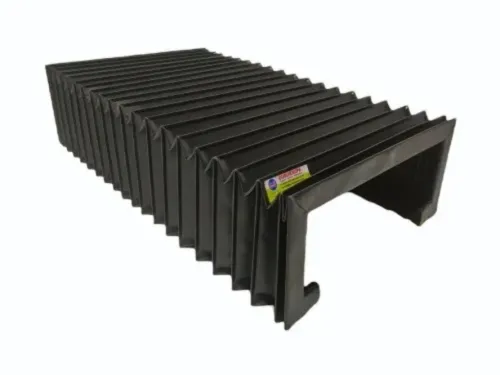
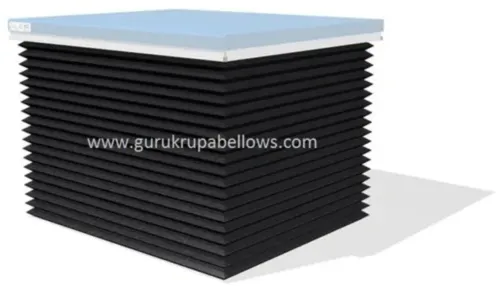
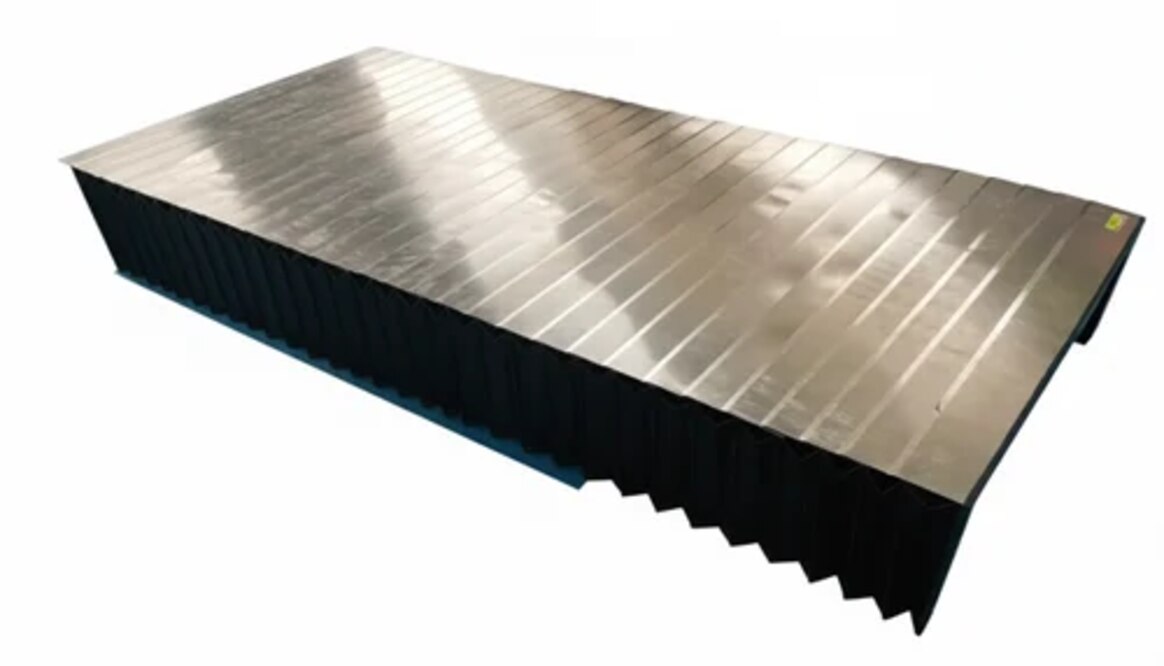
A metal flap bellow, lamella bellow, and steel lamella bellows usually describe overlapping metal strips or plates fixed to a flexible bellows body. The lamellas face chips and abrasion; coated fabric, elastomer, or textile-reinforced material provides the folding movement.
This is not an unreinforced fabric or rubber accordion bellow, an extruded-aluminum apron cover, a rolling cover, or a telescopic steel cover.
In the phrase ss lamella bellow covers metal flap bellow, “SS” normally identifies stainless-steel lamellas, not an assembly made entirely from stainless steel. Use these metal flap bellow details to establish what you are actually buying:
1. Ask the quotation to name the lamella grade, thickness, strip width, surface finish, bellows-body material, stitching or bonding method, and end-frame material. Stainless strips do not make the coating, adhesive, stitching, seals, or frame stainless.
2. Request a cross-section, because terminology is not standardized. It should show the overlap, attachment, fold direction, and how the strips shed chips; these features affect flexibility, folded thickness, and coolant access.
3. Compare the drawing with the intended machine path. A lamella cover shields a flexible body from swarf and abrasion, but it does not carry structural or heavy impact loads like a telescopic steel cover.
4. Confirm that “metal flap bellow” covers the complete construction quoted, rather than only replacement lamellas or a flexible bellows element.
The specifications that belong on the quotation
A quotation must describe the motion, environment, and construction—not just the cover’s nominal size. These metal flap bellow specifications and inclusions determine whether the assembly survives and clears the machine.
- Identify the protected axis, total stroke, extended length, minimum compressed length, fold pitch, installation height, installation width, bending radius, orientation, and unsupported length.
- State speed, acceleration, cycle frequency, permissible vibration, mounting-hole pattern, and support arrangement. Include the motion profile, not only peak values.
- Specify lamella grade, thickness, width, overlap, surface finish, corrosion compatibility, and allowable chip temperature.
- Give the flexible body’s temperature and chemical limits, plus coolant type and concentration, cleaning chemicals, abrasive materials, hot-chip or welding-spark exposure, and expected temperature range.
| Metal flap bellow details | Why they matter | What to request |
|---|---|---|
| Motion rating | A catalog speed or acceleration is not universal; width, fold size, lamella mass, support, orientation, and motion profile change the limit. | Supplier-approved speed, acceleration, cycle frequency, and vibration limit for your geometry |
| Folded envelope | Adequate stroke does not prevent collision with tooling, guarding, another axis, or the frame. | Minimum folded length and maximum extended length on one drawing |
| Chemical exposure | Stainless lamellas can outlast the body, adhesive, coating, stitching, or seals. | Compatibility confirmation for every fluid and cleaning agent |
Ask for the sectional drawing to show overlap, attachment, fold direction, and lamella thickness. Record the minimum folded length beside the maximum extended length; a nominal stroke alone is not an interference check.
What the supplied assembly must include for a proper fit
A proper fit is proven by the supplied assembly drawing, not by a nominal width and stroke. Measure the machine before requesting a quotation.
1. Record guideway width, total travel, available installation height, mounting-face spacing, end-frame dimensions, minimum clearance at maximum compression, and the complete interference envelope around tooling, guarding, cables, and moving axes. Request both minimum folded length and maximum extended length.
2. For a non-linear path, changing gap, or multi-axis motion, request a folded-shape and interference review. Rectangular dimensions alone cannot show whether the cover will rub, buckle, or collide.
The drawing must identify whether the cover is fixed at one end or both ends, guided from above, mounted beside the guideway, telescopic, or supported on rails.
3. Make the metal flap bellow specifications and inclusions explicit. Confirm whether the quoted price includes rigid end frames, clamping rails, mounting flanges, drilled holes, fasteners, gaskets, transition pieces, guide strips, rollers, support frames, anti-sag devices, and drainage provisions.
4. Ask whether you are receiving a complete assembly or only a replacement bellows element. Long, wide, vertical, or laterally moving metal flap bellows for machinery often require guides or supports to prevent fold overload and uneven rubbing.
The end attachment controls sealing and alignment, so treat it as part of the cover. A missing frame, flange, gasket, or transition piece can force machine-side fabrication and create leakage or tracking problems after installation.
How to choose between a lamella cover and other machine covers
A lamella cover earns its added mass and folded space when sharp or hot chips, swarf, abrasion, and ordinary machine-tool coolant would quickly damage an unreinforced fabric bellow. Its lamella bellow cover benefits come from exposed metal strips shielding the flexible body without sacrificing a folding motion path.
| Option | Main advantage | Main limitation |
|---|---|---|
| Lamella bellow | Shields flexible folds from chips, abrasion, and coolant | Adds folded thickness, mass, and bending stiffness |
| Telescopic steel cover | Carries impact and structural loads | Needs a telescoping installation envelope |
| Extruded-aluminum apron | Provides a relatively rigid sliding shield | Does not fold like a bellows and can need more path space |
| Rolling cover | Follows a compact reciprocating route | Needs controlled winding, guides, and alignment |
| Way wiper | Removes residue at one edge | Is not a full enclosure |
Do not treat the thickest lamella package as automatically superior. More metal improves chip resistance but increases drive force, acceleration demand, compressed length, and fold-loading risk on a fast axis.
Specify high-pressure through-tool coolant or wash-down separately, then require validation of:
- Lamella overlap and edge sealing
- End-frame sealing and fold geometry
- Coolant jet direction and pressure
For metal flap bellows for machinery, compare the supplier’s motion review with the construction drawing, including folded clearance and guide control. GURUKRUPA BELLOWS PVT LTD can clarify which end hardware, seals, guides, and geometry are included in the quoted assembly.
Related product
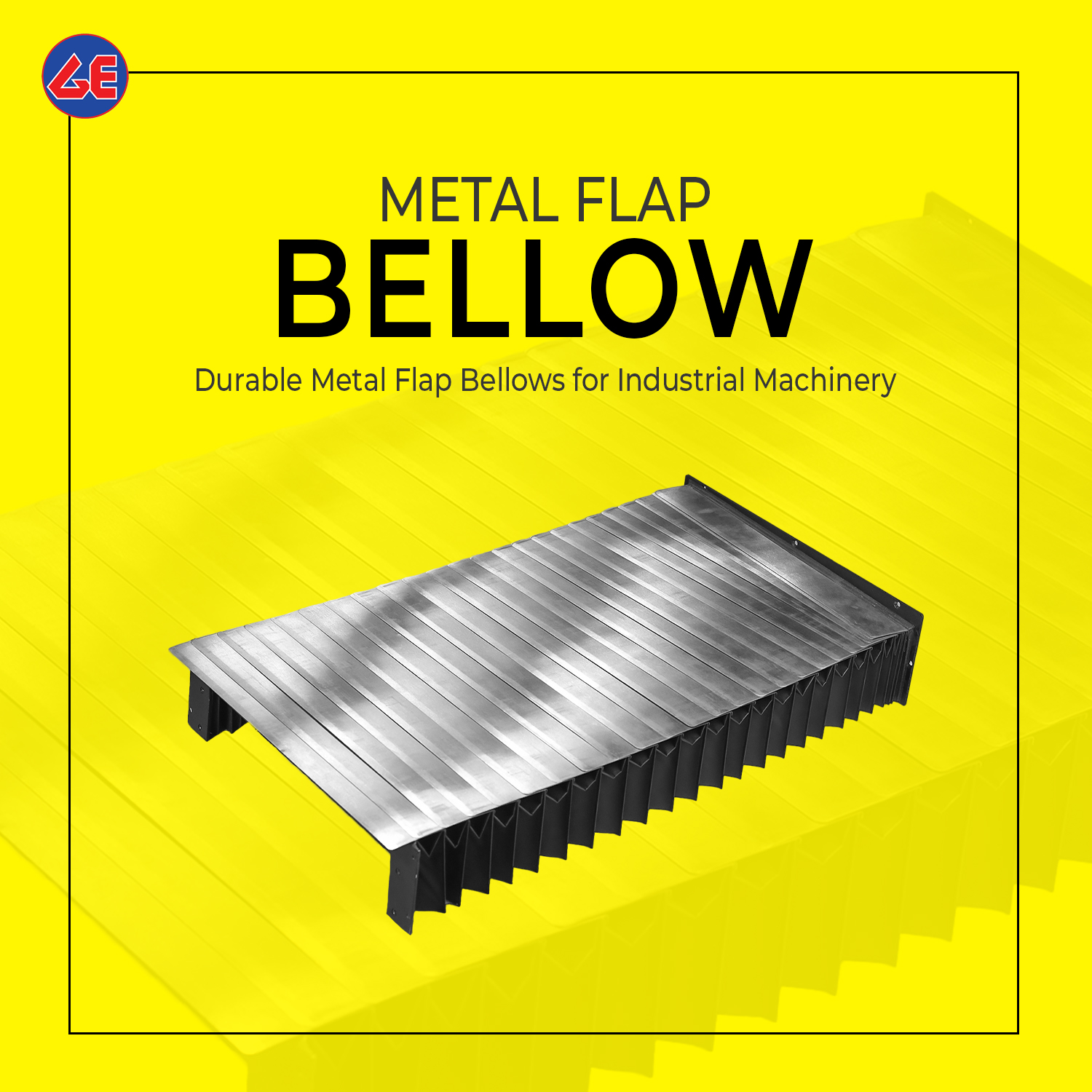 | Flexible Bellows Heavy-Duty Machine Protection At Gurukrupa Bellows Pvt. Ltd., we manufacture high-quality Metal Flap Bellows designed to protect machine guideways,... View product → |
The acceptance and maintenance checks that protect the purchase
Verify the delivered cover against the approved drawing before connecting it to production motion. The comparison must cover these metal flap bellow specifications and inclusions:
| Item | Acceptance check | Failure if wrong |
|---|---|---|
| Lamellas | Confirm grade, thickness, overlap direction, and fold pitch | Chips enter gaps or strips deform |
| Frames and mounting | Match hole pattern, mounting faces, guides, and support hardware | Misalignment causes rubbing and buckling |
| Travel envelope | Measure compressed and extended lengths | The cover strikes tooling or the machine frame |
| Drainage | Confirm the specified route around end frames | Coolant pools inside the assembly |
Run the cover through its full stroke at the specified speed and acceleration. Check clearance at maximum compression and maximum extension, then look for rubbing, uneven fold loading, trapped chips beneath lamella edges, and coolant paths around the end frames.
Put these checks in the maintenance plan:
- At each defined service interval, inspect lamella edges, fabric folds, bonded or stitched attachments, clamps, fasteners, guides, and support rollers.
- Record impact dents, fabric fatigue, attachment separation, and alignment-related rubbing.
- Record coolant type and concentration, cleaning agents, abrasive materials, hot-chip or welding-spark exposure, temperature, vibration, and cycle-rate changes.
Stainless lamellas do not establish whole-assembly compatibility. The coating, adhesive, stitching, seals, or end-frame finish can fail first. These records let the supplier assess the actual operating condition and preserve the lamella bellow cover benefits you expected.
Frequently asked questions
What is a metal flap bellow?
It is a flexible bellows body fitted with overlapping metal strips or plates that face chips and abrasion while allowing folding movement.
Which specifications belong on a metal flap bellow quotation?
State the protected machine area, travel, compressed and extended lengths, width, height, mounting method, operating speed, temperature, coolant exposure, chip type, and material requirements such as stainless steel.
What should a supplied metal flap bellow assembly include?
Confirm that the quotation identifies the bellows, lamellas, end frames or mounting plates, fasteners, guides, seals, and installation drawings required for a proper fit.
When should you choose a lamella cover instead of another machine cover?
Choose a lamella cover when sharp chips and abrasion are the main hazards; use another cover when flexibility, low weight, heat resistance, or protection from fine dust takes priority.
How do you check a metal flap bellow after delivery?
Compare the assembly with the approved drawing, inspect lamella alignment and fasteners, cycle it through full travel, check clearances and seals, and record damage before acceptance.