A scissor lift exposes more than its hydraulic cylinder when it rises, descends, stops, or shifts under load. By the end, you will be able to identify the parts that need protection, measure the full movement envelope, choose materials for the actual hazards, and check whether a proposed cover creates a new pinch or access problem.
Key takeaways
- Protect pivots, pins, bearings, rods, seals, hoses, and cables—not only the cylinder.
- Track the full folded, extended, tilted, and access envelope before sizing the cover.
- Match fabric, coating, seams, and fasteners to heat, coolant, chips, and weld spatter.
- Inspect attachment points, travel clearance, material data, and trial-fit results before approval.
Which moving parts need protection beyond the cylinder?
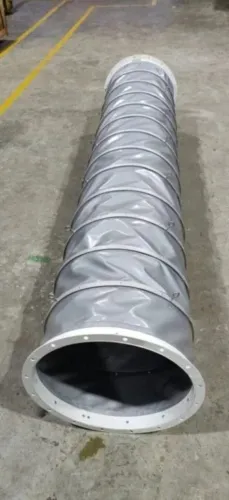
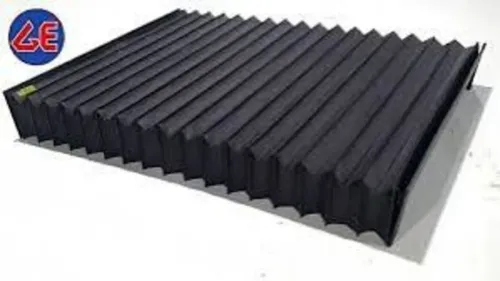
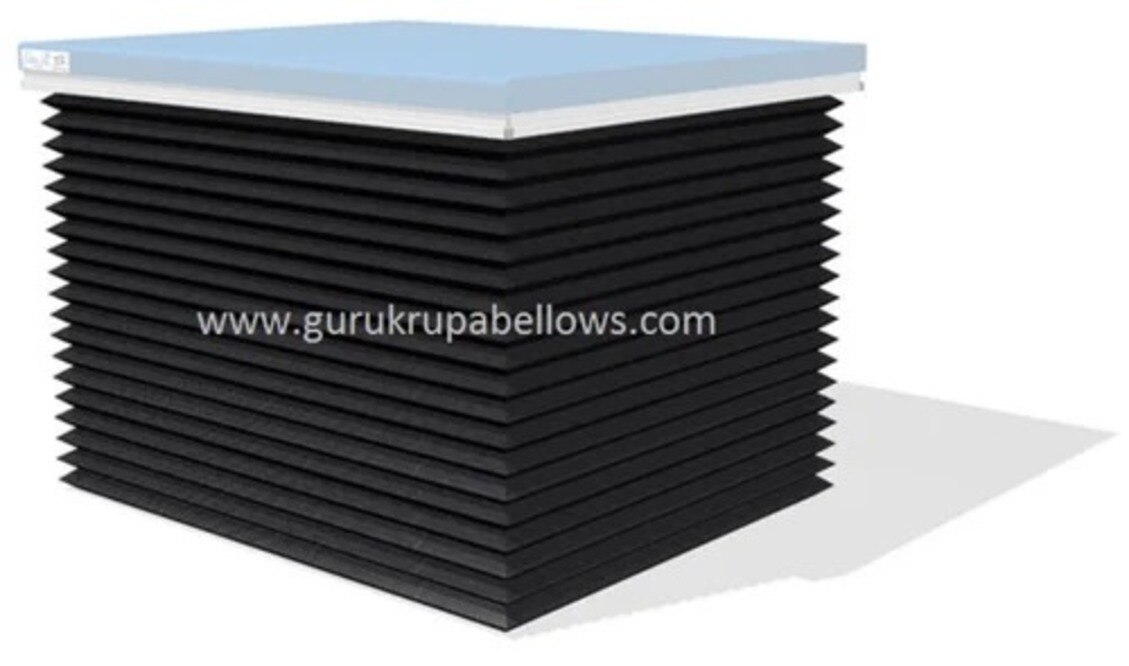
A scissor lift bellow cover protects more than the hydraulic cylinder: it shields links, pivots, pins, bearings, piston rods, seals, hoses, cable runs, and nearby moving joints as the platform rises and retracts. Chips, abrasive dust, coolant, grease, weld spatter, and moisture can shorten bearing life, damage seals, or create a pinch hazard.
| Part | What the cover protects | What goes wrong without protection |
|---|---|---|
| Scissor links and pivots | Pins, bushes, bearings, and joint faces | Abrasive debris increases wear and creates stiff or uneven movement |
| Piston rod and seal area | Polished rod surface and cylinder seal | A chip scores the rod, then carries contamination into the seal |
| Hydraulic hoses | Hose bends, fittings, and routing points | Rubbing or trapped debris causes abrasion, leaks, or sudden pressure loss |
| Cable runs and nearby joints | Insulation, connectors, and moving interfaces | Repeated folding or contact damages cables and interrupts controls |
The cover must fold in a controlled path. Internal frames, anti-collapse strips, retaining rings, or guide bands stop a tall or horizontal cover from sagging into the linkage; unsupported fabric can become trapped as the lift closes.
Scissor lift bellow covers also add moving mass, limit service access, retain heat, and require inspection for pleat wear and replacement.
They are not load-bearing platforms or substitutes for fixed guards. Check reach distances around, beneath, and through the cover; closing a visible gap does not make a moving joint inaccessible. Specify those hazards when comparing scissor lift bellows in Coimbatore.
How movement drives debris into pinch points
An extending scissor lift does more than expose its links and cylinder. Each opening and closing cycle changes the air volume around the mechanism, so moving members can draw contaminated air into narrow gaps and force it out again through the folds.
That pumping action carries debris toward pins, bearings, seals, hose bends, and cable runs.
Chips, dust, fluids, and moisture reach these points through several routes:
- Chips and abrasive dust fall from machining, cutting, grinding, or nearby conveyors, then settle on horizontal links and enter gaps as the mechanism retracts.
- Coolant and oil arrive as spray, splash, or runoff from equipment above; moving links spread the film across pivots and piston rods.
- Weld spatter travels as hot particles and can lodge in pleats or fuse to exposed surfaces.
- Moisture enters through condensation, washdown, floor splash, and humid air drawn into the mechanism during repeated movement.
The danger increases at every pinch point. A chip caught between a link and frame can score a seal; abrasive dust can work into a bearing; trapped coolant can carry contamination deeper into a joint. Industrial bellow covers block that direct path while folding with the lift.
They need controlled pleat movement, because a loose cover can sag into the linkage, rub against a cylinder, or fold debris into the same gap it is meant to protect.
How to measure the complete folding and travel envelope
A cover fits only when its compressed length, extended length, and complete outside envelope match the lift through its entire stroke. Platform dimensions alone cannot prove that scissor lift bellow covers will avoid restriction or collision.
1. Measure the lift fully retracted and fully extended. Record the distance between the proposed mounting faces in both positions; these are the minimum compressed length and maximum extended length.
2. Measure the cover’s required width, height, and folded depth at every position. Include pleat height, retaining rings, guide bands, and any internal frames, not just the fabric.
3. Map the moving envelope around the cover. Measure clearance from cylinders, piston rods, scissor links, pins, hoses, cable runs, welds, and structural members while the lift opens and closes.
4. Record lateral movement and offset between mounting faces. Add the permitted misalignment and deflection under movement, then verify that no fold can sag into a pinch point or rub against a link.
5. Mark the exact mounting-face dimensions, bolt locations, attachment orientation, and allowable load on each face. Check service openings with the cover installed, because a design that blocks inspection creates a maintenance failure.
Send these measurements with a dimensioned drawing or 3D model; photographs rarely show fold spacing or attachment locations accurately. Custom bellow covers are justified when stroke, folded height, cylinder offset, or mounting space falls outside standard sizes. Confirm the final envelope against reach-distance requirements wherever a person could reach around or beneath the cover.
Choosing cover construction for heat, fluids, abrasion, and access
Choose construction from the actual exposure and movement hazard, not from the label “industrial.” The right scissor lift bellow covers reduce contact with a defined contaminant or moving linkage; they also add moving mass, fold wear, heat retention, and service-access restrictions.
| Construction or method | Best suited to | Limitation to check |
|---|---|---|
| PVC- or polyurethane-coated fabric | Chips, dust, ordinary coolant, and moisture | Verify compatibility with the named fluid and cleaning agent |
| Neoprene or similar elastomer | Oil, grease, and repeated flexing | Check maximum continuous temperature and solvent resistance |
| Silicone-coated fabric | Higher operating temperatures | It can tear or abrade against sharp members |
| Aramid or other heat-resistant construction | Sparks, hot particles, and welding spatter | Specify particle temperature and impact exposure |
| Fixed guard or interlocked barrier | A reachable pinch point or linkage | It may restrict access and cannot follow a large stroke |
A cover is not a load-bearing platform or a substitute for a fixed guard. If a person can reach through, around, or underneath it, evaluate the opening and surrounding geometry against the applicable reach-distance requirements; closing a visible gap with fabric does not prove that the hazard is inaccessible.
Provide maximum and continuous temperature, fluid names or SDS data, chip size and temperature, cleaning method, UV exposure, and cycle rate before selecting material. Include removable panels or fast-release attachments where routine inspection requires access.
Reject any construction that rubs against links, traps hot debris, or restricts full travel. For unusual folded height, offset cylinders, limited mounting space, or severe chemical exposure, use a custom design based on a dimensioned drawing rather than photographs.
What to specify and inspect before approving a local supplier
Approve a local supplier only after the cover is matched to the lift’s duty, not its platform size. For scissor lift bellows in Coimbatore, compare cycle frequency, stroke, orientation, contaminant type, fluid exposure, temperature, cleaning chemicals, and replacement interval.
The measurable case for scissor lift bellow covers for benefits in Coimbatore is reduced exposure to a defined contaminant or moving hazard, balanced against added mass, heat retention, restricted access, and fold wear.
1. Send a dimensioned drawing or 3D model showing compressed and extended lengths, pleat height, mounting faces, cylinder offsets, clearance, misalignment allowance, allowable cover load, and service access. Photographs alone often produce incorrect fold spacing or attachment points.
2. State maximum and continuous temperature, chip size and temperature, coolant or oil name, SDS data, solvent-cleaning method, UV exposure, and cycle rate. Reject a chip-only material for hot swarf, welding spatter, aggressive fluid, or solvent exposure.
3. Inspect a sample through full travel. Look for rubbing, snagging, overstretched folds, exposed pinch points, loose fasteners, and contact with links, hoses, or cables. Check compressed height and access after installation.
4. Require an ISO 13857 reach-distance assessment where a person could reach through, around, or beneath the cover. A bellow is not load-bearing and cannot replace a fixed guard at an accessible dangerous point.
Ask GURUKRUPA BELLOWS PVT LTD for written inspection intervals, cleaning instructions, replacement criteria, spare-part lead time, and warranty exclusions before approval; custom bellow covers need those service terms as much as accurate dimensions.
Related products
 | Bellow Cover ₹5000 Product Details: Brand GURUKRUPA Color Black-Blue Size Customised With the support of our excellent team workers, we have been delivering the best... View product → |
 | Product Details: Brand GURUKRUPA Color Black-Blue Size Customised With support of our excellent team workers, we have been delivering the best... View product → |
Frequently asked questions
Which scissor lift parts need protection beyond the hydraulic cylinder?
Protect piston rods, seals, links, pivots, pins, bearings, hoses, cable runs, and nearby moving joints where debris or crushing can cause damage.
How does scissor movement drive debris into pinch points?
Rising and retracting links sweep air and debris into narrow gaps around pivots, bearings, rods, hoses, and folded joints, where particles can be trapped or forced against seals.
How do you measure a scissor lift bellow cover's complete travel envelope?
Record the protected length at minimum and maximum lift, folded thickness, lateral and vertical movement, tilt, attachment locations, service access, and every nearby obstruction.
How should you choose bellow construction for a scissor lift?
Select fabric, coating, seam design, reinforcement, and fasteners according to heat, coolant, oil, abrasion, chips, weld spatter, moisture, travel speed, and cleaning method.
What should you specify and inspect before approving a local supplier?
Specify dimensions, travel range, material, temperature and fluid exposure, attachment method, inspection access, and clearance requirements; then verify fit, fold pattern, stitching, hardware, and trial movement.