A cylindrical bellow cover protects a round shaft, spindle, actuator or screw only when its geometry, material and mounting match the machine’s movement and contamination. By the end, you will be able to size one, compare it with harder or simpler alternatives, and decide whether its service life justifies the purchase.
Key takeaways
- Measure compressed length, extended length, stroke and mounting diameter before requesting a quote.
- Match bellows material to coolant chemistry, chip shape and operating temperature.
- Choose telescopic covers when rigid chip impact protection matters more than flexibility.
- Require stroke, fit, cycle and leak checks during acceptance testing.
What a cylindrical bellow cover protects—and where it earns its place
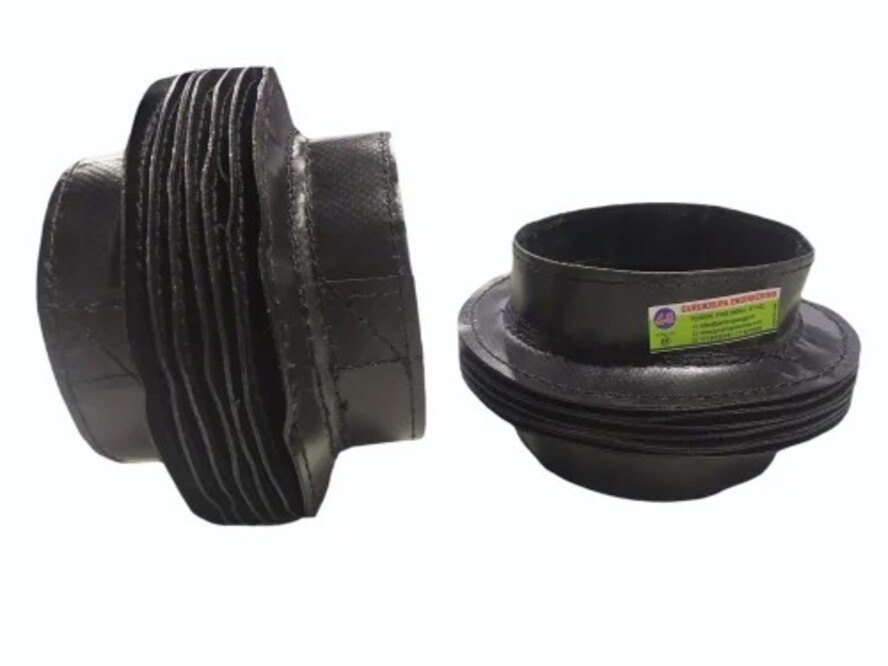
Cylindrical bellow covers protect a round moving element by enclosing it in a series of flexible, annular folds. As a shaft, spindle, guide column, actuator or screw extends, the folds open; as it retracts, they compress, keeping dust, chips, coolant splash and abrasive particles away from the protected surface.
The geometry earns its place when axial travel repeats inside tight radial clearance. Round bellow covers fit coaxial features without the side bulk of a rectangular cover, while the closed folds maintain a barrier throughout extension and compression.
The cover is not structural: it cannot carry tooling loads, guide a slide or replace a machine enclosure.
| Option | Protection and movement | When it applies |
|---|---|---|
| Cylindrical bellow covers | Flexible axial coverage around round parts | Compact shafts, spindles and actuators |
| Telescopic steel cover | Rigid resistance to impact | Heavy or hot chips striking guideways |
| Rectangular fabric bellows | Broad coverage across flat travel areas | Square or rectangular guideways |
| Strip cover or wiper | Local sealing with minimal moving mass | Narrow openings and lighter contamination |
| Uncovered guideway | No barrier | Clean, enclosed environments only |
Choose precision machine bellows when contamination stays within the fabric or elastomer’s temperature and chemical limits, and confirm that their moving mass and fold stiffness suit the axis acceleration. Reject the shape for square guideways, large lateral movement, direct hot-chip impact, load-bearing duties or unrestricted high-speed motion.
Add wipers, drainage or air purge where trapped coolant and chips could collect at a low point.
How to size the cover before you request a quotation
Fit depends on more than the nominal diameter: record the protected shaft or spindle diameter, available radial clearance, mounting-end diameters, compressed length, extended length, and the machine’s complete stroke. For precision machine bellows, the mounting interface often decides service life.
Include these details in the quotation drawing:
- Fixed and moving end-ring dimensions, mounting-hole pattern, axial height, and allowable clearance
- Axis stroke, travel speed, maximum acceleration, cycle rate, and expected service life
- Minimum bend radius, lateral offset, angular misalignment, and any eccentric shaft movement
- Coolant or oil type, operating temperature, chip size, chip impact, cleaning method, and washdown pressure
- Clearance from limit switches, lubrication lines, cable carriers, tooling, neighboring guards, and the machine enclosure
Check the cover at both ends of the stroke, not only in its relaxed position.
| Check | Compressed condition | Extended condition | Failure risk |
|---|---|---|---|
| Axial length | Folds must not bottom out | Folds must not pull tight | Crushed or torn folds |
| Radial clearance | No rubbing on the shaft or bore | No contact with guards or carriers | Abrasion and friction |
| Alignment | End rings remain concentric | Offset stays within the design limit | Twisting, buckling, early failure |
| Motion load | Moving mass stays within axis capacity | Acceleration does not distort folds | Following error or servo overload |
Test the selected cylindrical bellow covers through full travel at maximum acceleration, then repeat with coolant and representative chips present. Reject the design if folds rub, switches or lines interfere, or the cover’s mass and stiffness burden the precision axis.
Material selection starts with the actual coolant, chips and heat
Do not approve precision machine bellows on the label “oil resistant.” Name the exact coolant, concentration, alkalinity, additives, tramp oil, cleaning agent and operating temperature, then check the fabric, coating, thread, adhesive and end-frame materials as one assembly.
| Exposure | Construction decision | Failure to prevent |
|---|---|---|
| Water-miscible coolant | Use a coating proven against the fluid and its concentration; verify seams and adhesive | Swelling, delamination or coolant seepage |
| Straight cutting oil | Check elastomer and thread compatibility with the oil and additives | Softened folds or weakened stitching |
| Abrasive dust and chips | Choose a tough coated fabric and provide drainage; add a chip shield for impact zones | Abrasion, trapped chips and seal contamination |
| Heat and sparks | Confirm continuous temperature limits, peak exposure and spark resistance; use heat shielding where needed | Burned coating, embrittlement or ignition |
| Caustic cleaning chemicals | Test the complete cover against the actual cleaner and contact time | Cracking, discoloration or loss of flexibility |
Round bellow covers are flexible barriers, not chip-resistant armor. Hot, sharp or heavy chips can cut the fabric, burn its coating, lodge between folds or deform the cover permanently; severe impact calls for a steel telescopic cover, added shielding or both.
Specify the machine’s maximum temperature, coolant and cleaning cycle, chip size, travel speed, acceleration and expected service life. A cover that survives coolant but traps it at the low point can direct contamination toward a seal, so include drainage, wipers, labyrinths or air purge where the machine design requires them.
When a telescopic cover, wiper or enclosure is the better investment
Reject a cylindrical design when the protected path is square or rectangular, the cover must carry chips or tooling loads, or lateral movement bends the folds sideways. Direct hot-chip impact can cut coated fabric, burn its coating, or weld debris into the folds.
Use a steel telescopic cover for heavy chip impact and rigid guideway protection. Choose a strip cover when the opening is long and nearly flat, a wiper when contamination is light and the machine already provides a rigid barrier, and an enclosure when operators, sparks, coolant spray, or access control require a complete guard.
| Option | Cost factors beyond purchase price | Best fit |
|---|---|---|
| Cylindrical bellows | Replacement frequency, mounting labour, cleaning, trapped coolant, and axis downtime | Round shafts, actuators, or screws with compact radial clearance |
| Telescopic steel cover | Higher fabrication and alignment cost; lower exposure to sharp chips; seal and slide maintenance | Rigid guideways facing heavy or hot chips |
| Strip cover | Strip replacement, roller wear, and edge sealing | Long, flat openings with limited contour changes |
| Wiper | Low initial cost; depends on the machine’s existing shield and regular replacement | Light dust or residual coolant at a protected edge |
| Enclosure | Highest space, access, and fabrication cost; strongest overall segregation | Open machines, severe spray, sparks, or operator exposure |
For cylindrical bellow covers for precision machines in Pune, compare five-year cost: cover price, installation, planned replacements, cleaning labour, and lost production during failure. A replaceable cartridge with accessible fasteners often beats a bonded cover on abrasive coolant or multi-shift lines.
For machine protection in Pune, GURUKRUPA BELLOWS PVT LTD can be evaluated against this same application data, not a catalogue shape. Specify stroke, speed, acceleration, media, temperature, cleaning method, mounting, and target service life.
Related product
 | Round Bellow Covers ₹1000 To match with our reputation in the market, we are here to present an unparalleled assortment of Round Bellow Covers. View product → |
The acceptance test that turns a specification into a decision
Approve only after the cover survives the machine’s real motion, not a hand-compression check on a bench. Record the axis stroke, speed, acceleration, temperature, coolant or oil, chip form, cleaning method, mounting drawing and required service life; “machine protection in Pune” does not establish compatibility.
| Test | Pass condition | Reject when |
|---|---|---|
| Full travel | Folds extend and compress without rubbing, twisting or buckling | Any fold contacts its neighbour or the shaft |
| Peak motion | No following error, excessive servo demand or transmitted force at maximum acceleration | Moving mass or stiffness disrupts axis control |
| Mounting interface | End rings remain concentric through the stroke | Unequal heights, eccentricity or misalignment causes friction |
| Contamination | No leaks or material damage after coolant, oil, chips and cleaning exposure | Hot chips puncture the cover or chemicals attack the fabric |
| Clearance | No interference with switches, lubrication lines, cable carriers or guards | Any travel position creates a pinch or collision |
Choose cylindrical bellow covers for precision machines in Pune when the protected feature is round or coaxial, radial space is tight, repeated extension is required, and the contamination load stays within the selected material’s limits.
Reject them when the cover must carry load, absorb direct hot-chip impact, accommodate large lateral movement, or move at high speed without accounting for mass and stiffness. The final approval requires a documented pass at full stroke and peak conditions, plus a mounting arrangement that preserves concentric travel.
Frequently asked questions
What does a cylindrical bellow cover protect?
It encloses round moving parts such as shafts, spindles, guide columns, actuators and screws against dust, chips, coolant splash and abrasive particles.
What measurements do you need to size a cylindrical bellow cover?
Provide the protected diameter, stroke, compressed length, extended length, mounting method and available clearance around the moving part.
How should you choose the material for a cylindrical bellow cover?
Base the choice on the actual coolant, chip type, abrasive exposure and operating temperature, then confirm chemical and heat resistance with the supplier.
When is a telescopic cover better than a cylindrical bellow cover?
Choose a telescopic cover when rigid protection against heavy chips, impact or high-volume swarf is more important than a flexible round cover.
What should an acceptance test for a bellow cover include?
Check full extension and compression, mounting fit, interference through the complete stroke, leakage protection and smooth operation over representative machine cycles.