
An exposed guideway, scale, ball screw or encoder needs more than a cover that fits its nominal travel. By the end, you will know how spot bellows work, which dimensions and materials to specify, when another guard is safer, and what evidence to request before approving a precision-machine installation.
Key takeaways
- Use spot bellows when only one exposed machine zone needs protection.
- Measure travel, compressed length, mounting points and clearance before ordering.
- Match fabric, coating and guards to heat, chips, coolant and motion speed.
- Compare Pune suppliers using drawings, fit checks, installation support and lifecycle cost.
What makes a spot bellow cover different from a conventional bellows?
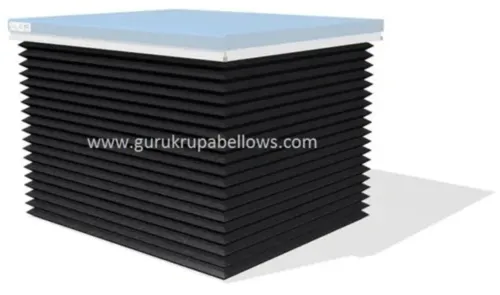
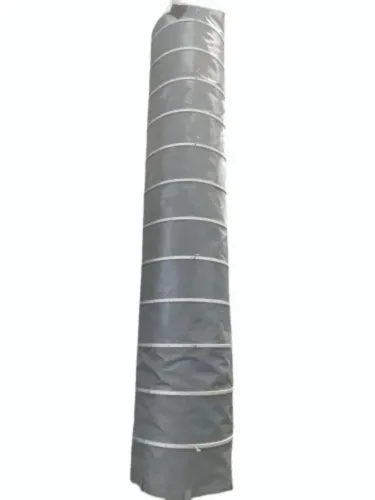
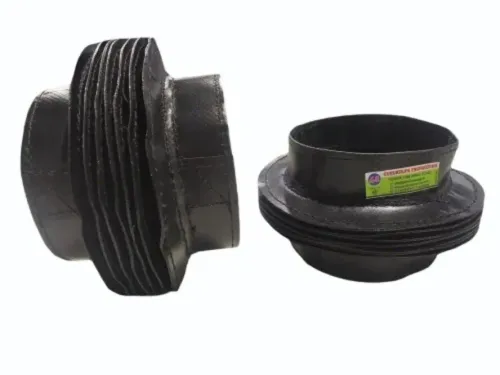
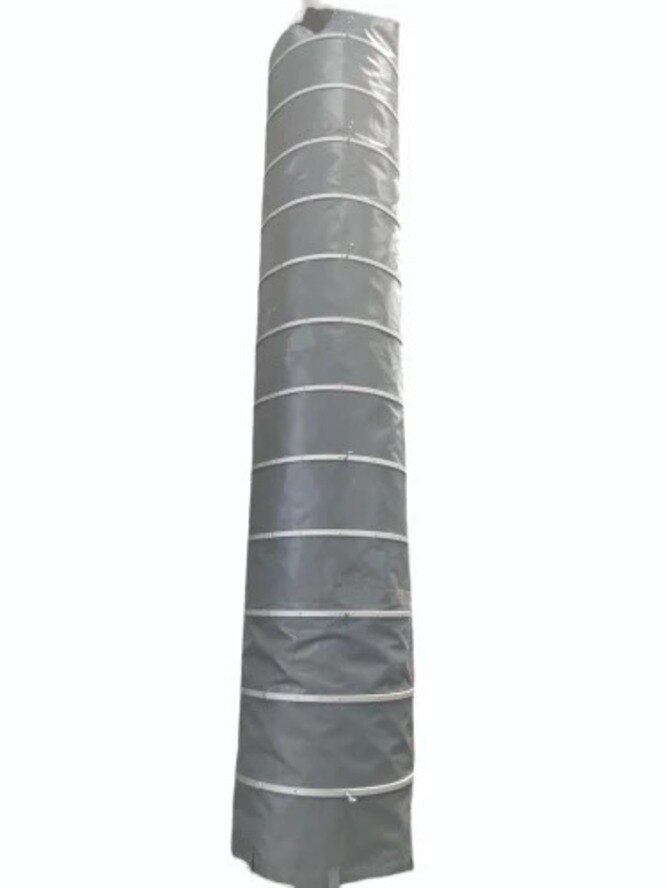
A spot bellow cover protects one exposed zone, such as a guideway, slide, ball screw, linear scale or joint, instead of enclosing an entire machine axis. It is a custom-sized local barrier fitted between fixed and moving points.
Its panels and folds may be joined by spot welding, sewing or heat sealing, depending on the fabric, coating, temperature and contamination. The joining method affects flexibility, seam strength and liquid resistance; it does not create a universal performance standard.
| Construction | Coverage | Best fit |
|---|---|---|
| Spot-welded, sewn or heat-sealed spot bellows | Local protection around one component | Retrofit work where nearby structures prevent a full cover |
| Conventional full-axis bellows | Continuous protection along the machine travel | New designs with defined mounting space and full-axis coverage |
A localized cover suits a retrofit because you can protect the damaged or exposed section without rebuilding the machine enclosure, relocating cables or adding a long, heavy moving assembly. It also reduces the protected moving mass when the full axis does not need coverage.
Check the cover through the complete stroke before approval. A loose fold can rub an encoder or scale, while a tight fold can restrict travel, transfer vibration or shed particles. Spot bellows in Pune should be compared by compressed height, minimum fold radius, end sealing and equivalent-duty cycle evidence—not by fabric thickness alone.
A bellows remains one protection layer; wipers, end seals and machine guarding still control contamination entering from the sides.
How can a bellows cover protect precision motion without harming accuracy?
A bellows cover preserves accuracy only when it protects the axis without becoming part of the guidance system. Independent fixed and moving frames keep the fabric aligned as a CNC axis, linear slide, ball screw or optical stage travels, preventing side loading, rubbing and fold distortion. Let the machine’s guides—not the cover—carry the motion.
Choose low-friction fabric, controlled fold stiffness and sufficient clearance around scales, linear encoders and cable loops. Excess stiffness or friction can restrict travel; excess mass, sag or pressure on an air-bearing carriage can increase servo following error and vibration. Verify clearance through the full stroke, including maintenance positions.
CMM bellow covers in Pune require stricter control than ordinary machining-centre covers: low particulate generation, low outgassing and stable geometry matter near probes, reference surfaces, scales and air bearings. A cover cannot correct thermal error caused by machine temperature, workpiece temperature or thermal gradients.
Check these effects before approval:
- Measure added mass and moving drag against the machine builder’s allowable load; otherwise acceleration and positioning repeatability can suffer.
- Run the cover through repeated compression and extension, checking fold contact, seam fatigue, friction changes and loss of service life.
- Confirm that folds neither rub an encoder nor shed particles, and that vibration or pressure cannot disturb measurement performance.
Which measurements must you take before ordering a replacement cover?
Measure from fixed machine datums, not from the old cover. Mark one stationary point on the bed and one moving point on the carriage, then record the protected-axis direction and travel between them. This prevents a reversed mounting orientation or incorrect reference from producing the wrong open and compressed lengths.
- With the axis fully extended and fully retracted, measure open length, compressed length and usable stroke between the same datum points.
- Measure the guideway, screw, scale or joint width and height, then record both the required inside opening and the outside envelope.
- Measure folded height, minimum bend or fold radius, and clearance above, below and beside the cover.
- Measure each end frame’s length, width, thickness and mounting-face position; record bolt-hole centres, hole diameter and edge distances.
- Photograph guideway access and note whether the cover mounts horizontally, vertically, inverted or across a side face.
- Move the axis through its complete stroke while checking the cable loop, hoses, wipers, scale and encoder for contact, pinch points and pulling force.
- Repeat the collision check with doors open and in every maintenance position, not only during automatic travel.
Use these readings when comparing precision machine bellow covers in Pune:
| Measurement | Record | Why it matters |
|---|---|---|
| Open/compressed length | Extended and folded values | Prevents bottoming out or frame tension |
| Inside/outside size | Protected opening and total envelope | Preserves clearance |
| Fold height/radius | Fold pack and minimum radius | Prevents rubbing and overstressing |
| Frame and holes | Centres, orientation and access | Enables accurate replacement mounting |
Which material and guard design matches the contamination and duty?
Match the cover to the contaminant and motion, not to fabric thickness. A bellows is a contamination barrier, not automatically an airtight or coolant-proof enclosure; seams, end frames, wipers, orientation and drainage determine the result.
| Option | Construction | Best fit and limitation |
|---|---|---|
| Fabric-coated, stitched | Fabric with sewn seams and reinforced ends | Flexible retrofit for dust, oil and moderate coolant; needle holes and thread can leak or absorb fluid |
| Fabric-coated, heat-sealed | Welded seams with compatible coating | Better liquid resistance; heat, chemical compatibility and repair method must be verified |
| Telescopic steel cover | Overlapping sliding steel boxes with scrapers | Heavy chips, impact and long exposed ways; needs space, guides and maintenance |
| Metal flap bellows | Linked metal slats over a flexible bellows | Sharp or hot chips; adds mass and can restrict small, fast axes |
| Simple guard | Plate, shield or curtain | Deflects a directed chip stream; does not seal a moving guideway |
Specify the outer fabric and coating against the actual fluid: cutting oil, synthetic coolant, alkaline cleaner and humidity require separate compatibility checks. For welding or grinding debris, use a heat- and abrasion-resistant outer layer; for static-sensitive encoders, request conductive fabric or coating plus a defined grounding path.
PVC-coated fabric is not automatically suitable for hot chips or every coolant.
Keep folds out of the chip stream, eliminate low points, and provide drainage and clean-out access. Choose a telescopic steel cover for heavy impact, sustained high heat or a large unsupported span; choose a full enclosure or engineered liquid seal when frequent access or complete coolant containment matters.
A bellows alone does not replace wipers, labyrinth seals or chip conveyors.
How should you verify a Pune supplier, installation and lifecycle cost?
Ask for a drawing approved against the measured axis, showing open length, compressed length, stroke, fold height, clearances and mounting orientation. For spot bellow covers for precision machines in Pune, require material, coating and chemical-compatibility data for the actual coolant, oil, cleaner and chip type, plus temperature range, minimum fold radius and compressed height.
Give the supplier axis speed, acceleration, cycle frequency, washdown method, humidity and required service life. A generic “precision machine” description cannot establish suitability.
- Approve a sample on the machine through the complete stroke, including maintenance positions; check rubbing, fold bottoming, sag and encoder or scale clearance.
- Request the cycle-life test method, or evidence from an equivalent-duty axis, and record the test load, stroke and frequency.
- Confirm mounting hardware, hole pattern, fixed and moving frames, replacement-fold availability and written warranty terms.
- Obtain site-measurement records and a lead-time commitment before scheduling installation.
- Calculate installation downtime, including removal, alignment, trial cycles and machine restart checks.
- Set inspection intervals based on cycle count and contamination; inspect folds, seams, frames, fasteners and abrasion.
- Clean according to the stated material limits, then check trapped chips, blocked drainage and coolant pooling after every washdown.
Evaluate GURUKRUPA BELLOWS PVT LTD against these documents, sample results and service commitments—not fabric thickness or a generic compliance claim. Include replacement folds, cleaning labour, inspection time and downtime in lifecycle cost.
Related products
 | Round Bellow Covers ₹1000 To match with our reputation in the market, we are here to present an unparalleled assortment of Round Bellow Covers. View product → |
 | Bellow Cover ₹1000 Product Details: Brand GE Color Black-Blue - Gray -White Size ANY ( C shape, Square, Round, Rectangular) Ours is a trustworthy name in the business... View product → |
Frequently asked questions
What makes a spot bellow cover different from a conventional bellows?
A spot bellow cover protects one exposed zone, such as a guideway, ball screw or linear scale, rather than enclosing an entire machine axis.
How can a bellows cover protect precision motion without harming accuracy?
Use accurate travel and clearance measurements, low-resistance folds, secure mounting and a design that prevents contact with moving components.
Which measurements must you take before ordering a replacement cover?
Record the protected length, travel, compressed length, extended length, width, height, mounting-hole pattern, clearance and attachment locations.
Which material and guard design matches the contamination and duty?
Select materials and reinforcement based on chip size, coolant, oil, heat, sparks, corrosion exposure, motion speed and cleaning method.
How should you verify a Pune supplier, installation and lifecycle cost?
Request a dimensional drawing, material details, sample or inspection plan, installation instructions, replacement-part guidance and a complete cost comparison.
Related products
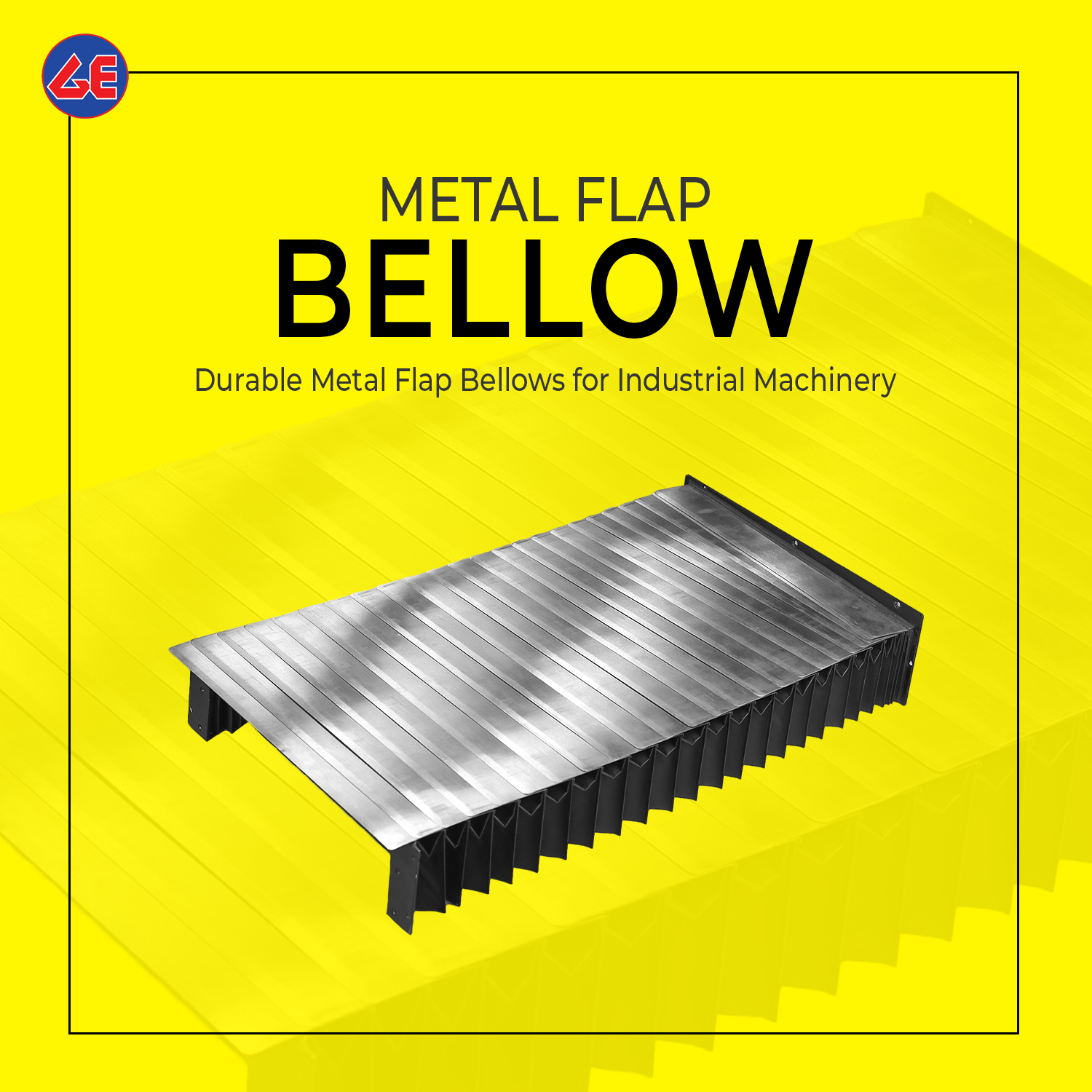 | Flexible Bellows ₹5000 Heavy-Duty Machine Protection At Gurukrupa Bellows Pvt. Ltd., we manufacture high-quality Metal Flap Bellows designed to protect machine guideways,... View product → |
 | CNC Bellow Cover Product Details: Brand GURUKRUPA Color BLACK Size ANY We are considered a well-known name in the business that manufactures and supplies CNC Bellow... View product → |