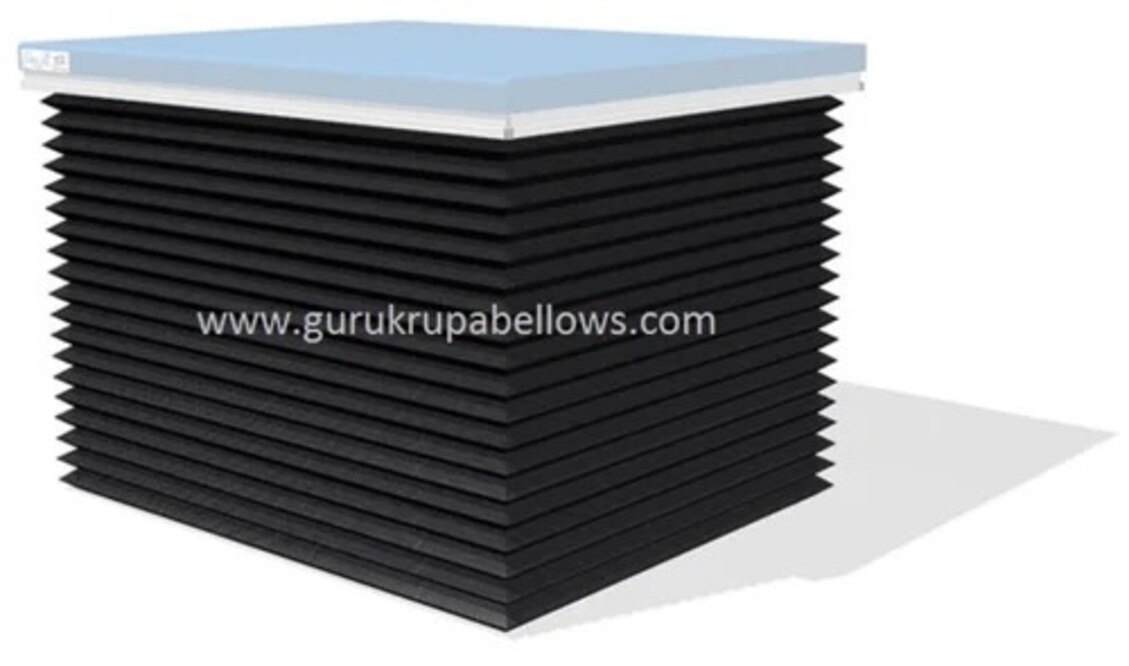
A scissor lift bellow cover can keep chips, coolant, dust, and condensation away from moving machinery, but the wrong folded envelope can create interference, drag, heat buildup, or premature failure. You will be able to determine whether the design suits a CNC machine, CMM, or another precision system, assemble the measurements for a quotation, and define a test that proves the cover works in your Washington facility.
Key takeaways
- Use a pantograph-supported cover when unsupported folds could sag or rub.
- Measure travel, closed length, width, height, and mounting clearances before ordering.
- Match bellows fabric, coatings, and seams to coolant, chips, heat, and humidity.
- Test full extension, retraction, access, and repeatability before approving production use.
What a scissor lift bellow cover actually does
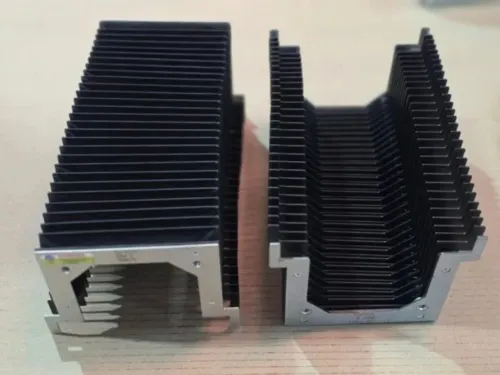
A scissor lift bellow cover moves with a pantograph, or scissor mechanism, that supports the folded material as the lift extends and retracts. The mechanism opens the bellows in a controlled path, limits sag, and keeps the cover away from nearby machine structures instead of allowing unsupported folds to drag across them.
The cover creates a flexible contamination barrier over a moving guideway or lifting assembly. It helps block chips, grinding dust, coolant splash, oil, abrasive particles, and moisture from reaching precision surfaces, seals, screws, and bearings. It is not a personnel guard, structural support, or automatic cable-management system.
For scissor lift protection, Washington shops must account for more than the bellows fabric. The pantograph adds pivots, joints, wear points, and a minimum fold radius; a tight radius or misaligned guide can cause binding, uneven extension, premature fabric failure, or contact with the machine.
A typical assembly includes:
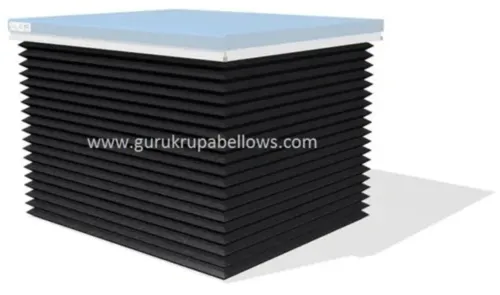
- Flexible bellows material that folds as the lift closes and opens as it rises
- Scissor links or pantograph arms that guide and support the folds
- End frames, flanges, or mounting plates that attach the cover to fixed and moving structures
- Clearance around the mechanism so the cover does not pinch, rub, or obstruct travel
Route power, encoder, coolant, or pneumatic lines through a separate cable carrier unless the cover has a purpose-designed passage with verified bend-radius and cycle-life control. A bellow can protect the mechanism without safely carrying those lines.
Are scissor lift bellows suitable for CNC and CMM machines?
Yes, but the answer depends on the axis load and the machine’s accuracy target. For CNC work, scissor lift bellows for cnc machines suit exposed guideways or moving assemblies that need supported, controlled protection through a long vertical or horizontal stroke.
The pantograph supports the folds, limits sag, and keeps the cover away from adjacent structures. It also adds joints, wear points, mass, and drag. Specify travel speed, acceleration, cycle frequency, guide alignment, and service life; a cover that reaches the stroke can still bottom out or bind at either end.
CMM applications demand tighter control. Scissor lift bellow covers for cmm machines are appropriate only when the assembly stays clear of the bridge, probe envelope, scales, and guide surfaces. Mount it so its weight or asymmetric loading does not pull the axis, and verify that motion does not transmit vibration into the metrology structure.
Reject the design if any of these conditions occurs:
- The cover touches the bridge, probe, workpiece, or guarding during travel.
- Drag changes axis following, scanning speed, or probing force.
- Folded mass causes sag, overshoot, or inconsistent acceleration.
- The cover traps warm air or blocks the machine’s intended thermal path.
A CMM cover can alter thermal behavior even without contact. Steel expands about 11.7 micrometres per metre per kelvin, while aluminum expands about 23; a 1 m aluminum structure changing 10 K moves about 0.23 mm. Recheck ISO 10360 performance after installation when the cover affects motion or temperature.
Which dimensions decide whether the cover will fit?
A reliable fit starts with more than machine-axis stroke: provide the cover’s complete envelope, mounting geometry, motion profile, and clearance at every position. A cover that reaches nominal travel can still bottom out when folded or strike the frame when extended.
- Measure fully extended length, compressed or folded length, usable stroke, overall width, and cover height.
- Supply end-frame allowances, flange dimensions, mounting-hole pattern, hole diameters, and the datum used for each measurement.
- Mark the cylinder location, scissor-arm pivot locations, guide alignment, and the available mounting footprint.
- Record side, top, and bottom clearances with the lift fully retracted, fully extended, and at intermediate positions.
- State travel speed, acceleration, cycle frequency, target service life, and the minimum fold or bend radius.
- Show nearby ways, guards, tooling, cable carriers, hoses, drain paths, and any structure that could contact the assembly.
- Give cable and hose dimensions separately; a bellow does not automatically provide controlled bend radius, strain relief, or torsion management.
| Measurement | Fixed or moving reference | Failure if omitted |
|---|---|---|
| Compressed length | Fully folded assembly, including frames | The cover bottoms out or blocks the lift |
| Extended length | Maximum travel plus end-frame allowance | Folds stretch, joints bind, or protection ends short |
| Width and height | Largest outside envelope during travel | The cover rubs guides, guarding, or the machine |
| Clearance | Every position and direction | A nominally correct assembly collides under acceleration |
| Mounting geometry | Hole pattern, flange, cylinder, and datums | Installation requires drilling or leaves uneven loading |
For precision manufacturers in Washington, scissor lift bellow covers need these measurements alongside coolant, chip, and cleaning-fluid exposure. Send a dimensioned drawing or three-dimensional model with the quotation request.
Can the materials and layout survive a Washington shop?
A Washington shop is not one environment: coastal and western sites bring humidity, condensation, and salt, while eastern sites can add dry dust and sharp temperature swings. Specify materials from the actual exposure, not the state name.
For scissor lift protection washington manufacturers, that means matching the cover, hardware, seams, and drainage to the machine’s process.
- Coolant and oil: identify synthetic coolant, neat oil, tramp oil, concentration, temperature, and chip heat; “oil resistant” is insufficient.
- Cleaning chemicals: name the alkaline cleaner, solvent, disinfectant, and washdown temperature. Confirm the coating will not swell, crack, or delaminate.
- Temperature: state minimum and maximum ambient, coolant, hot-chip, and washdown temperatures. PVC, polyurethane, elastomer, aramid, and heat-resistant fabrics behave differently across that range.
- Corrosion and ultraviolet exposure: use stainless or plated hardware, sealed attachment points, and a UV-resistant coating where condensation, salt, skylights, or outdoor exposure are credible.
- Fire risk: obtain the fabric’s documented flame or fire rating and compare it with the machine’s hot-chip, oil-mist, and coolant hazards. Do not treat a fire-resistant label as a complete fire-control system.
- Interference and guarding: check every extended, folded, and skewed position for contact with tooling, guards, guideways, pantograph joints, and access doors. A sagging fold can trap chips or obstruct an emergency stop.
- Cable routing: provide separate bend-radius control, strain relief, torsion management, chip separation, and cycle-life verification for power, encoder, coolant, and pneumatic lines. Use a drag chain or cable carrier when the cover cannot provide those controls.
Run the assembly at worst-case speed and acceleration with the real chemicals, chips, temperature, and mounting orientation. Inspect for pinholes, seam opening, cracked coating, loose fasteners, joint wear, fold interference, and permanent deformation.
How should you qualify the cover before approving it?
Approve the purchase only after the supplier’s drawing, quotation, test record, and inspection plan agree. For scissor lift bellow covers for precision manufacturers in Washington, treat the pantograph, cover, attachment frames, and guides as one moving assembly—not a fabric replacement.
- Request a dimensioned drawing showing usable stroke, folded and extended lengths, cover width and height, end-frame allowances, minimum fold radius, mounting-hole pattern, flange dimensions, cylinder location, guide alignment, and clearance at every position. Include joint locations and drainage paths.
- Require the quotation to state fabric and coating, seam construction, hardware material or plating, permitted temperature range, coolant and cleaner compatibility, travel speed, acceleration, cycle frequency, orientation, and guaranteed service life. “Custom size” alone is not a specification.
- Run an application-specific cycle test at the actual or worst-case speed and acceleration, with the intended coolant, chip type, cleaning chemicals, temperature range, and mounting orientation. For scissor lift bellows for CNC machines, record whether the assembly sags, binds, bottoms out, touches guarding, or loosens its fasteners.
- For a CMM, check probing and scanning behavior after installation. A cover that drags the bridge or transmits vibration can invalidate motion performance; ISO 10360 verification does not certify the replacement cover.
Inspect the tested assembly for cracked coating, pinholes, delamination, open seams, pantograph-joint wear, loose fasteners, fold interference, and permanent deformation. Ask GURUKRUPA BELLOWS PVT LTD to identify these acceptance limits on the quotation, not merely promise protection. Reject any “IP65” claim that does not define the complete assembly and test orientation under IEC 60529.
Related products
 | Bellow Cover Product Details: Brand GURUKRUPA Color Black-Blue Size Customised With the support of our excellent team workers, we have been delivering the best... View product → |
 | Product Details: Brand GURUKRUPA Color Black-Blue Size Customised With support of our excellent team workers, we have been delivering the best... View product → |
Frequently asked questions
What does a scissor lift bellow cover do?
A pantograph supports the folded material as the lift extends and retracts, limiting sag and keeping the cover clear of nearby machine structures.
Are scissor lift bellows suitable for CNC and CMM machines?
They suit CNC and CMM applications when the travel, clearance, mounting, motion speed, and contamination exposure match the cover design.
Which dimensions determine whether a scissor lift bellow cover will fit?
Check extended travel, compressed length, cover width and height, mounting points, folded-pack dimensions, and clearance through the full motion.
Can scissor lift bellows survive a Washington manufacturing shop?
Select materials and seams for the shop's coolant, chips, abrasion, temperature, humidity, cleaning chemicals, and fire-risk conditions.
How should you qualify a scissor lift bellow cover?
Run repeated full-stroke tests, inspect rubbing and sag, verify machine access and sensor clearance, and document performance under real operating contamination.