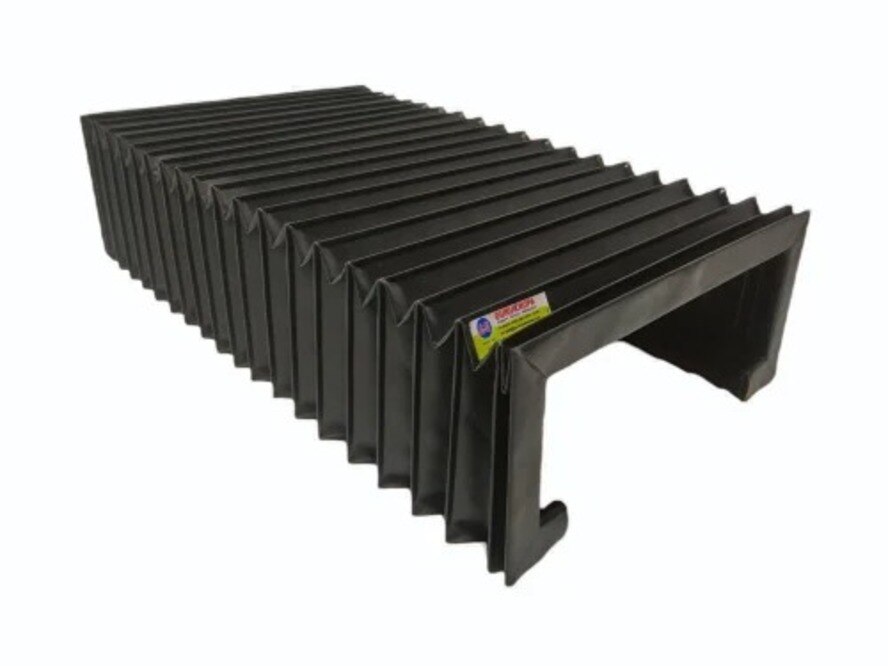
A CNC bellow cover is suitable only when its movement, folded package, materials, and support arrangement match the machine axis it protects. By checking the guideway, travel envelope, operating conditions, and maintenance requirements, you can decide whether a fabric bellows is appropriate or whether steel protection, a fixed guard, or a hybrid arrangement is the safer choice.
Key takeaways
- Use bellows for guideways, ballscrews, and slides needing continuous flexible protection.
- Choose steel covers for repeated impacts from hot, sharp chips.
- Measure travel, compressed length, clearance, and mounting points before ordering.
- Require documented temperature, speed, coolant, material, and support limits.
Start with the Assembly You Need to Protect
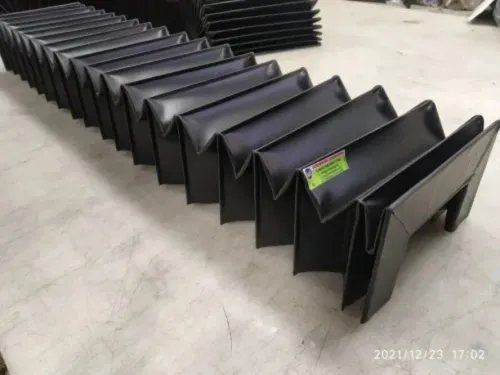
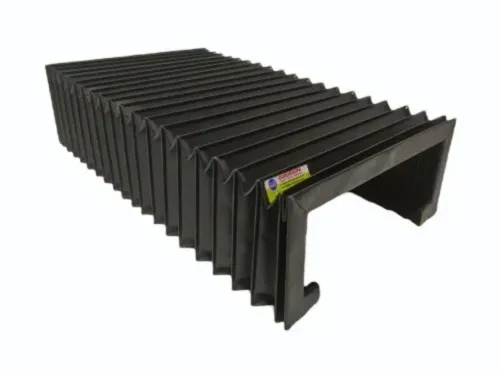
A CNC bellow cover suits a linear guideway, slide, ballscrew, or other moving assembly that needs continuous protection while travelling through a compact or irregular space. It is most effective against dust, fine chips, coolant mist, and ordinary machining debris—not repeated impacts from hot, sharp chips.
| Assembly or exposure | Suitable choice | Reconsider the choice when |
|---|---|---|
| Linear guideway or slide | Flexible bellows follow travel and seal an exposed rail in a confined space | The folded package would collide with the carriage, tooling, or nearby structure |
| Ballscrew or narrow moving mechanism | An accordion cover protects the screw where space and access are limited | Chips can penetrate folds or wrap around the rotating component |
| Spindle-side or moving head area | Bellows work when the protected area moves predictably and exposure is moderate | Hot chips strike directly, or heat and abrasion exceed the material’s limits |
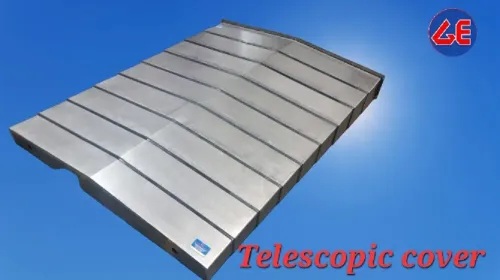
| Heavy chip or high-impact zone | Use a steel telescopic cover, roller shutter, or hybrid steel-and-bellows design | A fabric cover would carry the full impact and penetration load |
Check chip temperature and sharpness, coolant or cutting-oil chemistry, abrasive dust, wash-down pressure, ultraviolet exposure, and axis speed before choosing the material. PVC-coated polyester identifies a construction, not compatibility with your specific fluid.
A bellow cover does not replace personnel safeguarding. Fixed and movable guards still need assessment against ISO 14120, while ISO 13857 sets safety distances for preventing reach-through access to the hazard zone.
Compare Bellows with Steel Covers, Guards, and Wipers
Fabric accordion covers suit guideways and slides that move quickly through compact, irregular spaces. They flex around changing travel paths, but they are not automatically chip-proof or personnel guards.
| Option | Flexibility and space | Chip resistance and speed | Service life and cost |
|---|---|---|---|
| Fabric or accordion bellows | Highest flexibility; fits narrow, uneven clearances and adds little mass | Handles dust, light chips and coolant when the material is compatible; supports rapid travel with low inertia | Usually lower initial cost, but sharp or hot chips, abrasive dust and wash-down can shorten life |
| Telescopic steel cover | Rigid and space-hungry; needs room for stacked sections and mounting frames | Strongest defence against heavy, sharp or hot swarf; suitable for demanding cutting, though section inertia affects acceleration | Higher purchase and installation cost; often lasts longer in severe chip service |
| Fixed guard | No flexibility; occupies a defined boundary around the hazard | Blocks thrown chips and supports personnel safeguarding, but cannot follow a moving guideway | Long service life with little wear; requires space and access doors |
| Wiper | Extremely compact and follows a sliding surface | Removes a thin film of coolant or loose debris, but does not stop penetrating chips or hot swarf | Low cost and easy replacement; wears quickly on rough or contaminated ways |
Choose CNC machine bellow covers when flexibility, low moving mass and restricted space matter more than impact resistance. Select steel, or combine steel slats with a bellows, when hot chips can burn, embed or puncture fabric.
Treat fixed guards separately: a bellows protects machinery, not people. Assess reach-through distances under ISO 14120 and ISO 13857. Compare removal time and cartridge replacement access, because difficult servicing can erase a low purchase price.
Measure the Machine Before Requesting a Cover
A cover that matches the guideway length can still collide with the carriage when it folds. Measure the assembly in both fully extended and fully compressed positions, then record the space occupied by the folded package, not only the axis travel.
1. Record the required extended length, compressed length, cover width, cover height, and available clearance above, below, and beside the guideway at both ends of travel.
2. Measure the guideway cross-section, slide dimensions, adjacent tooling, cable carriers, spindle housing, and any projecting bolts or brackets that could strike a fold. Note the minimum bend or fold radius required by the path.
3. Photograph the mounting surfaces and provide the mounting-hole pattern, hole diameters, end-frame dimensions, and the distance from each mounting face to the moving assembly. Include a CAD file or dimensioned drawing if available.
4. State the travel direction and axis orientation: horizontal, vertical, inclined, or inverted. Record maximum traverse speed, acceleration, deceleration, reversal frequency, cycle rate, and the mass of any frame attached to the moving end.
5. Move the axis through its complete stroke at reduced speed while checking every potential pinch point with a clearance gauge. Do not place fingers between folds, frames, or the carriage; lock out the machine before taking close measurements.
Send the supplier the measured minimum clearances rather than estimates. Compare the cover’s compressed length and dynamic movement rating with those figures; inadequate clearance or acceleration capacity will cause rubbing, buckling, excess drag, or premature fold failure.
Match Construction and Support to the CNC Environment
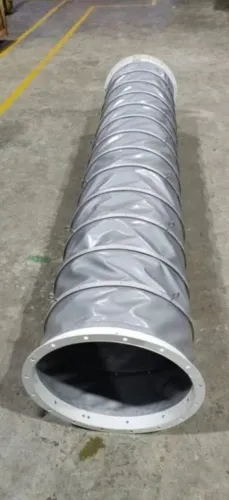
A cover survives only when its fabric, seals, support frames, and movement rating match the actual cutting environment. PVC-coated polyester is not proof of compatibility: check the manufacturer’s resistance data against your coolant or cutting oil, abrasive dust, wash-down chemicals, and ultraviolet exposure.
| Option | Construction and support | When it applies |
|---|---|---|
| Standard fabric bellows | Coated fabric, sewn or bonded folds, flexible end frames, and compatible wipers | Coolant mist, moderate chips, and lower thermal loads |
| Heat-resistant bellows | Heat-rated fabric with stainless or coated slats, spark-resistant layers, or a separate chip shield | Hot, sharp swarf that could burn, cut, or embed in fabric |
| Rigid-supported cover | Reinforced frames, guide rollers, sliding supports, or telescopic sections | High acceleration, frequent reversals, long horizontal travel, or heavy attached hardware |
Specify the installation position and operating limits, not just rapid-traverse speed. Give the supplier:
- Maximum axis speed and acceleration
- Reversal frequency and vibration level
- Horizontal, vertical, or inverted orientation
- Chip temperature and sharpness
- Coolant chemistry, wash-down pressure, and cleaning method
- Folded and extended lengths, plus the mass of attached frames
- Wiper material, sealing method, and drainage route
A vertical cover needs support that prevents sagging into the guideway; a horizontal cover needs guidance that prevents fold collapse and coolant retention. Excessive acceleration can distort folds even when the speed rating looks adequate.
Inspect for pinholes, delamination, cracked coatings, exposed reinforcement, loose hardware, distorted folds, and swollen wipers. Specify a replacement interval before damage reaches the guideway, and choose removable end frames or a replaceable cartridge when axis dismantling would make service expensive.
Make the Purchase Decision from Documented Limits
Approve a cover only when the supplier’s written limits match your machine data. A low quote is not a saving if the folded package collides with the carriage or the cover must be removed to service the axis.
1. Send the supplier a drawing or CAD file, guideway photographs, extended and compressed lengths, width, height, mounting-hole pattern, movement direction, axis orientation, speed, acceleration, coolant type, chip temperature, cleaning method, and available clearance at both ends.
2. Request a datasheet stating temperature and chemical-compatibility limits, maximum travel speed and acceleration, minimum fold or bend radius, compressed length, wash-down conditions, and mounting requirements. Reject comparisons based only on fabric name, fold count, or price.
3. Check safety separately. A bellows protects machinery, not people; assess fixed and movable guards against ISO 14120, and check reach-through distances against ISO 13857. Confirm that no extended or folded position creates a pinch point or blocks emergency access.
4. Inspect the service plan before approval. Prefer removable end frames, standard fasteners, drainage, and a replaceable bellows cartridge that comes off without dismantling the axis. Record the inspection interval and replace the cover when seams split, folds remain permanently deformed, seals leak, or exposed reinforcement lets chips reach the guideway.
For CNC bellow covers in Berlin, GURUKRUPA BELLOWS PVT LTD should receive the same drawings and operating data as any competing supplier; local availability does not replace proof that the proposed construction meets your documented limits. Get the final dimensions, materials, exclusions, and replacement method in writing.
Related products
 | CNC Bellow Cover Product Details: Brand GURUKRUPA Color BLACK Size ANY We are considered a well-known name in the business that manufactures and supplies CNC Bellow... View product → |
 | CNC Telescopic Cover Product Details: Brand GURUKRUPA Being one of the trustworthy names of the industry, we bring forth CNC Telescopic Cover that can be availed at... View product → |
Frequently asked questions
Which CNC assemblies need bellow covers?
Bellow covers protect moving linear guideways, slides, ballscrews, cables, and similar assemblies from dust, fine chips, coolant mist, and ordinary machining debris.
Are CNC bellow covers better than steel covers, guards, or wipers?
Bellows suit compact or irregular spaces and continuous movement. Steel covers handle repeated impacts from hot, sharp chips better, while guards and wipers suit fixed barriers or simpler wiping tasks.
What measurements do you need before requesting a CNC bellow cover?
Record the protected assembly’s width, height, travel, compressed length, extended length, mounting dimensions, folded thickness, clearance, and nearby moving-part restrictions.
Which construction details matter in a CNC environment?
Match the bellows material, fabric or coating, frame support, guide arrangement, stitching, and mounting method to coolant exposure, chip heat, speed, acceleration, contamination, and available space.
What documents should support a CNC bellow-cover purchase?
Request documented limits for operating temperature, travel speed, acceleration, folded and extended dimensions, coolant or chemical resistance, load support, and expected service conditions.
Related product
 | Bellow Cover ₹1000 We are offering an excellent quality of Protective Bellows for all type Guideways. This design covers three sides of the rail. View product → |