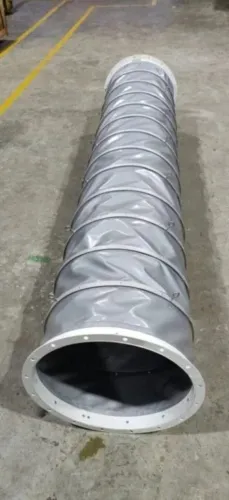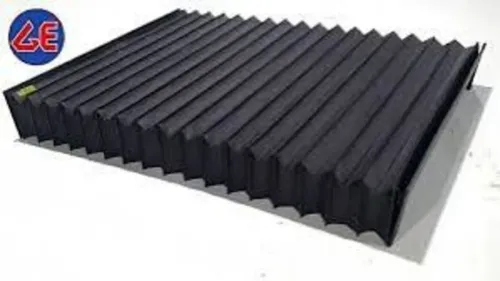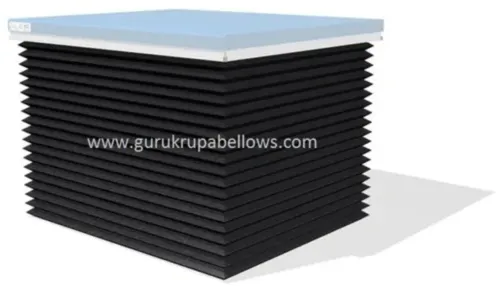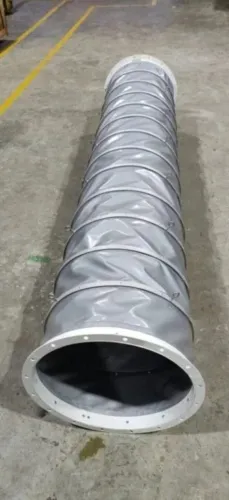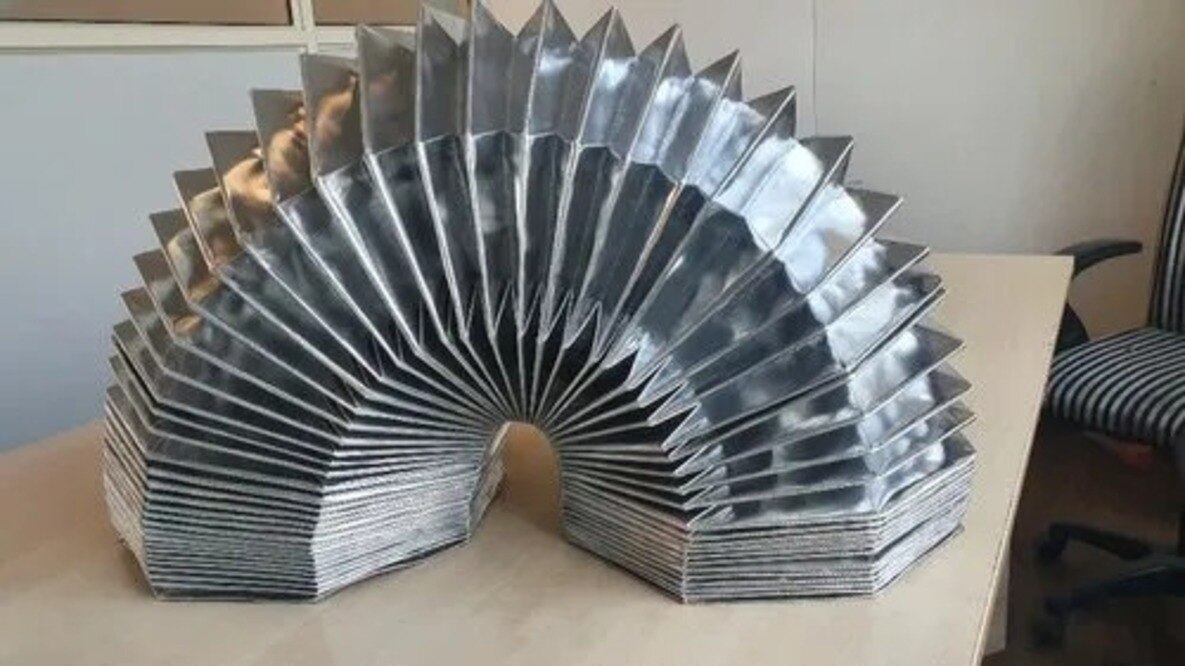
A puncture does not automatically mean a cover needs replacement, but a clean-looking bellow can conceal heat-weakened fabric, failed stitching, or a damaged internal layer. By the end, you will be able to classify the failure, choose a repair method when one is safe, measure a replacement correctly, and verify its movement on the machine tool.
Key takeaways
- Replace covers with damaged bellows, seams, layers or fire barriers.
- Repair localized surface damage only after confirming the cover’s structure remains sound.
- Measure full machine travel, folded length and mounting space before replacement.
- Request material, temperature and fire-performance details from your supplier.
Inspect the Cover Safely Before Choosing Repair or Replacement
A repair decision starts with whether the defect is localized or has compromised the cover’s structure and fire performance. Isolate the machine under lockout/tagout, release hydraulic, pneumatic, spring and gravity-stored energy, and wait for hot surfaces, chips and coolant to cool before opening guards.
| Condition | Decision | Reason |
|---|---|---|
| Localized hole in sound, non-fold fabric | Repair | Original fabric, coating, thread and reinforcement remain flexible and strong |
| Active fold, fold apex, sewn hinge or repeated flex line | Replace section or complete cover | A stiff patch concentrates stress and shifts tearing to the next fold |
| Carbonised fibres, burned reinforcement or brittle coating | Replace | Heat damage has reduced fire performance and flexibility |
| Distorted frame, wrong travel length or damaged attachment point | Replace or correct the assembly | The cover cannot compress and extend without interference |
Inspect the torn area and adjacent:
- Folds, fold apexes, sewn hinges and internal baffles
- Seam tape, stitching, guide strips and mounting frames
- Compressed stack, attachment points and exposed reinforcement
Record detached stitching, failed adhesive or thermal bonds, pinholes, edge fraying, delamination, hardening, discoloration and changed fold shape. Soot or dried coolant is cleanable only while the fabric remains flexible and strong; shrinkage, carbonisation, burned reinforcement and loss of flexibility indicate replacement.
Oil saturation, embedded grinding dust or contamination that cleaning cannot remove also supports replacement. Identify the cause—abrasion, chip impact, thermal or chemical attack, seam pull-out, delamination, incorrect compression or mounting interference—not just the hole size.
That record determines fireproof fabric bellow covers repair or replacement and prevents the new cover from failing at the same point.
Match the Repair Method to the Damaged Area and Material
Choose a patch only when the damage is a small, localized hole in a non-fold area and the original fabric, coating, thread and reinforcement remain sound. That is the narrowest fireproof fabric bellow covers repair or replacement decision.
1. Inspect beyond the puncture. Check adjacent folds, fold apexes, seams, internal baffles, seam tape, stitching, mounting frames, guide strips and the compressed stack. Hidden delamination, burned reinforcement or multi-ply abrasion can make a visible hole misleading.
2. Match the repair to the material. Use a compatible sewn patch only when needle holes will not create a leakage or tear path and the thread withstands the cover’s heat exposure. For coated or laminated fabric, use hot-air welding, RF welding or compatible seam tape; ordinary stitching is not automatically suitable.
3. Replace a full fabric section when damage crosses a seam, spans several plies, affects an internal baffle or covers adjacent folds. Replace the complete cover when an active fold, fold apex or repeated flex line is damaged. A stiff patch concentrates stress and transfers failure to the next fold.
4. Before approval, confirm fold pitch, flexibility, compression, attachment geometry, guide clearance and fire performance. Reject any repair that makes one area rigid, changes the compressed stack, rubs a guide or uses unknown adhesive, textile, thread or patch thickness. Run the repaired cover through complete machine travel.
For fireproof fabric bellow covers replacement, choose the complete cover when the original construction or fire qualification is unknown. Appearance alone is not proof of protection.
Use a Maintenance Schedule That Finds Damage Before Failure
Prevent an emergency by scheduling fireproof fabric bellow covers maintenance against machine use, not calendar time alone. Set inspection points from stroke count and cycle frequency, then shorten the interval for heavy chip load, coolant exposure, welding or grinding.
| Exposure | Scheduling basis | Reason to shorten the interval |
|---|---|---|
| Stroke count and cycles | Inspect at recorded machine-use milestones | Repeated folding exposes weak seams and apexes |
| Chip load | Increase frequency as chip volume or impact rises | Chips abrade fabric and jam folds |
| Coolant exposure | Increase frequency with wet or continuous coolant contact | Residue can weaken coatings and alter fire behaviour |
| Welding or grinding | Inspect more frequently during spark, heat or dust exposure | Sparks, hot particles and grinding dust can char or embed |
At each inspection, remove loose chips, check pinholes and edge fraying, examine stitching and bonds, feel for hardening, and compare fold shape and movement with the original condition.
- Clean only by the fabric and coating manufacturer’s approved method. Unapproved solvents, high-pressure washing and excessive heat can strip flame-retardant finishes, swell coatings, weaken thread or drive oil into the laminate.
- Do not lubricate fabric folds unless the manufacturer permits it. Oil and grease change fire behaviour and attract abrasive dust.
- Check fasteners, end frames, guide strips and wipers for looseness or contact marks. Use controlled-pressure air away from folds and seals.
- Move the axis through its permitted range after cleaning; look for snagging, rubbing and uneven stacking.
Record the date, strokes, contamination, damage location, cleaning method, corrective action and post-maintenance travel result.
Measure a Replacement Against the Machine’s Actual Travel
A replacement drawing or purchase specification must describe the machine’s actual travel, not just the old cover’s outside dimensions. For fireproof fabric bellow covers replacement, record:
- Machine axis; closed length; extended length; usable travel; folded height; fold pitch or fold count; cover width and height.
- Mounting-hole pattern; end-frame or flange shape; guide arrangement; guideway clearance; allowable compression; clearances around screws, tooling and adjacent parts.
- Travel speed; acceleration; coolant type; chip size and sharpness; and exposure to heat, sparks, flame or hot work.
Check the machine tool head or table at both ends of its position range and at intermediate positions. Confirm that the cover reaches full extension without pulling at either mounting point and folds into the specified closed length without buckling.
Run the cover through its real compression and extension cycle, because a stationary inspection will miss contact that occurs in motion. Check for rubbing against guides, screws, tooling or machine parts; catching chips; forced mounting frames; displaced guide strips; poor wiper contact; and folds that touch a rail.
Accept the replacement only after a guarded, controlled full-travel test confirms free movement, correct fold stacking at minimum and maximum positions, and no excessive compression or end tension. Stop the test if any fold snags, twists or leaves its guide.
Specify Fire Performance and Get the Right Repair or Replacement Support
“Fireproof” is not a specification. Ask every fireproof bellow covers supplier for the exact fabric and coating construction, flame or heat test method, exposure duration, temperature, specimen-conditioning procedure and pass/fail criteria. Confirm whether the result applies to a textile coupon or the complete assembled cover.
Ask whether the rating remains valid after flexing, cleaning, ageing and repair. A report for an unused flat specimen cannot validate a patched cover that folds thousands of times.
Use the hazard comparison below before choosing the construction:
| Hazard | Failure risk | Specification response |
|---|---|---|
| Brief flame | Fabric resists ignition but may char or lose strength | Request flame-test evidence and post-exposure strength |
| Sparks and hot chips | Sparks pass through or perforate the textile | Add a replaceable spark shield or sacrificial outer layer |
| Sustained radiant heat | Fabric shrinks, seams fail or reinforcement burns | Specify a heat-resistant fabric system and heat-test data |
| Combined hazards | One protection layer cannot handle both attacks | Consider heat-resistant fabric with spark shielding, metal slats or lamellae where required |
For fabric bellow cover repair in Coimbatore, give the provider the machine drawing, damage photographs, travel data, and removed cover or fabric sample. Ask Gurukrupa Bellows Pvt Ltd to identify the proposed construction and test basis, then check it against mounting geometry, heat exposure and full-axis travel.
A supplier unable to provide that evidence cannot confirm that a repair preserves the original protection.
Related products
 | Bellow Cover We are considered a well-known name in the business that manufactures and supplies Bellow Cover. View product → |
 | Soft Material Bellow Product Details: Brand GURUKRUPA Specifications:- Function of accordion machine shield: water-proof,oil-proof, anti-corrosion, fire-proof... View product → |
Frequently asked questions
How do you inspect a fireproof fabric bellow cover safely?
Apply lockout/tagout, release hydraulic, pneumatic, spring and gravity-stored energy, and wait for hot surfaces, chips and coolant to cool before opening guards. Check folds, seams, mounting frames, guide components and fire-barrier layers.
When should you repair rather than replace a fireproof fabric bellow cover?
Repair localized damage when the bellows retain their shape, movement, attachment points and fire-performance layers. Replace the cover when damage affects structural layers, repeated folds, seams, mounting points or fire protection.
What measurements are needed for a fireproof fabric bellow covers replacement?
Record the machine’s actual travel, closed and extended lengths, folded height, width, mounting arrangement, clearance, operating speed and nearby heat, chips, coolant or abrasive contamination.
What fire-performance information should you request from a bellow cover supplier?
Request the fabric construction, coating, temperature limits, fire-test classification or test report, seam construction and the conditions used for the stated performance. Confirm that the specification matches your heat, spark and coolant exposure.