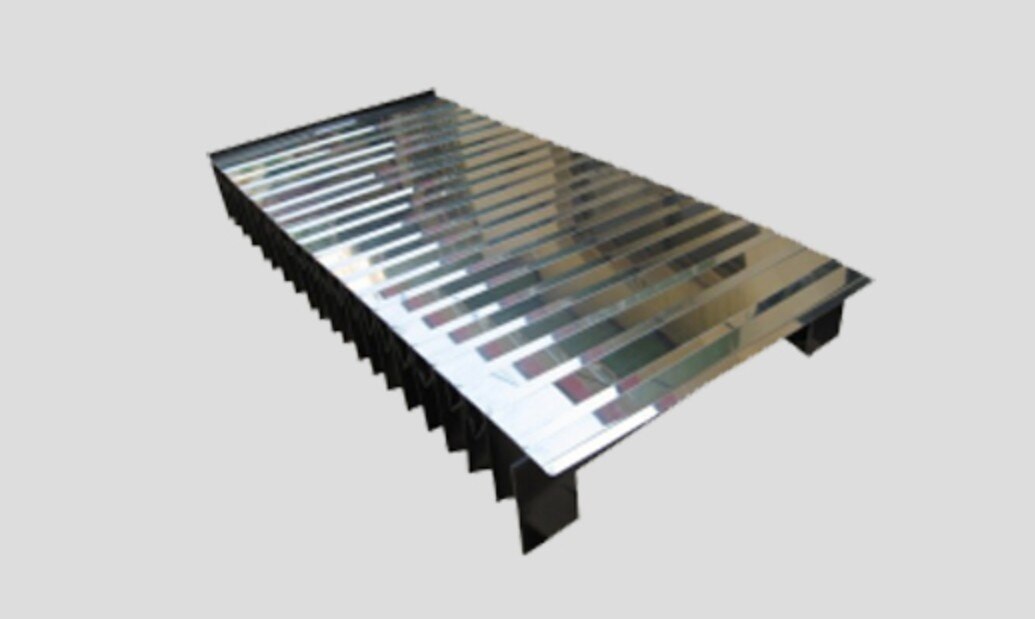
Chips, coolant, abrasive dust and impact can damage exposed guideways, ball screws and slides while an axis is moving. By the end, you will understand how overlapping stainless-steel lamellas work, which cover construction fits your machine, and which measurements and operating conditions must be specified before purchase.
Key takeaways
- Overlapping stainless-steel flaps block chips and coolant from reaching guideways.
- Choose metal flaps for sharp hot debris, not for every machine environment.
- Specify travel, compression, speed, temperature and mounting space—not rail width alone.
- Inspect flap overlap, bellows folds, seals and mounting points before failure.
What an SS Lamella Bellow Cover Is—and What the Names Mean
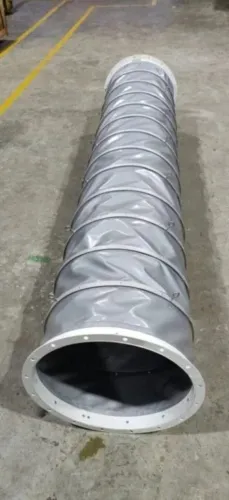
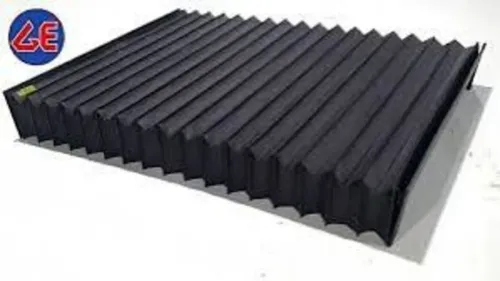
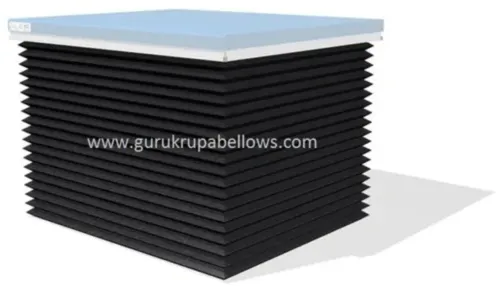
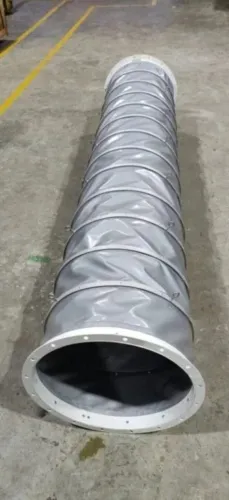
An SS lamella bellow cover combines a flexible fabric or elastomer bellows body with overlapping stainless-steel lamellas fixed to its outer surface. It is not a thin-wall, fully metallic expansion bellows.
As the machine axis travels, the flexible sections fold and unfold while the lamellas slide over one another. This preserves an armoured surface across the changing length without stopping the cover from compressing.
The overlap pattern is functional, not decorative. Correctly oriented flaps encourage chips and coolant to run off the cover; poor geometry lets debris enter the joints or collect between adjacent lamellas.
| Term | Construction it may describe | What to confirm |
|---|---|---|
| SS lamella bellow cover | Fabric or elastomer bellows with overlapping stainless-steel lamellas | Folded length, flap overlap, material grade and mounting direction |
| metal flap bellow | Individual metal flaps that overlap as the cover moves | Whether the flaps are hinged, riveted or fixed to a flexible body |
| metal bellow covers | A broad purchasing term for lamella, flap or all-metal designs | Exact body material, movement method and temperature limit |
| machine protection bellow covers | A functional category covering guideways, slides or other machine parts | The construction, sealing details and intended contamination duty |
Do not treat these names as interchangeable. Mass, flexibility, temperature resistance, sealing behaviour and maintenance change with the construction. A genuinely all-metal bellows follows a different design logic from stainless armour mounted over fabric, while a metal flap bellow can describe either arrangement. Specify the layers and joints before comparing quotations.
How the Cover Separates Moving Parts from Chips and Coolant
The protection sequence begins at the mounting points and ends with controlled chip removal. Machine protection bellow covers create a moving barrier, not a hermetic enclosure.
1. End frames attach the cover squarely to the stationary machine structure and the moving axis. Correct alignment keeps the cover travelling straight instead of twisting the flap rows or loading the fabric sideways.
2. Flexible bellows or fabric sections supply the folding stroke. They compress as the axis closes and unfold as it travels, closing the changing gaps above guideways, ball screws, racks, linear bearings and slides.
3. Hinges, rivets or fasteners retain the overlapping stainless-steel lamellas. These joints let each flap move with the folds while preserving an armoured outer surface. This is the working principle of a metal flap bellow.
4. During cutting, the outer lamellas receive ordinary chips, sharp swarf and minor impacts. Their overlapping edges encourage debris and coolant to run away from the folds rather than enter the joints.
5. The flexible body behind the lamellas blocks abrasive dust and cutting fluid that pass between flap rows. Wipers, seams and end-frame details improve coolant resistance, but do not prove a hermetic seal unless the complete assembly has been tested as one.
6. Remove accumulated swarf after machining. A cover reduces contamination; it does not replace chip evacuation, and large hot chips can wedge beneath a flap or damage the fabric underneath.
When Metal Flaps Beat Fabric Bellows—and When They Do Not
A metal flap bellow is the stronger choice when an axis faces heavy chips, hot swarf, sharp edges, abrasive dust, frequent cycling or coolant. Stainless armour resists cuts and surface wear that can quickly destroy an exposed fabric bellows, while overlapping flaps keep ordinary contamination off the moving length.
| Option | What it means | When it applies |
|---|---|---|
| Lamella cover | Stainless flaps over a flexible bellows body | Choose for chip load, coolant and regular impact; allow for added moving mass and support |
| Unarmoured fabric bellows | Lightweight flexible folds without metal armour | Choose for low drive load, a very small folded length or a tight bend radius |
| Telescopic steel cover | Nested rigid steel boxes that slide over guided sections | Choose for rigid installations with room for sliding clearances; it does not fold like a lamella cover |
| Simple scraper | An edge wiper that pushes debris aside | Choose for a local edge; it does not shield the full guideway length |
Metal bellow covers add acceleration force and can sag, chatter or wear early on a high-speed axis without suitable guidance. A lamella cover is also the wrong choice where you need unobstructed guideway visibility, extremely low mass or an exceptionally tight bend.
Do not specify it for direct grinding sparks, welding spatter, molten chips or severe impact without further protection. Heat-resistant fabric, a sacrificial shield, a spark-resistant design or another cover technology may be necessary, and chip evacuation must still remove material that could wedge beneath a flap.
How to Specify the Cover for the Machine, Not Just the Rail
Size the cover from the machine’s full movement and service conditions, not from guideway width alone. Record these values before requesting a quotation:
- Guideway width and axis travel
- Required closed length and extended length
- Fold height, flap overlap and minimum bend radius
- Mounting orientation and available clearance
- Axis speed, chip type, coolant chemistry and washdown practice
Check the complete stroke in a drawing, including the tool, workpiece, cable carriers and nearby guards. A cover that clears the axis at one end can rub against a carrier or guard at the other.
Mounting orientation changes the support required.
| Orientation | Main loading concern | Features to consider |
|---|---|---|
| Horizontal | Folds travel with less sag | Standard guides or support strips |
| Vertical | Weight loads the folds and mounting points | Guide rails, support strips or rollers |
| Inverted | Lamellas can sag or collect debris underneath | Rollers, revised fold arrangement and drainage clearance |
Choose stainless grade with the actual contamination in mind. Grade 304 suits many general-purpose duties; 316 or another molybdenum-bearing grade deserves consideration for chloride-bearing coolant, aggressive washdown or salt contamination. Specify fastener material with the stainless grade to reduce galvanic and joint corrosion.
For anyone searching “how ss lamella bellow covers for protect machines in coimbatore,” the useful data is duty, not city or machine model alone. GURUKRUPA BELLOWS PVT LTD can use those details to prepare compressed- and extended-position drawings after confirming the actual duty.
Related product
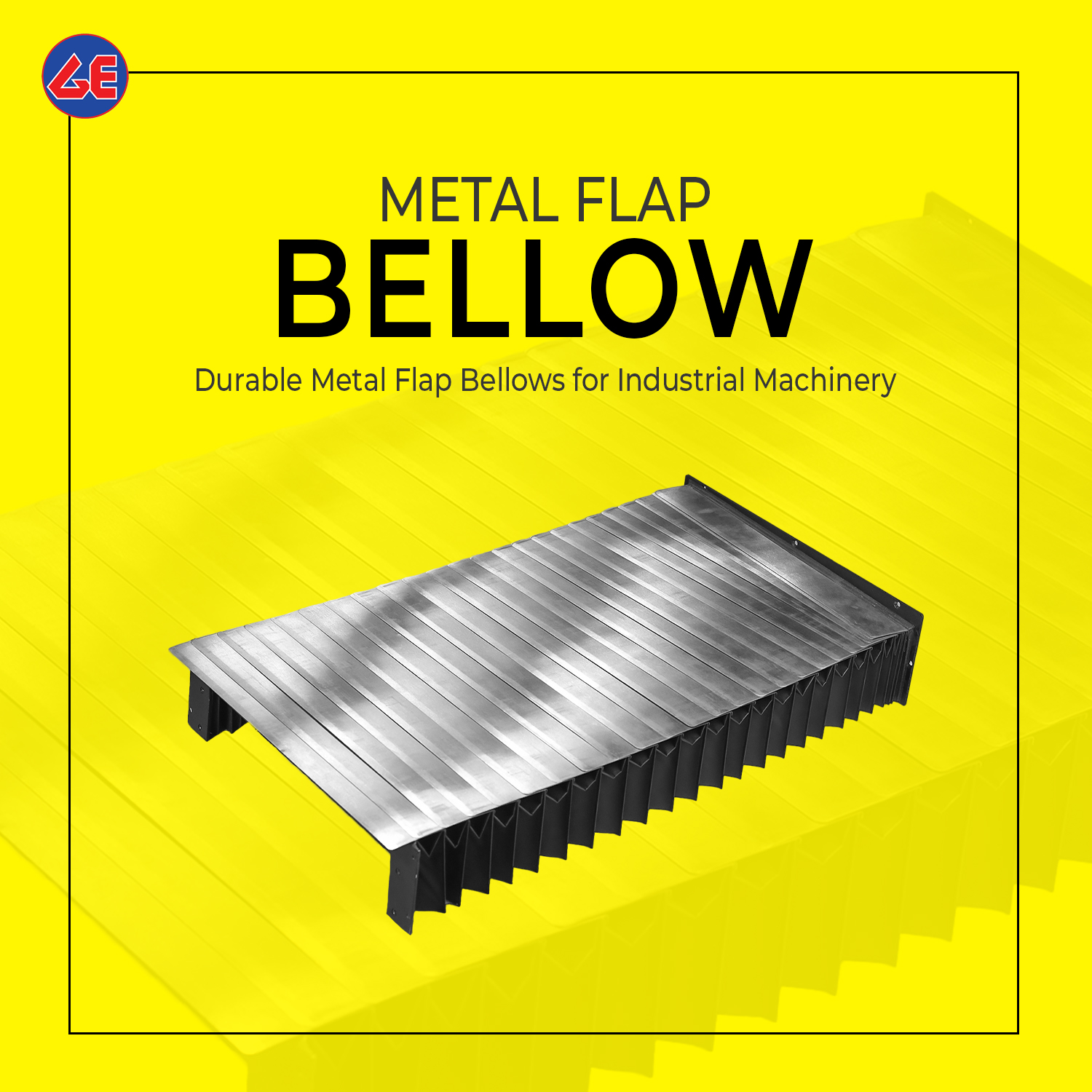 | Flexible Bellows ₹5000 Heavy-Duty Machine Protection At Gurukrupa Bellows Pvt. Ltd., we manufacture high-quality Metal Flap Bellows designed to protect machine guideways,... View product → |
What to Inspect Before a Lamella Cover Fails
The temperature limit of SS lamella bellow covers belongs to the complete assembly, not the stainless flaps alone. Fabric, elastomer, adhesive, thread, edge seal or wiper can harden, crack or lose adhesion before the steel loses strength. Use the lowest-rated component as the service limit.
Stainless steel resists many coolants, but chloride residue, salt contamination, stagnant fluid and contact with dissimilar metals can still stain or pit it. Specify the stainless grade and fastener material together, then inspect machine protection bellow covers on a fixed schedule and after impacts or washdown.
- Run the axis through its full stroke and check that the cover remains square. Look for uneven compression, side rubbing, lifted lamellas, sag, chatter or a rising drive load; these indicate misalignment, weak support or excess moving mass.
- Examine flap edges, overlaps, hinges, rivets and fasteners. Replace or repair parts that are loose, bent, cracked or corroded before a flap opens a path for debris.
- Inspect the flexible body behind the metal for cracks, delamination, hardened sections, torn seams and coolant penetration. Damage here can spread even when the stainless surface looks sound.
- Remove large hot chips before they wedge beneath a flap or burn the fabric. Replace damaged sections before debris reaches the guideway or ball screw.
Persistent rubbing, repeated flap lifting or temperature damage requires a redesigned cover, not simply more frequent cleaning.
Frequently asked questions
What is an SS lamella bellow cover?
It is a flexible fabric or elastomer bellows body covered with overlapping stainless-steel lamellas. It is not a thin-wall, fully metallic expansion bellows.
How does a lamella bellow cover protect moving machine parts?
The bellows expands and contracts with machine travel while the overlapping metal flaps form a barrier against chips, coolant and mechanical impact.
When should you choose a metal flap bellow over a fabric bellow?
Choose a metal flap bellow when sharp chips, hot particles or abrasive debris can damage exposed fabric. Use a fabric bellow when lower weight, tighter folding or reduced cost matters more than impact resistance.
What information is needed to specify a machine protection bellow cover?
Provide travel length, folded and extended dimensions, guideway geometry, movement speed, acceleration, temperature, coolant or oil exposure, chip type, mounting points and available space.
What should you inspect before a lamella cover fails?
Check for bent or missing lamellas, reduced overlap, cracked folds, torn seams, damaged seals, loose fasteners, contamination inside the folds and restricted extension.