
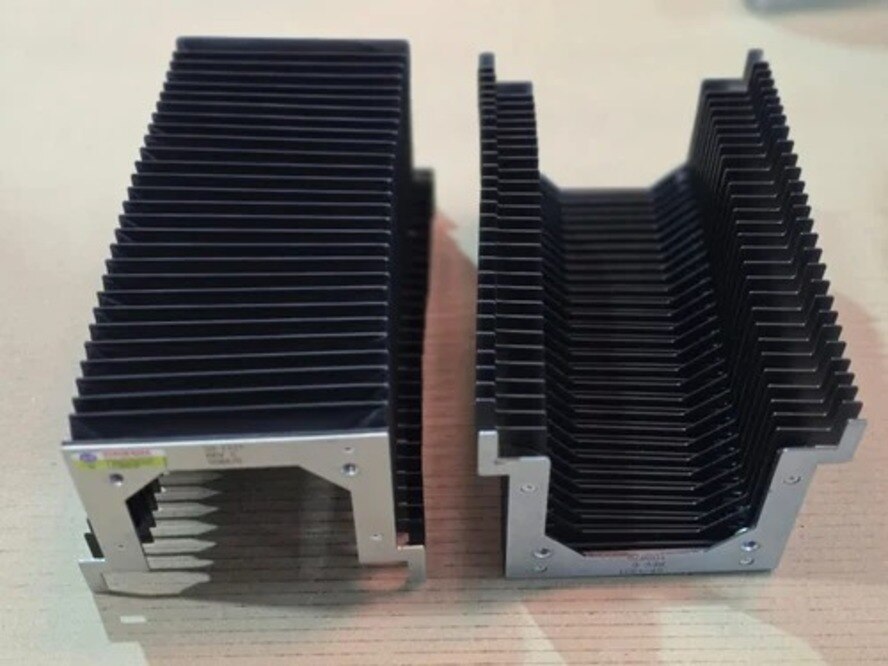
A thermal-welded cover is not automatically suitable because its seam is sealed or its fabric is described as heat resistant. You will need to match the joining method, fold geometry, materials, motion, temperature, contaminants and mounting details to the machine before requesting a quotation or approving a sample.
Key takeaways
- Specify travel, compressed length, extended length and folded height.
- Match the coating and seam design to heat, oil, chips and movement.
- Choose thermal welding when a sealed, needle-hole-free joint is needed.
- Request drawings, test details and installation limits from Mumbai suppliers.
How thermal welding changes the construction of a machine bellow
Thermal welding changes a machine bellow by fusing thermoplastic-coated textile layers, usually polyurethane- or PVC-coated fabric. Controlled temperature softens the weldable coating; pressure brings the layers together, and dwell time lets the joint set. The result is a continuous raised or flattened seam line, not needle holes.
| Joining method | Construction | What to look for |
|---|---|---|
| Thermal welding | Melted thermoplastic coating joins overlapping layers | Continuous raised or flattened seam |
| Stitching | Thread passes through both layers | Needle holes and possible leakage paths |
| Adhesive bonding | A separate glue layer joins the materials | Defined adhesive layer and bonding evidence |
| Vulcanisation | Heat and pressure cure rubber | Rubber cure, not melted thermoplastic coating |
Thermally bonded bellow covers are not automatically stronger. Oil or coolant contamination, poor surface preparation, incorrect heat, pressure or dwell time, and corner peeling can cause early failure. Ask the supplier to identify the coating chemistry, welding method, seam overlap and test evidence, preferably with a sectioned sample.
Silicone-coated, PTFE and some elastomer-coated fabrics may not weld directly. They need a compatible weldable film or another joining method, so “thermal welded machine bellows” alone proves neither seam strength nor chemical resistance.
When thermal-welded bellows are the right protection choice
Choose thermally bonded bellow covers for machines when you need a flexible, relatively light, sealed moving cover against dust, coolant or cutting fluid, and the folded package fits the machine’s full motion envelope.
| Option | Main strength | Choose it when |
|---|---|---|
| Thermally bonded fabric | Flexible sealing with low moving mass | Clearance is adequate and exposure is dust, coolant or cutting fluid |
| Sewn fabric | Easier field repair | Repairability matters more than seam leakage control |
| Telescopic steel | Rigidity and impact resistance | Heavy chips, large unsupported spans or severe mechanical loading dominate |
| Aluminium apron | Sliding metal protection | The guideway needs a durable sliding shield |
| Loose curtain | Simple, low-control coverage | Precise movement and sealing are not required |
Specify these operating limits before approval:
- Maximum travel speed, acceleration, fold frequency, unsupported span and coolant-jet pressure
- Chip size, impact energy, allowable compression ratio, lateral guidance and any anti-collapse slats
- Folded clearance, bend radius, mounting stiffness and expected cycle life
Do not infer those limits from a temperature or corrosion claim. Reject this construction for sustained open flame, very large hot-metal impact, vacuum service, washdown beyond the tested seam design or motion requiring an unusually tight bend radius. A cover becomes a machine guard only after a separate risk assessment confirms its safety function.
The dimensions and measurements your specification must contain
Send a complete machine bellows specification before anyone calculates a cover; travel alone cannot define the required geometry.
1. Identify the machine axis and coordinate direction, then record the required stroke, extended length, compressed length, number and height of folds, fold pitch, folded width and folded depth.
2. Measure the guideway cross-section, mounting-hole pattern, attachment frame and flange dimensions. Include travel speed, acceleration, minimum bend radius and clearance at every point of travel.
3. Measure the available envelope at full extension and full compression. Record space around the slide, ballscrew, lubrication lines, sensors, cable carrier and adjacent covers.
4. Move the axis slowly through its complete stroke. Check lateral movement, fold interference, buckle points, compressed-package contact, and access for installation and replacement.
5. Photograph both end positions with a scale visible. Mark the fixed and moving mounting faces on a dimensioned drawing, including hole centres and reference datums.
Do not specify only guideway width, copy an old cover after a machine modification, or use fold count alone to calculate travel. End folds, mounting frames and overlap consume usable length, so omit them and the cover can bottom out, buckle or fail to reach the required stroke.
How to match fabric, coating, temperature and seam construction
Start with the heat profile, not a label: record continuous operating temperature, short-term peak temperature, exposure duration, heat-source distance, radiant heat, hot-chip temperature and whether a heat shield is needed. Distinguish hot chips, radiant tooling, hot coolant and enclosure heat.
1. Match the fabric and coating to that profile. Identify the coating chemistry, such as polyurethane or PVC, and the limits of the textile, weld, wiper and mounting strip.
2. Name the actual coolant or cutting-oil family and concentration, hydraulic oil, solvent, cleaning chemical, welding sparks, abrasive dust and corrosive chemical. Include the wash-down practice.
3. Request compatibility data for the finished welded seam, laminated edge and mounting strip, not only the base fabric. State the chemical exposure conditions and temperature range used.
4. Request a construction drawing or sectioned sample showing weld width, overlap, corner treatment, reinforcement, end frames, wipers, grommets, clamps and mounting strips.
Ask for named test methods, seam pull or peel results, and inspection records. These details govern leakage, edge tearing, fold stability and service life; “thermal welded” and “supreme temperature” are descriptions, not performance figures.
How to test, install and maintain the finished cover
Accept the finished cover in three stages: sample inspection, machine commissioning and scheduled service.
1. Before ordering, inspect a sample for uniform folds, pinholes, coating adhesion, corner finish and reinforcement. Flex it repeatedly, then check for cracks or delamination.
2. Request seam pull-test or peel-test evidence. Expose another sample to the actual oil or coolant and heat cycle; test the finished weld, not only the base fabric.
3. During commissioning, cycle the cover across the full machine stroke at operating speed and acceleration. Confirm that folds do not rub the guideway, the compressed cover does not bottom out, fasteners do not pierce the bellows, and mounting faces stay square.
4. Watch for fold inversion, mount pull-out and interference throughout the stroke. After cycling, inspect weld lines, corners and mounting transitions for peeling, opening or distortion.
5. Set cleaning and inspection intervals from operating hours and contamination levels. Remove trapped chips only with the safe method specified by the machine maker; never force a sharp tool through a fold.
6. Replace the cover instead of patching it when delamination, repeated seam opening, cracked coating, distorted folds or exposed reinforcement returns after repair.
What to include in a quotation request, especially for Mumbai sourcing
A usable RFQ starts with the machine, not the cover’s colour or nominal width. State the machine type, axis and coordinate direction, travel, extended and compressed lengths, fold height, pitch, count, folded width and depth, speed, acceleration, temperature profile, contaminants, operating hours and required replacement interval.
- Specify fabric, coating, weld construction, seam overlap, reinforcement and mounting method.
- Attach a dimensioned clearance drawing showing the guideway, moving parts, access dimensions and mounting faces.
- Add photographs from both stroke limits, plus the requested acceptance test: full-stroke cycling, compressed-envelope verification, rubbing checks and post-cycle weld and corner inspection.
Allow time for drawing approval, machine measurement, sample fabrication, mounting-hardware confirmation, trial fitting and revisions. These steps frequently determine fit more than colour selection.
For custom bellow covers in Mumbai, send a local manufacturer the marked drawing, access measurements, transport constraints and preferred site-measurement date. Confirm these quotation items:
| Item | Confirm | Why it matters |
|---|---|---|
| Installation | Included or excluded | Fixes labour responsibility |
| Existing cover | Removal included or excluded | Prevents site delays |
| Transport | Folded-package method | Avoids compression damage |
| Revisions | Named approver | Controls drawing changes |
GURUKRUPA BELLOWS PVT LTD belongs in the comparison only after it supplies these construction details, test evidence and fit-for-machine criteria.
Related product
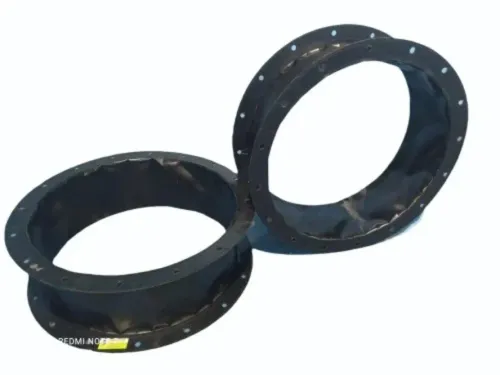
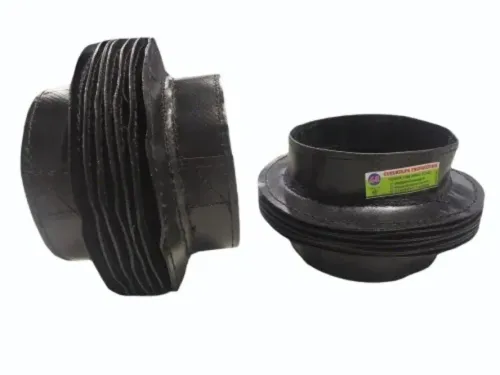
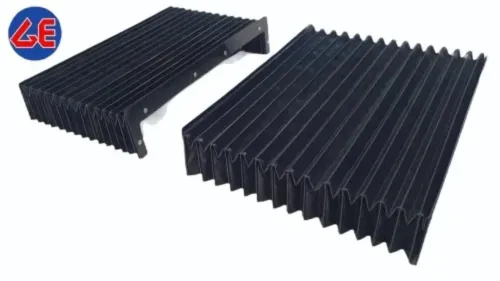
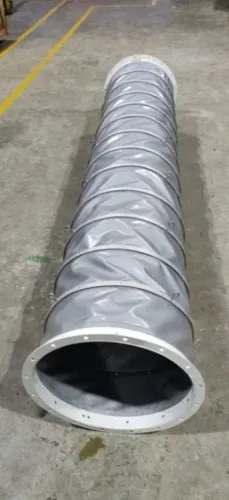
 | Thermally Bonded Bellows ₹1000 Product Details: Brand GURUKRUPA Color BLACK & OTHER Size ALL On offer from us is available Thermally Bonded Bellows for the clients. View product → |
Frequently asked questions
How does thermal welding change a machine bellow?
It fuses thermoplastic-coated textile layers using controlled heat, pressure and dwell time, creating a continuous seam without needle holes.
When are thermally bonded bellow covers suitable?
They suit applications that need sealed joints and protection from dust, chips, coolant or other contaminants, provided the fabric and coating match the operating conditions.
Which measurements belong in a machine bellows specification?
Include guideway dimensions, travel, compressed length, extended length, folded height, mounting dimensions, clearances and the required expansion direction.
What should you include when requesting a quotation from a Mumbai supplier?
Provide drawings, operating temperatures, contaminants, speed, cycle rate, mounting details, material requirements, quantity, delivery location and inspection or test requirements.