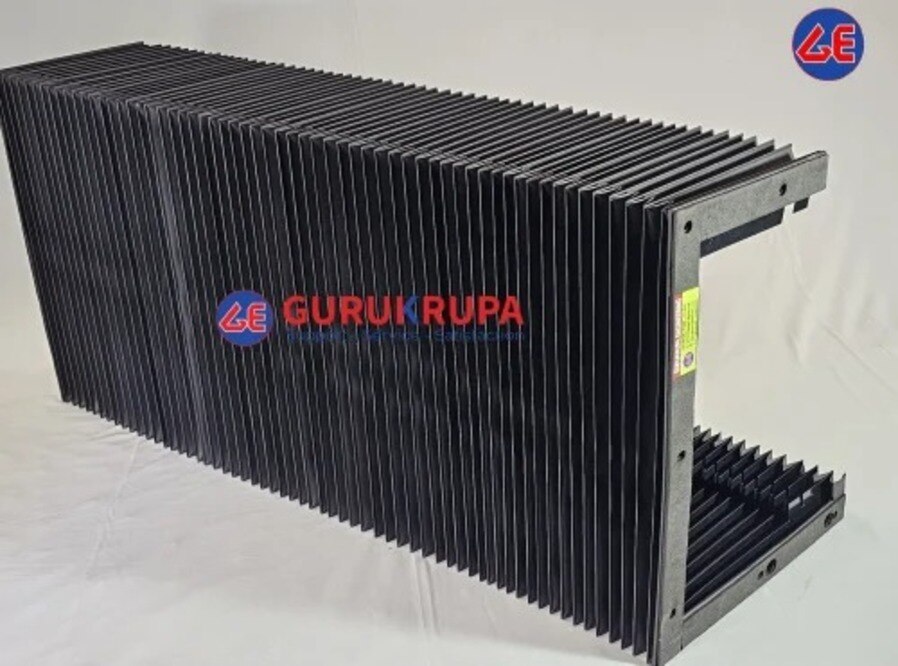
A fabric bellow cover is engineered around machine travel, fold geometry, fabric performance, and attachment loads—not cut to a nominal width and stitched into an accordion. By the end, you will know how the assembly is built, which measurements control its design, how to specify materials and seams, and what to include in a request for quotation.
Key takeaways
- Start with the machine drawing and map travel, clearances, folds, and mounting faces.
- Match fabric layers to heat, chips, oil, coolant, abrasion, and required flexibility.
- Calculate extended and compressed lengths from actual machine stroke and fold geometry.
- Give suppliers dimensions, motion data, hazards, and mounting details before requesting a quote.
How the fabric becomes a working bellow cover
1. Start with the machine drawing, not a nominal width. Map the guideway envelope, stroke, maximum extended length, minimum compressed length, available folded height, mounting faces, bend radius, and fold count. Mark centrelines, corners, bolt holes, travel direction, and reference points so every panel aligns with the machine.
2. Transfer the pattern to coated or laminated technical fabric, allowing for seam allowances and fold geometry. Cut the flexible panels accurately, then add reinforcement pieces at corners, fold creases, holes, and attachment zones. The reinforcement controls tear and stops concentrated mounting loads from pulling through the fabric.
3. Layer the panels, reinforcement, seam tape, and wear parts in the specified order. Align their reference marks before joining them by sewing, adhesive bonding, heat or radio-frequency welding, or mechanical clamping; the method depends on the fabric coating and required sealing.
Sewing preserves flexibility, while welded or bonded seams can improve resistance to coolant and chip entry.
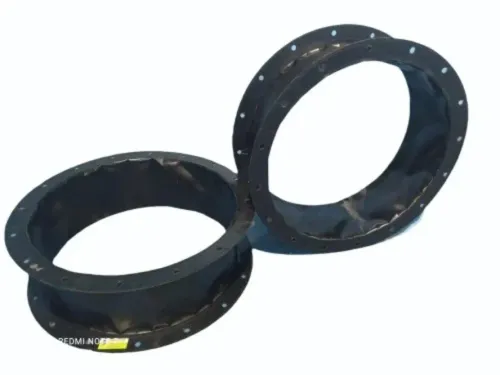
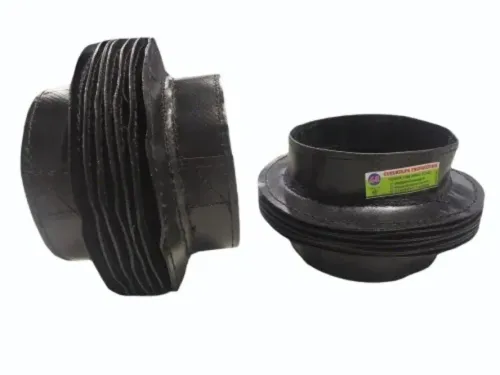
4. Form the bellows folds with templates, heated tooling, stitched fold lines, or shaped frames. Install sewn-in or welded end flanges, bolt-on or clamping frames, support strips, internal baffles, rings, and replaceable wear strips.
These parts keep the cover square, prevent sagging and twisting, and show how fabric bellow covers are made as assemblies rather than flexible bodies alone.
5. Inspect the finished cover at compressed and extended lengths. Check squareness, fold uniformity, hole alignment, seam continuity, attachment pull-out, rubbing points, and free movement through the full stroke. Run the axis by hand and confirm that no fold contacts a casting, cable, sharp edge, or tooling.
What each layer and seam contributes
The base cloth carries tensile loads; the coating or laminate faces the hazard. In fabric bellow cover construction, polyester or another base cloth supplies strength, while PVC, neoprene, silicone, PTFE, glass, aramid, or silica-based layers set the balance between flexibility, temperature capability, chemical resistance, and surface protection.
Reinforcement fabric or scrim limits tearing and dimensional growth. Seam tape seals or strengthens a joint, thread transfers repeated fold loads, and adhesive bonds compatible surfaces without creating a brittle hinge. Every layer matters: a strong cloth cannot compensate for coating delamination or thread failure.
PVC-coated polyester suits many general chip and coolant applications. Higher-temperature or chemically demanding service requires a material review, not a generic “heat-resistant” claim.
Seam choice changes the cover’s behaviour:
| Option | Main contribution | Trade-off |
|---|---|---|
| Sewn seam | Flexible joint with practical repair | Stitch holes can admit liquid and particles |
| Heat-welded seam | Continuous seal where the coating melts correctly | Excess heat can damage the laminate |
| Radio-frequency-welded seam | Strong sealed joint in RF-compatible materials | Not suitable for every coating or fabric |
| Adhesive-welded seam | Bonds compatible surfaces without perforating them | Chemical, heat, and flex durability depend on the adhesive |
Specify the actual cutting fluid, oil, cleaner, concentration, temperature, exposure duration, flame behaviour, and flex-cycle conditions. Test the complete assembly, including seams and attachments; a fabric that survives the chemical may still crack at the fold or lose adhesion during repeated movement.
How motion determines folds, length, and support
A cover is sized from the axis motion, not simply from the distance between two end points. Start with the stroke, maximum extended length, minimum compressed length, travel speed, acceleration, bend radius, and available packed height.
- Measure the guideway width and height, moving mass, adjacent tooling, mounting faces, clearance, and axis direction.
- Set the required extension and compression, then select fold count and fold depth.
- Check the folded pack against the available height and nearby tooling.
Tight folds crease and rub the fabric, shortening service life. Oversized folds consume clearance and can strike an adjacent axis. High-speed movement also makes mass critical: thick reinforcement improves durability but increases inertial load and reversal forces.
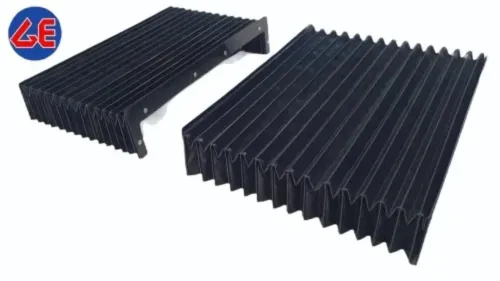
Horizontal and vertical fabric bellows for machinery use internal or external frames, rings, strips, baffles, pocketed inserts, or guide components to prevent sagging, twisting, sticking folds, and entry into the travel path. These supports improve repeatable movement but add mass and create places for chips or coolant to collect.
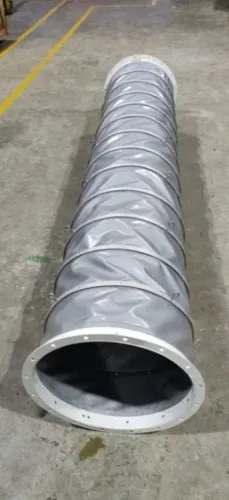
Do not substitute similar-looking products. A machine-guideway fabric bellow cover follows an axis; a fabric expansion joint handles thermal movement in ducting; a soft accordion shield provides a basic flexible barrier; and a metal flap bellow suits conditions demanding different rigidity and wear resistance.
The bend radius, speed, load, and hazard determine which construction belongs on the machine.
How the cover is mounted and kept clear of hazards
Fixed and moving ends are engineered attachment points, not cosmetic hems. A cover may use sewn-in or welded flanges, a clamping frame, a bolt-on frame with screw fixing, clips, or hook-and-loop closures where frequent removal is needed. Make the attachment removable when inspection, cleaning, or replacement requires access.
Keep both mounting faces square to the axis. An out-of-square end twists the cover, loads one fold edge, and can pull seams or frames loose. The frame must resist pull-out and spread the force across its perimeter; do not make the fabric carry concentrated loads around isolated screws or clips.
Protect contact zones with replaceable wear strips, sacrificial layers, reinforced corners, and smooth guide surfaces. These parts reduce abrasion, but they will not save a cover forced across a sharp casting edge or dragged through chips.
Check the installation before powered movement:
- Run the axis by hand through full compression and full extension.
- Confirm that no fold rubs a casting, guide, sharp edge, cable, or tooling.
- Check that folds cannot collapse into the travel path.
- Verify that chips cannot accumulate between folds.
- Inspect for sagging, twisting, uneven edge loading, and coolant trapped in pockets.
Internal baffles, pocketed inserts, and shaped frames improve fold repeatability and stop adjacent folds sticking together. They also add mass and create collection points for chips or liquid, so provide access for cleaning and inspection.
What to send a supplier before specifying the material
A comparable quotation starts with machine data, not a fabric preference. Send every bidder the same information:
1. Provide guideway width and height, travel direction, stroke, minimum compressed length, maximum extended length, mounting-face dimensions, available clearance, packed height, moving mass, speed, acceleration, bend radius, fixing-hole pattern, photographs, and a dimensioned mounting drawing. Include fold count and depth if known; otherwise ask the supplier to calculate them from the motion envelope.
2. Describe the exposure precisely: dry chips, hot chips, coolant spray, cutting oil, oil mist, welding sparks, UV, corrosive gases, cleaning chemicals, operating temperature, peak chip temperature, dwell time on the cover, and cleaning method. A “heat-resistant” label does not show that seams, coatings, frames, or trapped chips will survive the duty.
3. Ask for the proposed base cloth, coating or laminate, reinforcement, seam process, thread, adhesive, frame material, test method, temperature limits, chemical-compatibility evidence, flame behaviour, and replacement strategy. Request test conditions for named coolant, oil, cleaner, concentration, exposure duration, and flex cycles.
When comparing a fabric bellow cover supplier in Mumbai, require each bidder to return the same drawing, test evidence, assumptions, and exclusions. GURUKRUPA BELLOWS PVT LTD is relevant at this stage as a Mumbai manufacturer and supplier, but the specification—not a generic resistance label—should decide the final material and construction.
Related products
 | Bellow Cover We are considered a well-known name in the business that manufactures and supplies Bellow Cover. View product → |
 | Bellow Cover ₹1000 Product Details: Brand GE Color Black-Blue - Gray -White Size ANY ( C shape, Square, Round, Rectangular) Ours is a trustworthy name in the business... View product → |
Frequently asked questions
How are fabric bellow covers made for industrial machinery?
A supplier builds them from measured machine geometry, then cuts, joins, reinforces, and tests layered fabric panels around the required folds and travel.
What do the layers and seams contribute to a fabric bellow cover?
The outer layer resists the machine environment, inner layers add strength or heat protection, and seams hold the assembly together while flexing repeatedly.
How does machine motion determine bellow cover dimensions?
Stroke, extended length, compressed length, available folded height, bend radius, and fold count determine the cover’s panel size and movement range.
What information should you send a fabric bellow cover supplier?
Send a machine drawing with guideway dimensions, travel direction, mounting faces, bolt holes, hazards, temperature, fluids, debris, and clearance limits.